
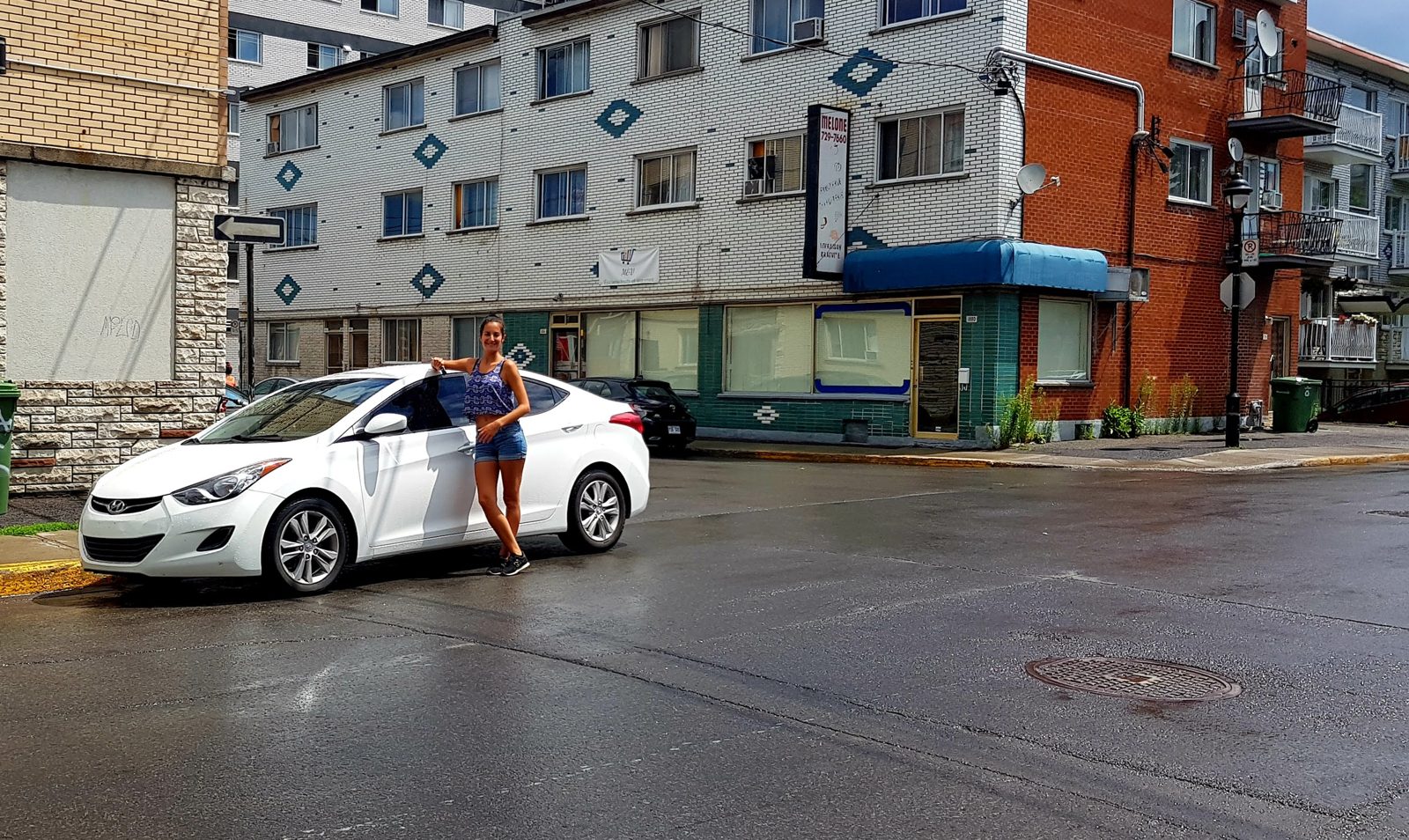
 ← PreviousA white Elantra
Sunday 14 June
As soon as the sun shows its rays, we use the car to get away from Montreal. After an hour's drive we park in the dirt car park of the Rivière-Doncaster park, and where we'd hoped for a quiet walk, we of course find we're not the only ones with the idea. Seven dollars each, and we're on the trails. Of the park's nine trails, the four most interesting are closed, which you only find out once inside, and which makes us frown at the operator's practices. The only open paths run along the river and are frankly nothing special; after a picnic in a corner, we go looking for happiness elsewhere.
Since arriving in Quebec we've wanted to discover the P'tit Train du Nord, a 230-kilometre cycle path laid, as the name suggests, on an old railway line. We park in the car park of a restaurant right next to the trail, change into our running gear and set off for twelve kilometres. The path is superbly laid out, young people even patrol on bikes to remind walkers and cyclists of the safety rules, and everyone shares it good-naturedly. Well, we do come across two or three oddballs convinced we're encroaching on their territory even though we're keeping right, but by and large it's a pleasant outing.
We chose our starting point badly, though: the whole first part is uphill. The first six kilometres climb, but after the second the wonder chases away the fatigue. On our left the pine forest opens onto a lake that winds at first like a river before revealing its full expanse and the houses set on its shores. It's the postcard image of Canada, and we savour it while running, combining business with pleasure. The six kilometres back go faster, and we reach the car soaked.
Not yet sated with exercise, we head back to Montreal to fly our frisbee. It's so lovely that every day we put off going home. Because if our ground-floor apartment was bright in winter, we've ended up nicknaming it “the cave”, it's so dark in summer. The leaves on the trees have grown spectacularly in less than a week, and the few rays that reach the building don't even get into our place, because of its odd orientation. So we stay outside as much as possible, lingering on our towels until the sun gives way to night. We end the day in style with a takeaway poutine from Poutine Centrale, our little neighbourhood spot, which has just reopened. We tell the owner we're setting off on the roads of Canada; he wishes us a good trip and tells us, to our great surprise, that we'll very probably see the northern lights along the way. Contrary to popular belief, the phenomenon isn't just a winter thing but can be seen almost all year round. We can't wait!
Saturday 20 June
We've answered a Facebook post proposing an outing for French people to the Rawdon Falls. At 8 am we join two cars and meet some new faces. An hour's drive, a stop at a supermarket to feed the barbecue, and here we are at the entrance. We left early on purpose, having been warned the place was overrun these days; we still didn't expect to find one car park already full and twenty cars ahead of us. When our turn comes we pay the not-at-all-excessive entry fee of ten dollars a head and follow the marked trail. The place is nothing special and hardly deserves its name of “falls”: it's a river with a few rapids here and there. It's only 10 am and huge groups have already set up along the water, music blaring and barbecues lit. It's hard to believe we're still in Quebec: the groups are almost all Hispanic or Caribbean, you hardly hear any Québécois spoken, and for a moment you'd think you were in Colombia.
Hard to find a free spot for a group of twelve. We settle for a simple wooden table, telling ourselves we'll spend the day in the water anyway. Pleasant surprise: the river coming down from the Laurentians is well above twenty-five degrees, and the whole little troop gets acquainted while splashing about. The other French people are here on various visas, each with their own story, which we discover as the day goes on. As soon as you move away from the bank, the current becomes powerful, and the main activity is letting yourself slide down the rapids. From above it isn't impressive; swept along among the rocks, it's another story, and you understand why swimming is supposed to be forbidden. We laugh a lot at every swirl, but the stones hidden underwater are treacherous and we graze ourselves several times, luckily nothing serious. The most daring do it again and again.
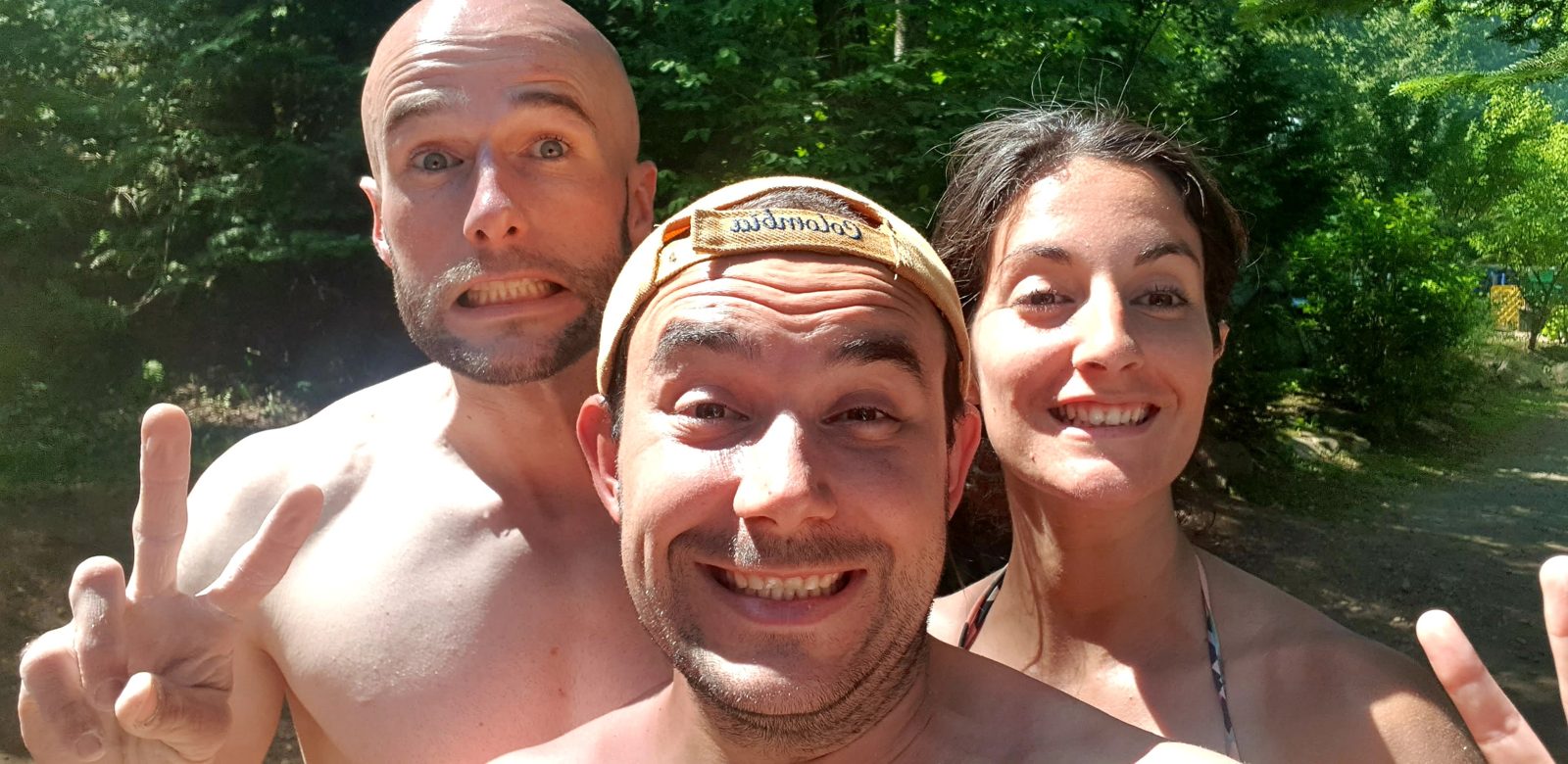
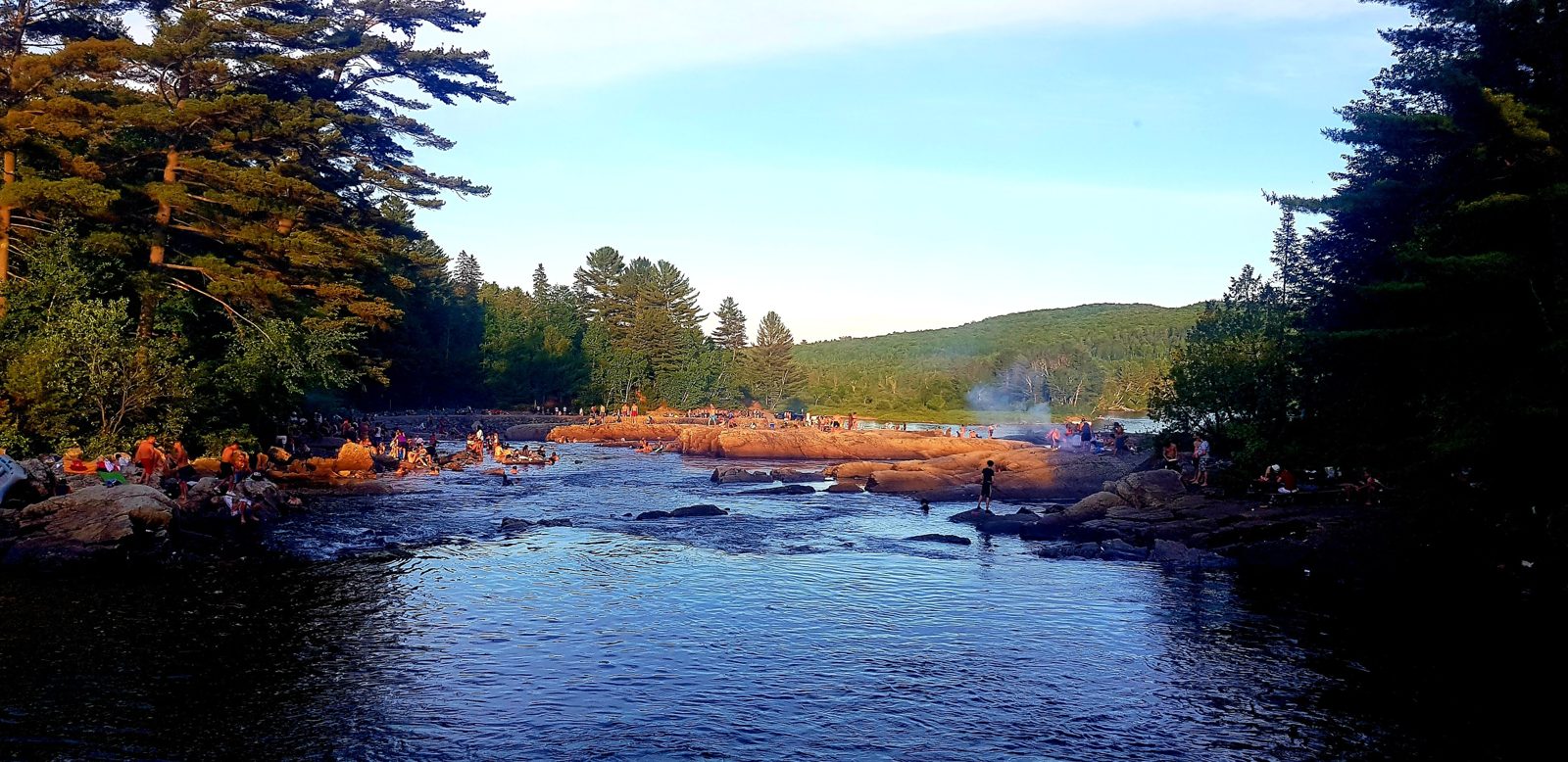
The day flies by, and on a stroll we realise that hundreds of people have invaded the place: it's almost like a festival. Alcohol flows freely, the music is everywhere, people are packed on top of each other. The pandemic is theoretically still here; it seems to have left everyone's minds. We stay until after 7 pm and grasp the scale of it as we leave: dozens of cars parked anyhow on the verges, people walking in the middle of the road… We'll learn the next day that, following residents' complaints, the local authorities have closed the falls. The mayor will issue a statement condemning the irresponsible behaviour of city dwellers, without ever blaming the site's managers, who could simply have set a quota and closed access once it was reached. As usual, those who want a good time are blamed rather than those who, out of greed, fail to take the necessary precautions and put people at risk. Back in Montreal we meet up in a park to share a few last beers before going our separate ways towards new adventures.