
 ← PreviousAn epic hike on the Routeburn Track in New Zealand
The next day we set off further north to get closer to Christchurch and the end of our trip. Hokitika beckoned and we strolled along its promenade. We should have had smiles on our faces, but a worry was weighing on our spirits. Cassandre still didn't have her visa to return to Australia, and there were only six days left before our flight. The outcome was becoming obvious: we'd be stuck in New Zealand, and that didn't really thrill us, because apart from its incredible landscapes, the country didn't really excite us culturally. In short, we were afraid of getting bored, and looking at travel sites we realised tickets to the United States were selling at more than affordable prices. We didn't overthink it: we booked our tickets to Los Angeles and spent the evening in a hotel lost in the middle of three fields planning a road trip along the American West Coast. The prospect of not staying in limbo brought the smiles back to our faces.
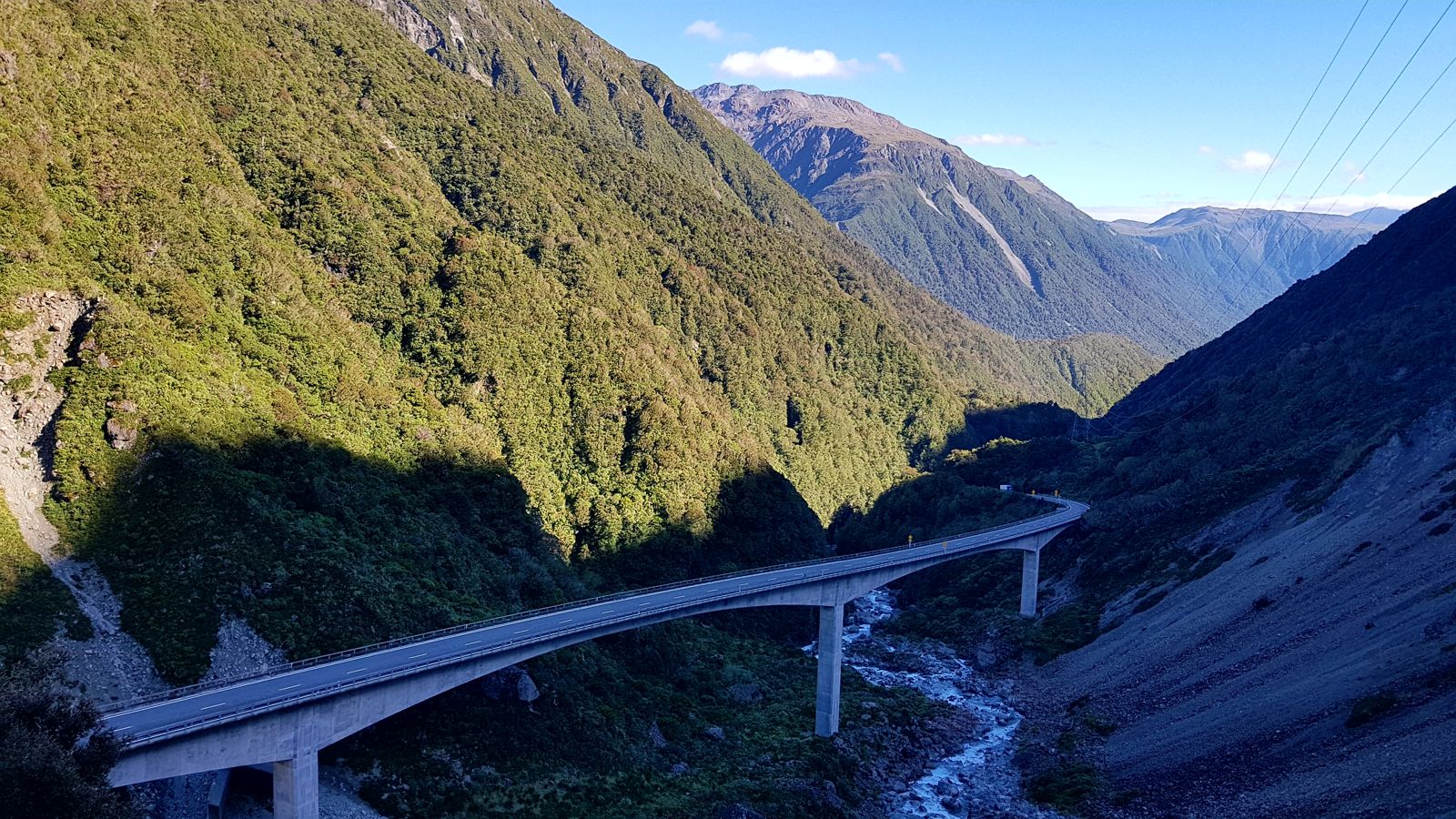
We got up very early to go hiking around Arthur's Pass, a mountain village. The climb to the little settlement was breathtaking, a road of hairpin bends along rivers and dams forming lakes. Sometimes resting on gigantic pylons, the road offered stunning viewpoints where the sheer scale of the place gave the illusion that a child had set down a model between the mountains. We reached the top around nine in the morning, a time when it was still very cold, which made us wonder about the temperature on the hiking trails. At the tourist office, the charming receptionist told us it was zero degrees at the top of the trails.
We looked at each other and laughed: I was in shorts with a jacket, and Cass was hardly more dressed. The lady pointed out that you had to be properly dressed, that the mountain was treacherous and that it wasn't something to take lightly. We're not the reckless type, so we took the chance to sit in the village café and call Cassandre's parents. It was always nice to have news from home, even if it was sometimes hard to manage because of the twelve-hour time difference. We chatted for a good hour before heading for the north of the South Island, much warmer at that time of year.
We arrived in Motueka in the late afternoon, just in time to go to the tourist office and book two seats on a boat to go hiking the next day. We'd planned to sleep in the car, but looking on Booking by chance, we came across a last-minute deal at one of the town's hotels and jumped at it. In Abel Tasman National Park, a tramping track lets you follow the coast for sixty kilometres. We had ourselves dropped off by boat to do a quarter of it, which was already a solid distance for the legs. The route went up and down and was hard on the knees, but the surroundings were spectacular enough to make up for the effort.
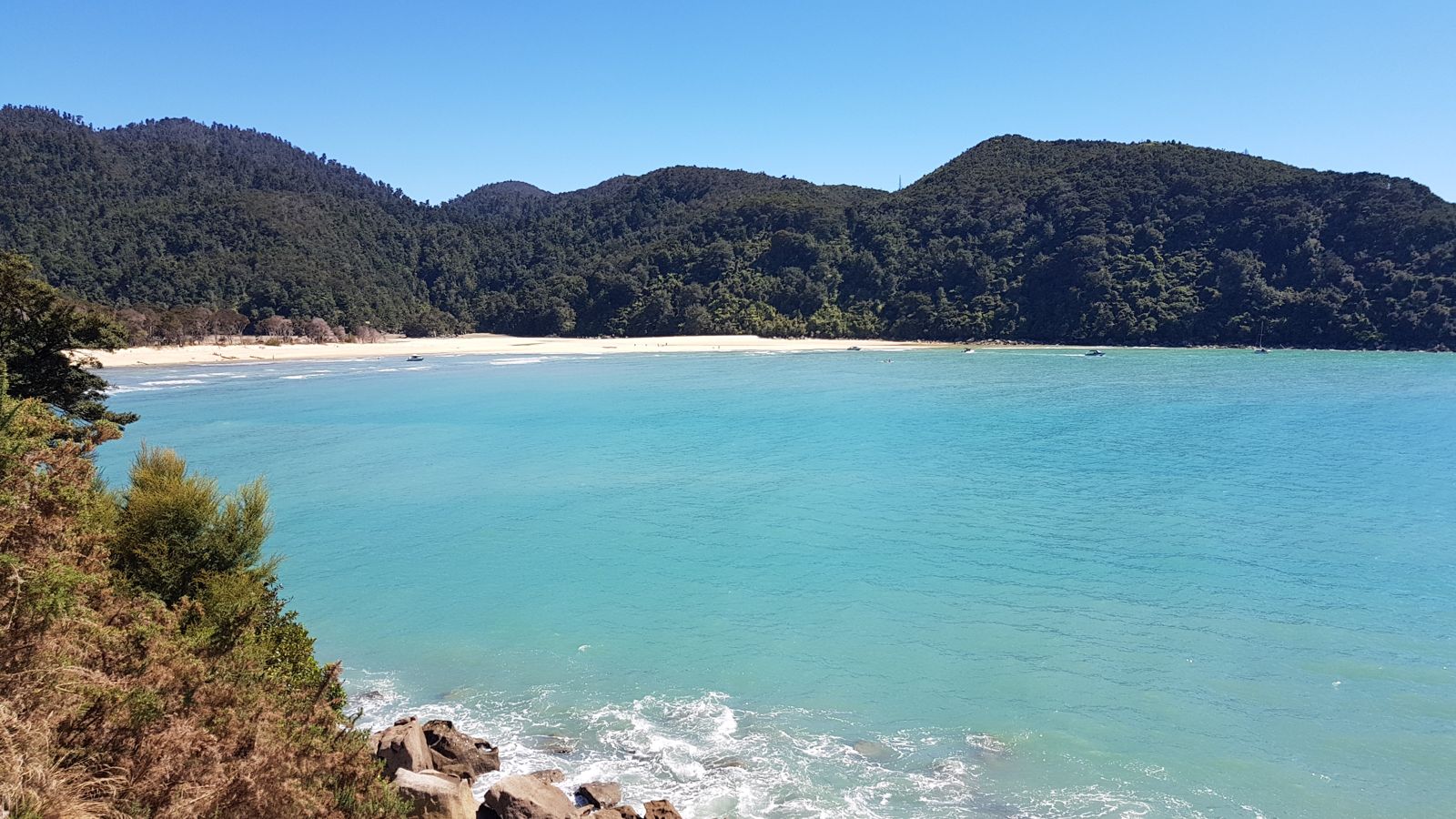
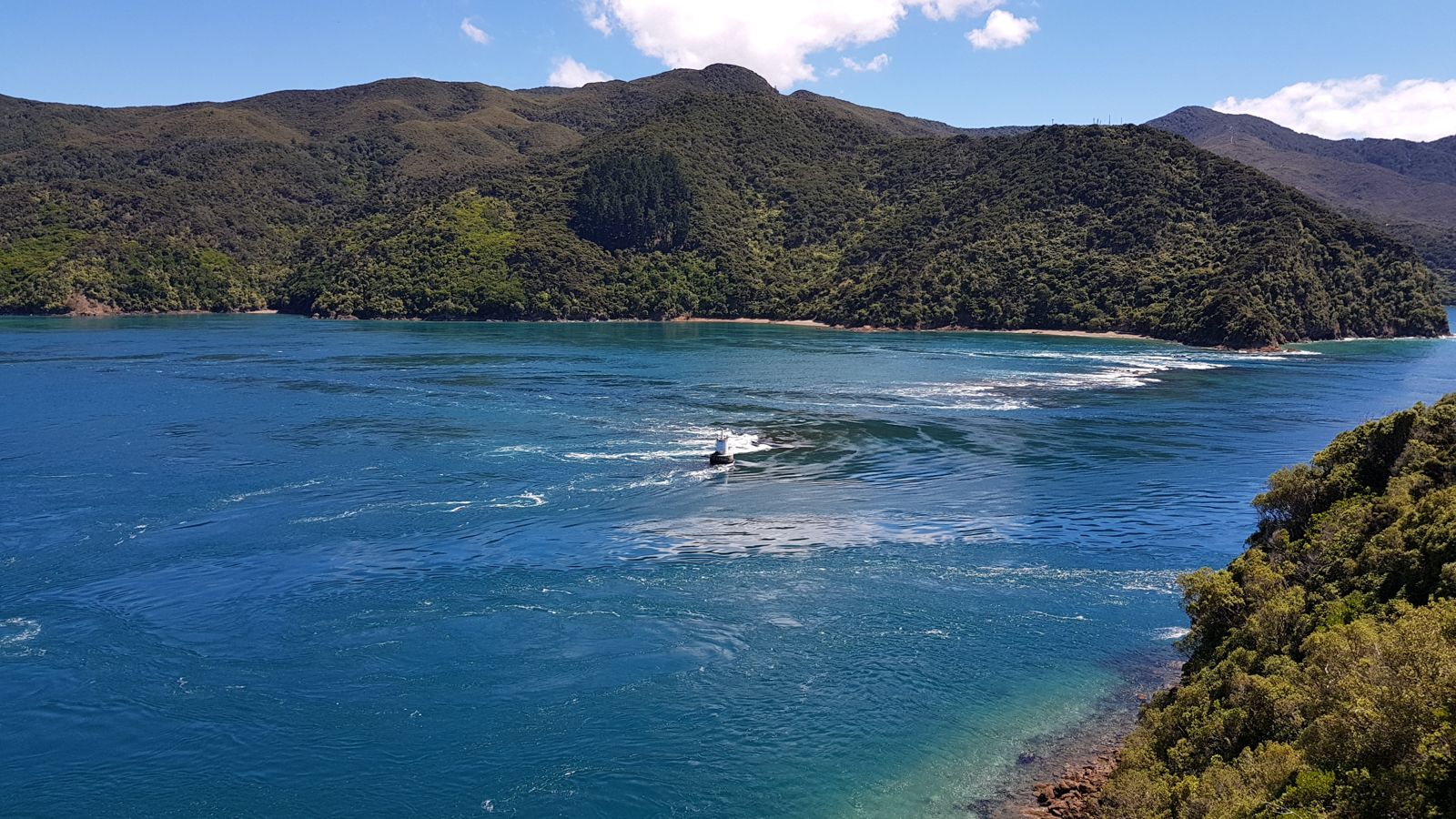
On our left, the Tasman Sea was a turquoise blue worthy of the best postcards, and on our right the dense, lush vegetation gave light green hues that blended perfectly into the landscape. Along the way we sometimes had to cross channels where the sea came up to our knees. The difficulty kept the crowds away: we didn't meet many visitors, and the few who caught up with us had much better gear than ours. We reached the boat pick-up point around 5:30 pm, drenched in sweat and faces a little reddened by the scorching sun. Through Airbnb we arrived at Blyda's, a woman in her fifties who welcomed us warmly, like all the New Zealanders we'd stayed with so far.
They were an endearing people, free of all worries. It felt as though the thread of life flowed over them peacefully without ever affecting them. They were a "friendly bunch", as you might describe them in English, people who never seemed to worry about anything. Wherever we were, we never sensed an ounce of aggression between people. Everywhere we were welcomed with smiles and good humour. We'd thought the Australians topped the kindness rankings, but the Kiwis beat them hands down; they seemed more authentic in their dealings with each other. All evening we chatted with Blyda, who told us about her life and her various jobs around New Zealand.
She showed us an old map and pointed to insignificant little villages, telling us her family's story. Meanwhile, we still had no news about Cass's visa. On the official website, her application had been hopelessly showing "pending" for almost a month. We'd probably made the wrong choice by applying from outside Australia, but friends were stuck in Perth with the same problem. When you applied for a second year from inside the country, the government put you on a "bridging" visa, which let you stay but not leave, and that could last up to six months.
Australia didn't make things easy for foreign workers, and we decided to do something crazy by booking tickets to Los Angeles. We couldn't see ourselves staying in New Zealand until a hypothetical favourable answer arrived, so we set ourselves a deadline after which we'd go home to France from the USA. If no answer came before 25 February, we'd take a one-way ticket to France and draw a line under our adventures at the other end of the world. It was a sad conclusion, but we couldn't really afford to spend months without working.
From the north of the South Island, reaching Christchurch took us three days, dawdling along the way. We went from park to park along the country's east coast, which still bore the scars of the terrible earthquake. The coast road was devastated in places, monstrous construction machines were parked at regular intervals and huge sea walls had been built. Progress was obviously slow; we often stopped for ten minutes because in places only one of the two lanes was open. We weren't in a hurry anyway, and we reached the suburbs of Christchurch on Sunday 11 February. Our host was a sports fan, and in his living room two TVs were showing cycling and the PyeongChang Winter Olympics. We settled into armchairs with him and commentated on the moguls skiing, laughing. He was a colourful character, very funny and full of anecdotes. He told us about his travels with passion and we had a great time listening to him.
We had a thorny problem to solve before returning the car to the rental agency. A truck had flicked a stone onto the windscreen, leaving a small chip. It was tiny, but knowing how honest that industry is, we preferred to avoid paying an outrageous sum and came up with a ploy to hide the damage. Since birds regularly relieve themselves on windscreens, we bought some Tipp-Ex-style correction fluid and tried to recreate a pigeon dropping. The next day, the man inspecting the car glanced at the windscreen, and when he started lingering a bit too long, we distracted him with a technical question. He answered happily, with plenty of explanation, then gave us the green light to leave. The shuttle then took us to the airport, and our New Zealand adventure came to an end.