
 ← PreviousFrom Bédarieux to Castres along the Passa Païs
Day 1, in which we escape by train
When we open our eyes, Clémence is in the middle of the bed. She crept in around 6 am because the travel cot keeps creaking and it stops her sleeping. It's still raining outside; we can hear the drops hitting the terracotta roof of the B&B. We go down to breakfast at 8:30 and enjoy a real feast prepared by our host. There's fruit, bread, homemade yoghurt, brioche and even a courgette waffle. All of this gives us strength before the stage bike tourers dread most: the train.
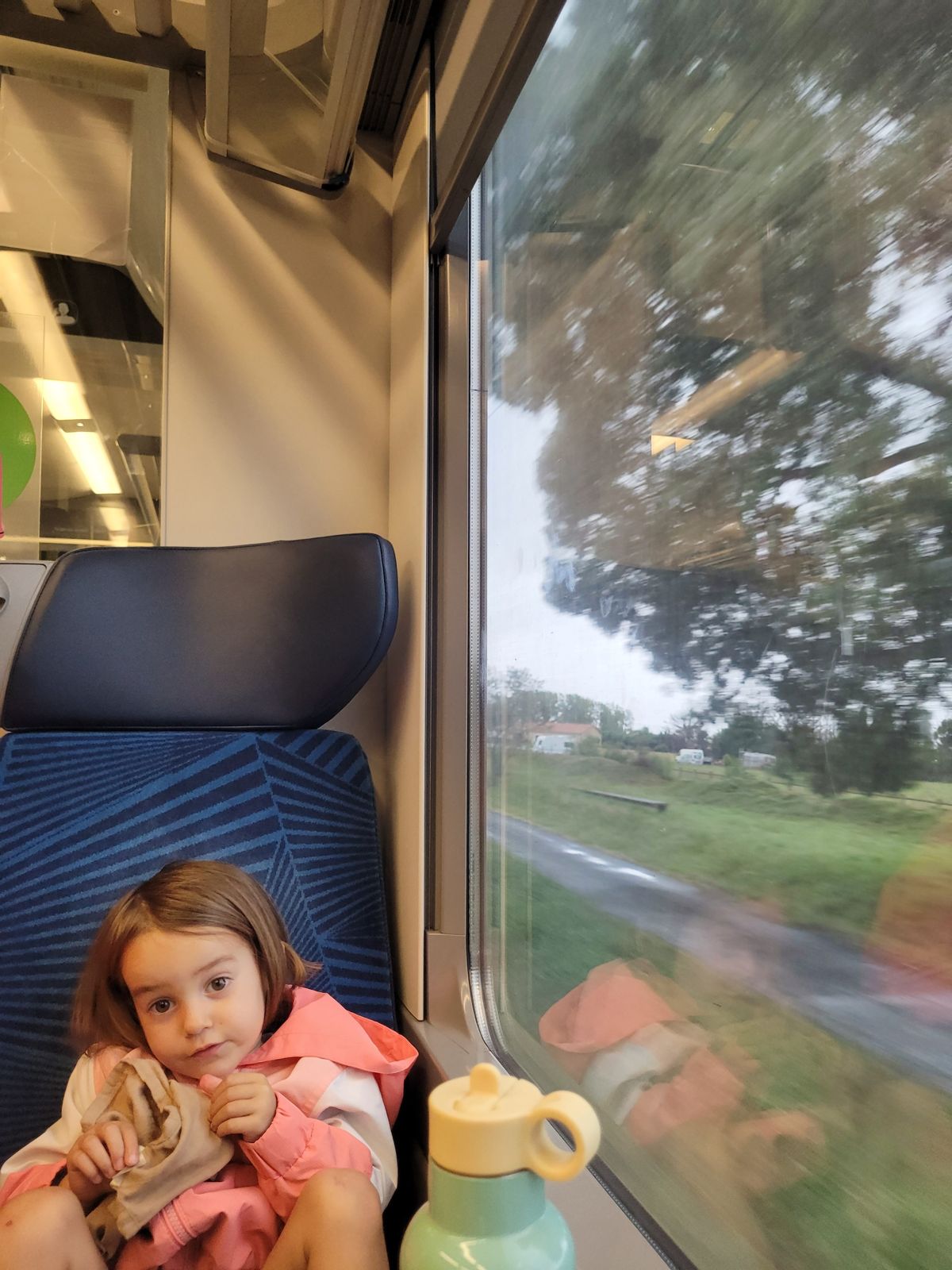
This mode of transport can be both the most charming in the world and sheer hell. When trains are empty, all is well. We just get on, wedge our bikes in and leave the buggy in an aisle. That's the case this morning in Castres, and we're also pleasantly surprised to find the train on the first platform, which spares us stairs or lifts.
It's not the case in Toulouse, where we have to take the bikes down one at a time in a lift to the underpass, then do it all again up to the exit platform. From here we go for a quick bite at the Maison du Vélo, right opposite Toulouse Matabiau. In 45 minutes we enjoy an excellent starter and main before heading back to the station to catch the express to Perpignan and get off at Carcassonne. We take the double lift again and get a nasty surprise: the train is at the platform but already almost full.
That's when logistics get complicated. You have to ask people to move, find somewhere for the panniers, fold the trailer and manage to wedge the bikes in. We make it just in time for departure. Clémence loves our day of trains and chats with the people in our bay of seats. Before we get off at Carcassonne, a young man strikes up a conversation and admits that, apart from the medieval Cité, the town isn't of much interest.
We'd like to keep chatting, but since we're not getting off at a terminus, we have to be quick. We're well drilled by now: Clémence goes back in the buggy, and Stéphane puts the panniers back on the bikes, which are positioned facing the exits. That way we don't waste time, and if other passengers grumble, they have to help us off. Our detour via Toulouse to get to Carcassonne does illustrate how poor public transport is outside big cities, though. However we looked at it, we had to spend more than three hours on trains and pay €60 for a trip that would take barely an hour by car. And we're only in Carcassonne because of this cursed bad weather. The rain won't stop, and we want to be on the railway line so we can go home if the weather keeps playing up.
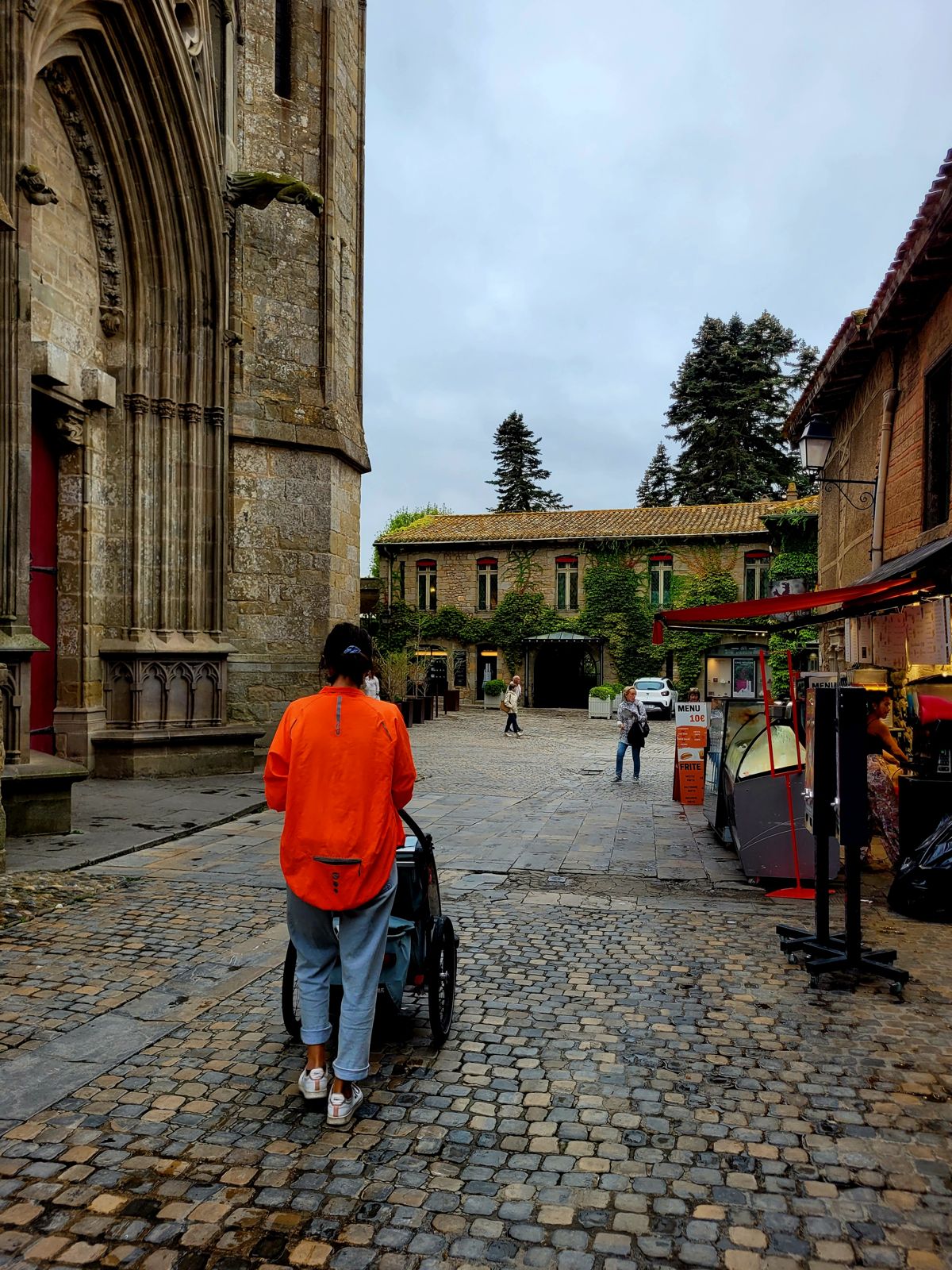
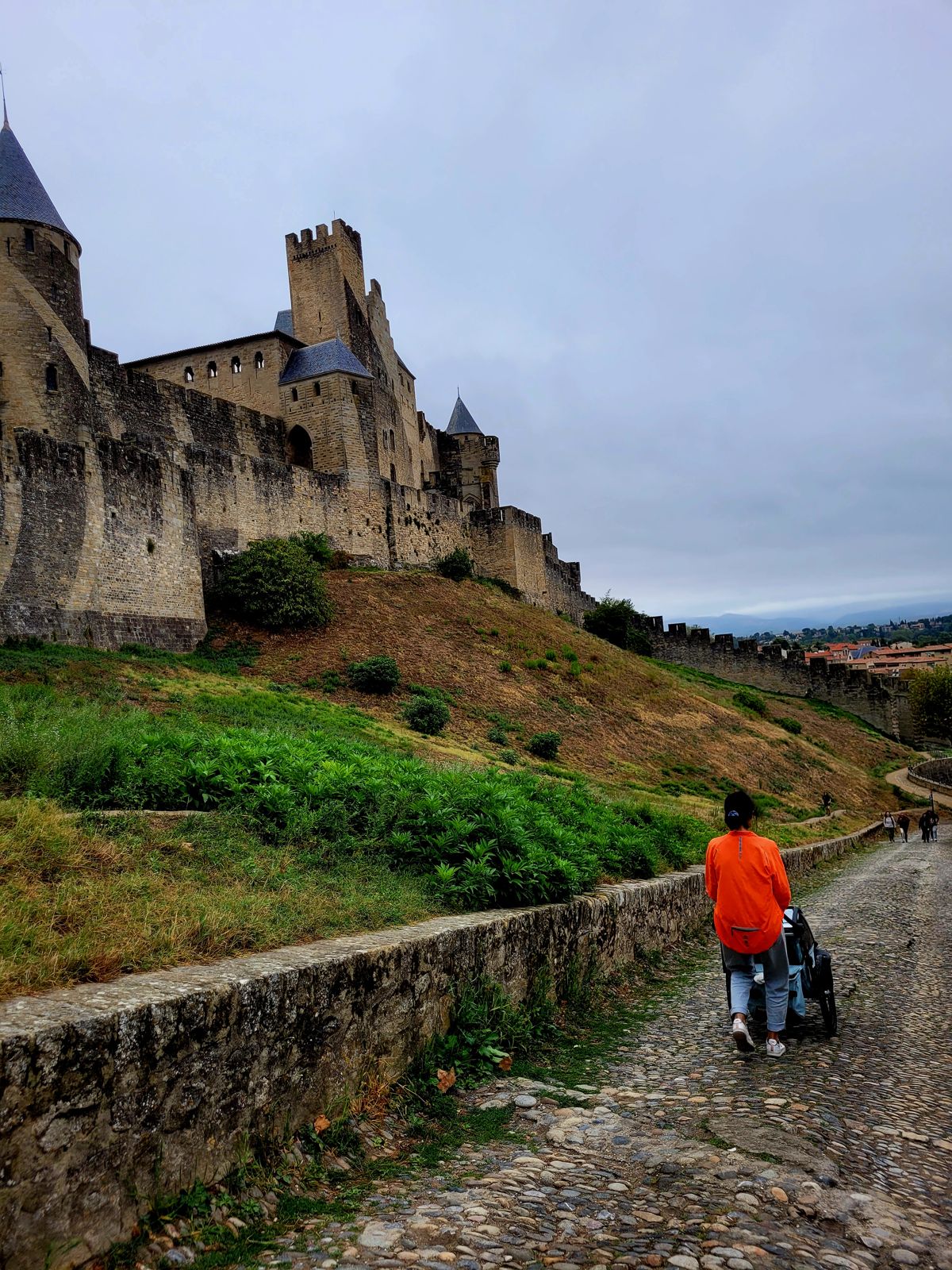
After Clémence's nap at Entre Bastide et Cité (the name of the B&B), we head off to visit the Cité in drizzle worthy of Brittany. Inhabited since prehistoric times, the Cité of Carcassonne is simply magnificent. There's no other word. The walls, the ramparts, the cobbles — absolutely everything oozes history, recent or ancient. Despite the greyness, we find it sublime. Our random wandering leads us to the Basilica of Saint-Nazaire, where dozens of coloured candles are lit. Clémence is amazed and asks whose birthday it is, which gives us a fit of giggles that we stifle so as not to disturb the peace of the church.
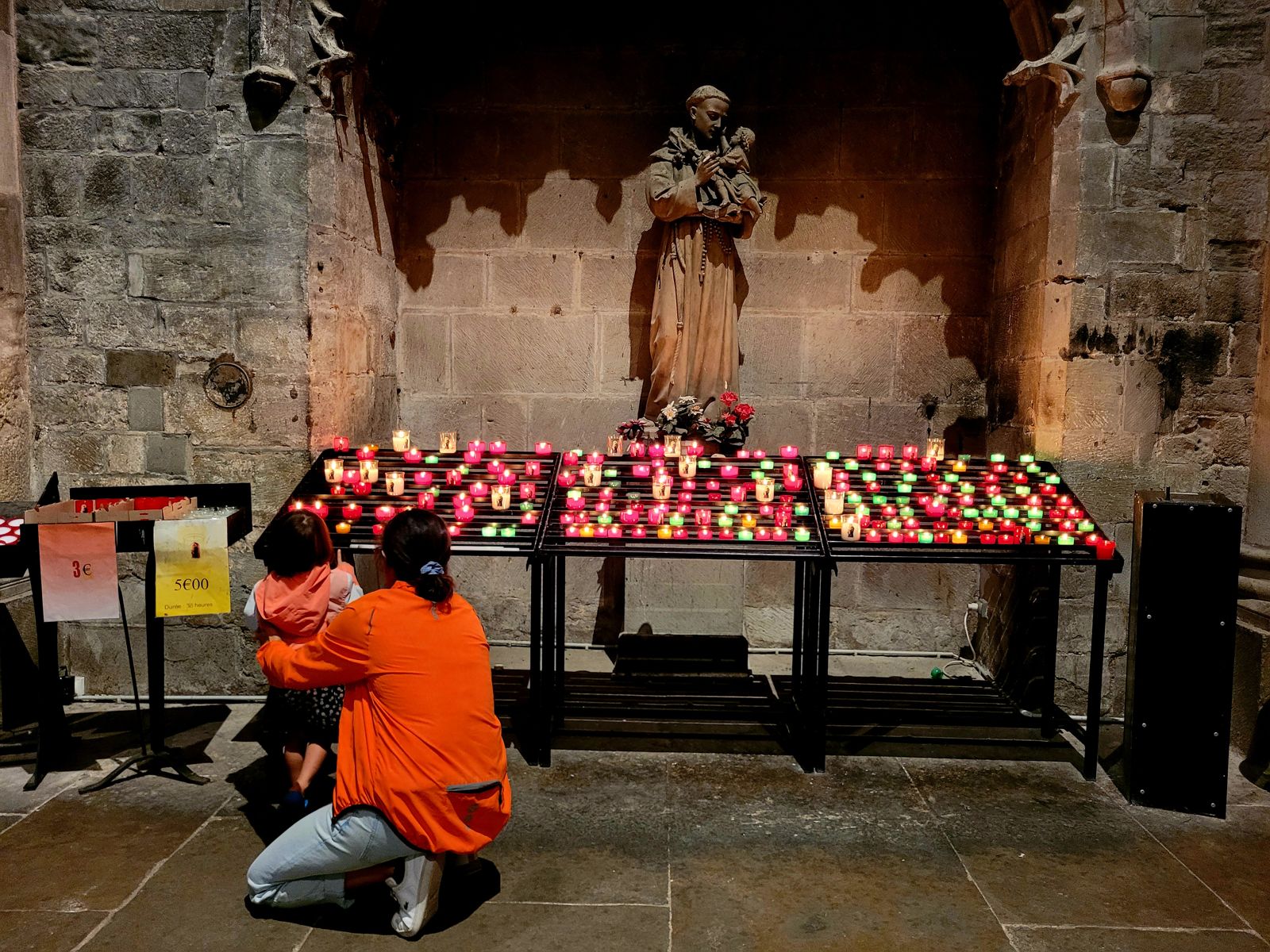
Carcassonne makes a much better impression on us than Castres, even though the two towns are the same size. Here the pavements are wide, there's plenty of public space and drivers seem less aggressive than in Castres. Despite the rain, we manage to have a good day, and just before bed we carefully plan a bike stage through the heart of the Minervois vineyards for tomorrow.
Where we slept: Entre Bastide et Cité, an excellent hotel at the gates of the Cité.
Day 2: through the Minervois vineyards
At breakfast, Karine brings up the subject of rain. Seeing rain in Carcassonne is a small miracle, as the Aude department is desperately short of water. And when it does fall, it sweeps everything away. She delves into her memories to tell us about the floods of the Aude river, which runs through her neighbourhood. Carcassonne very often wakes up with its feet in the water. A lesser evil compared with some villages upstream, where some hamlets are simply wiped off the map.
Today, fortunately, the weather is acceptable, and we leave her guesthouse to join the Canal du Midi. Once again, cyclists are catered for on the cheap. The surface is horrible, sometimes the track barely lets a bike through, and we have to go back onto the road. Departments and urban areas are quick to boast about how bike-friendly they are when they pad out their kilometres of cycle routes with dreadful routes like this.
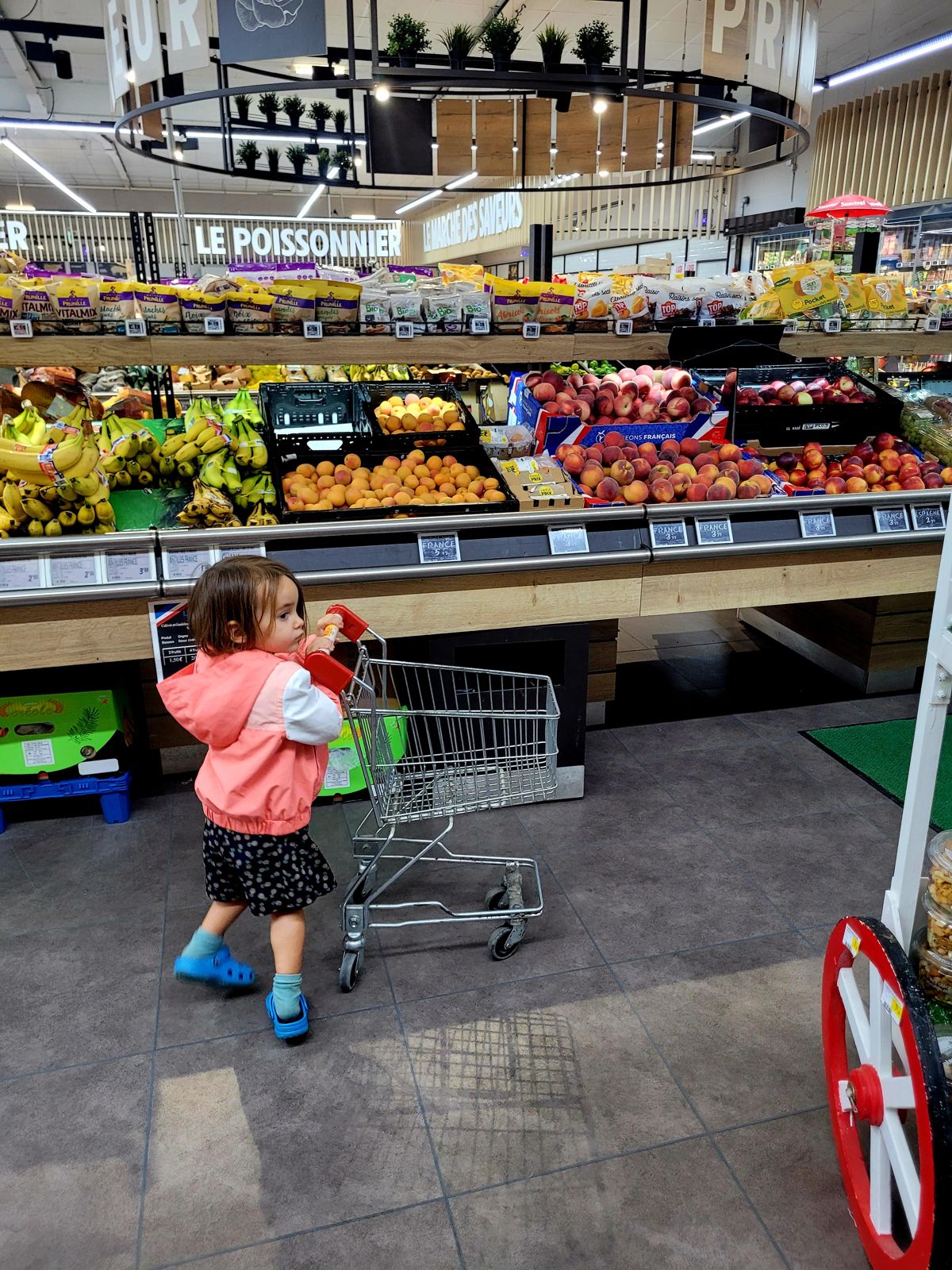
In Trèbes we stop briefly at the supermarket, then follow route number 6 of the Aude à Vélo network. It's been a while, but we're happy to find signposts again showing the nearest villages. When you're getting around by bike, it's always nice to know regularly how far you are from the next village.
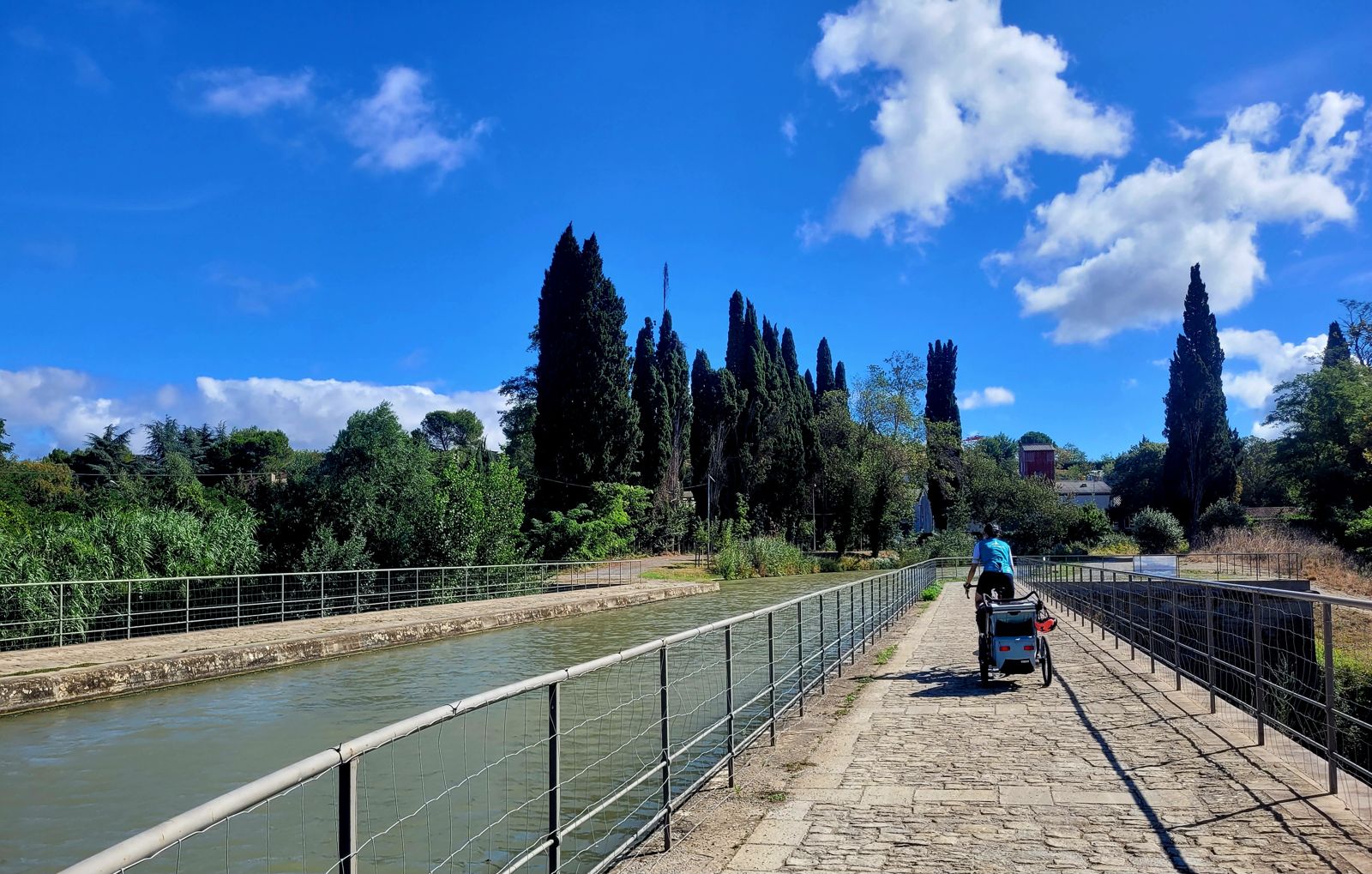
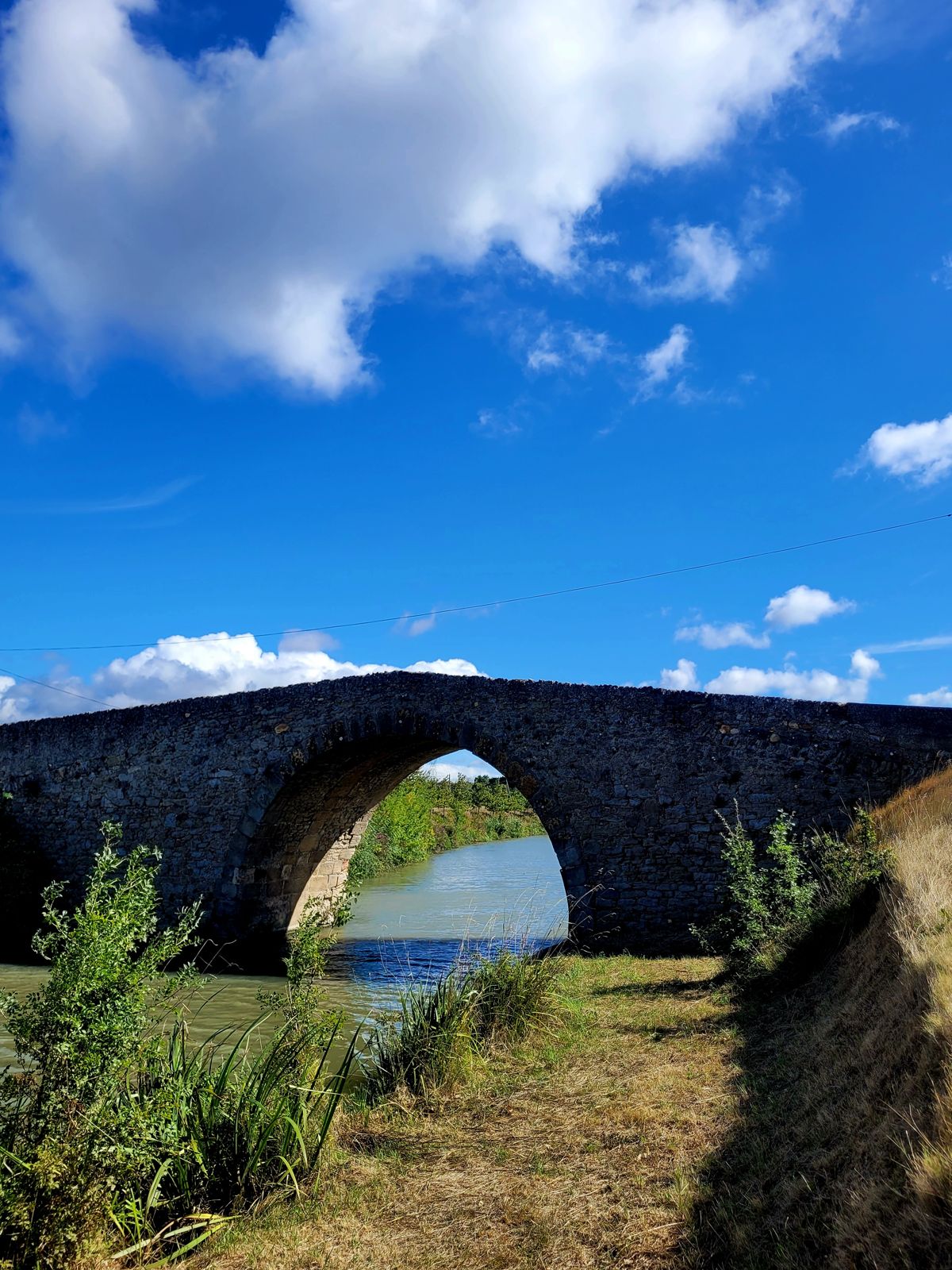
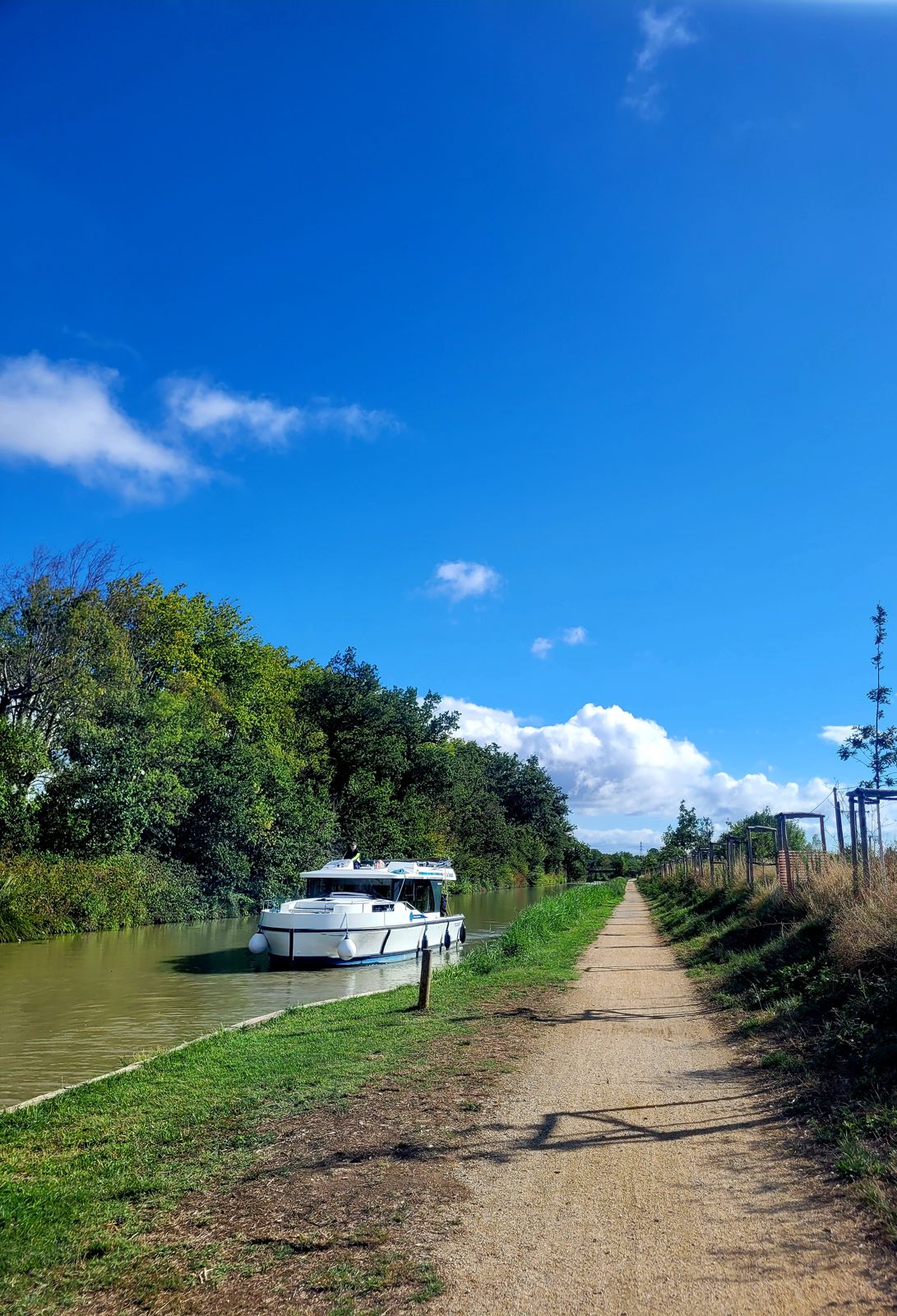
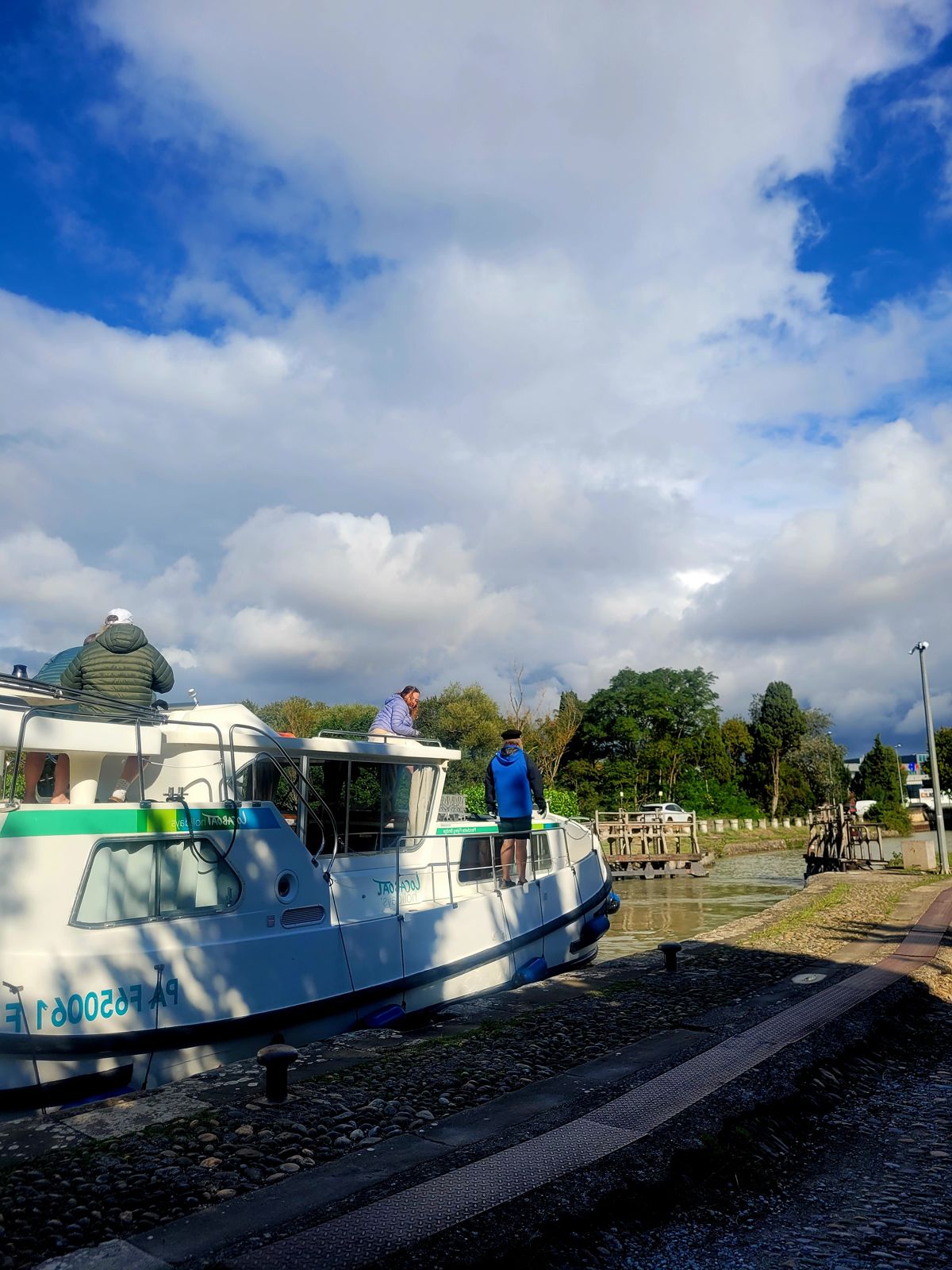
At noon we stop at a superb shady playground. These are the perfect stops for us, as they let Clémence play as much as she likes (and us too). After the picnic, we set off again towards Azille, about fifteen kilometres away. Since the little one isn't sleeping, we look for a playground and find one. This one has not one but two slides, so we have fun there for an hour or so before having a coffee in Pépieux.
All these charming, picturesque village names mean nothing to tourists following guidebooks and websites, yet they're paradise for bike tourers. Little traffic, authentic places and above all people who aren't jaded by tourists. The Minervois wine route is little known, yet it's magnificent. The roads wind through slopes and vineyards to make your head spin. In fact, we smell a strong scent of grapes in every village we pass, which means the harvest has well and truly begun.
Along the little paths followed by the cycle route, we pass several huge pumps in action, which alarm us. Here they're pumping groundwater even though we've been under drought alerts for ages. Our host for the night, a man in his sixties with sun-tanned skin, tells us of his dismay at the lack of water. His trees and plants are all slowly dying.
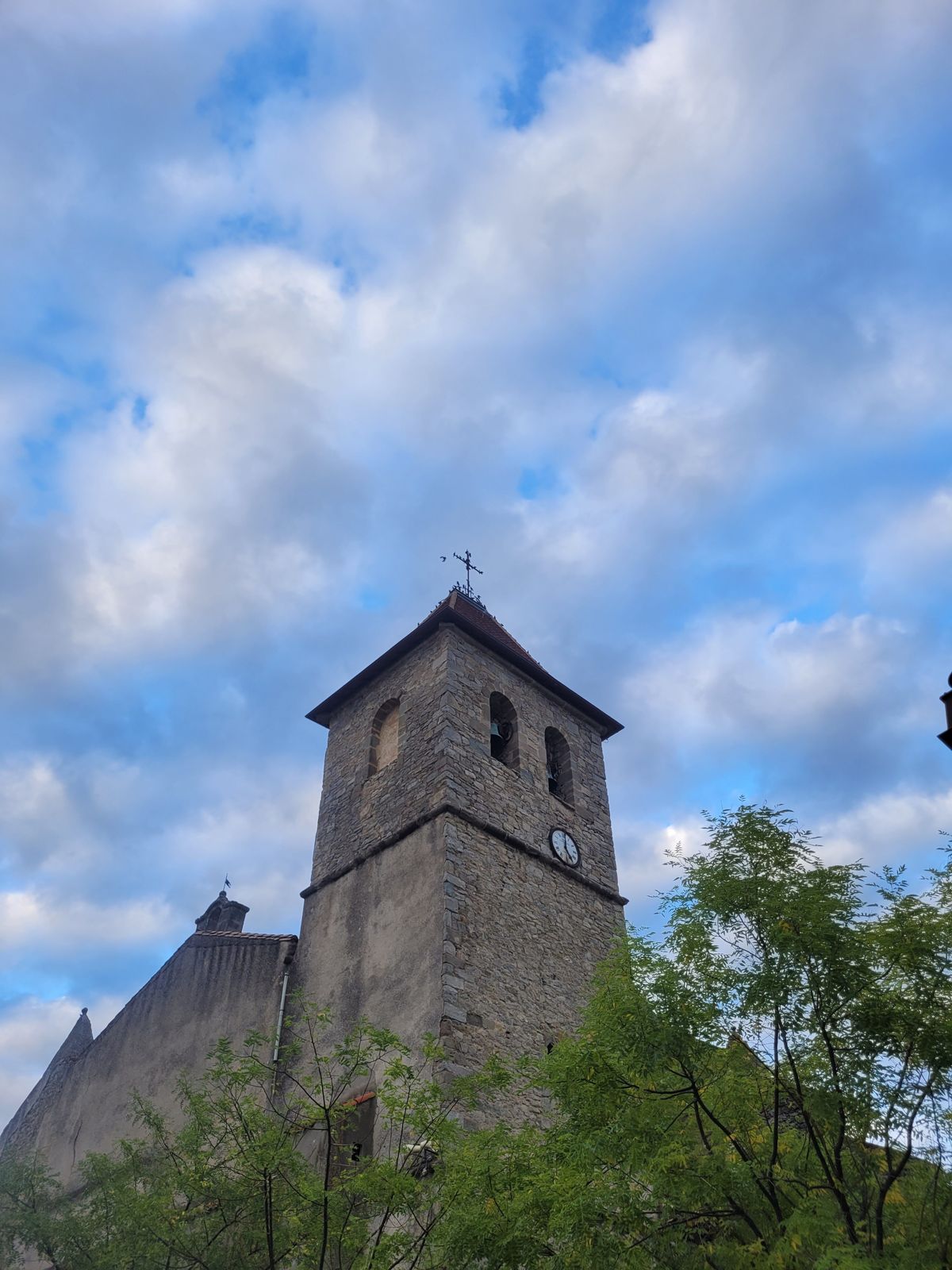
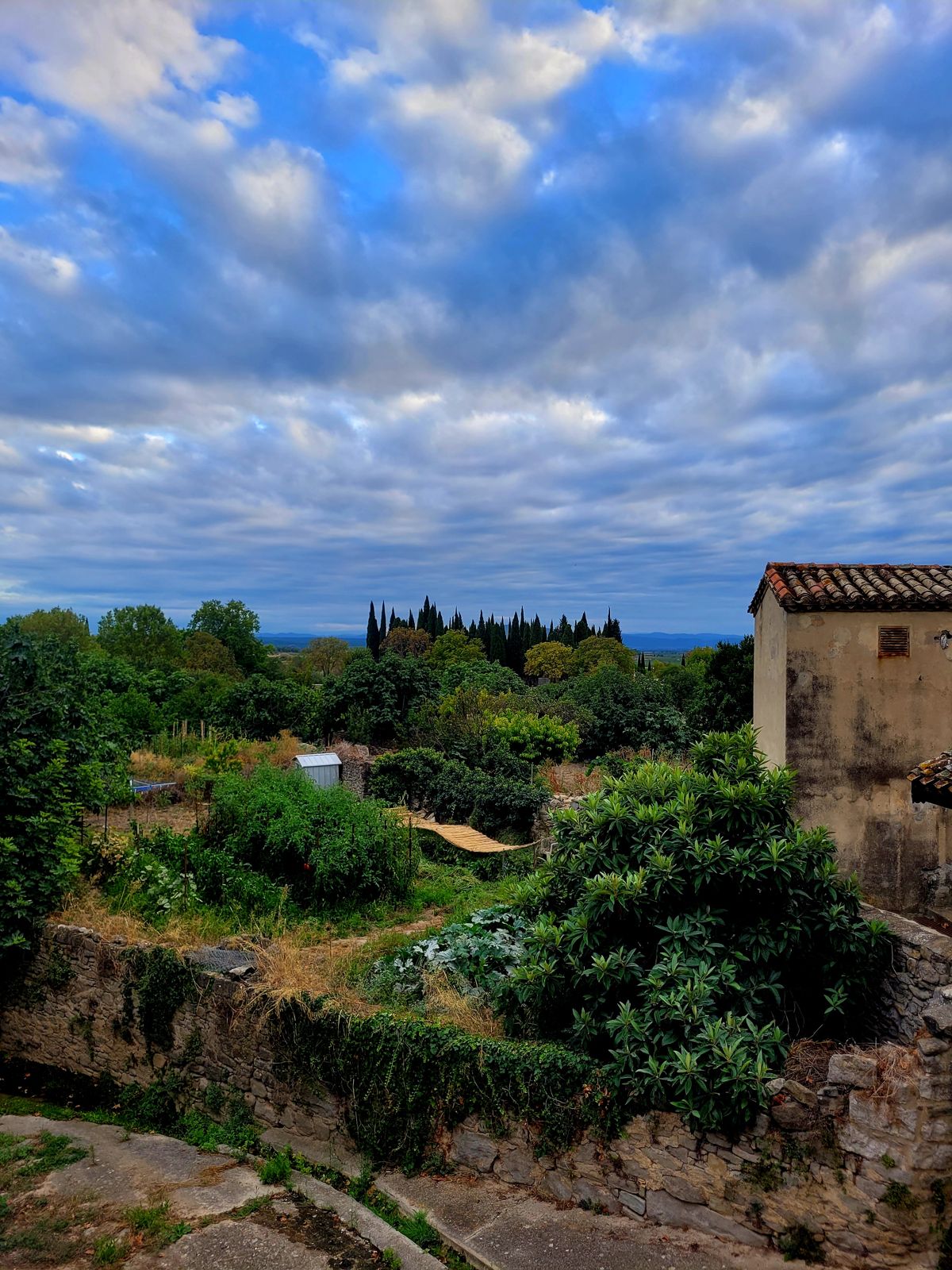
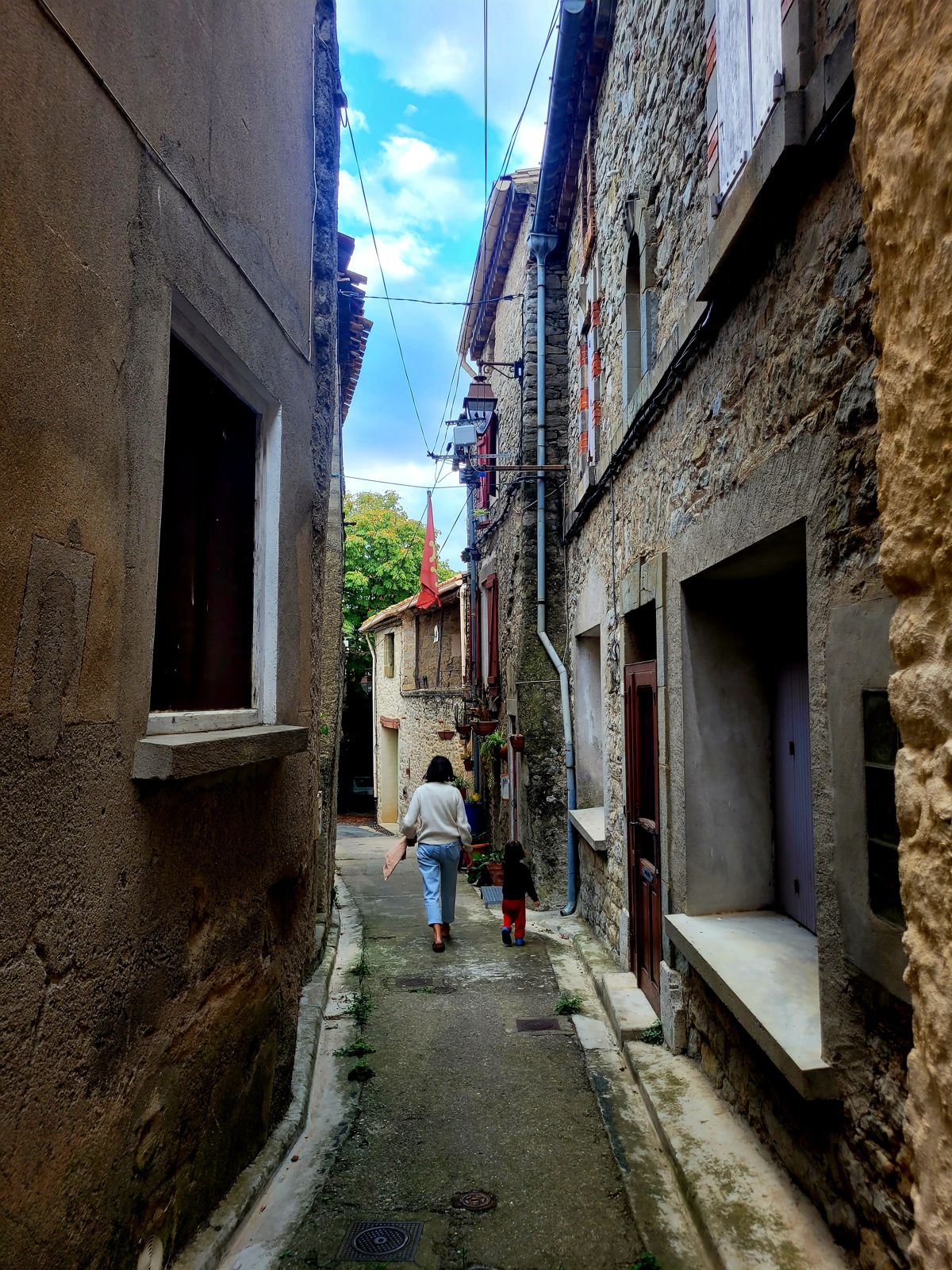
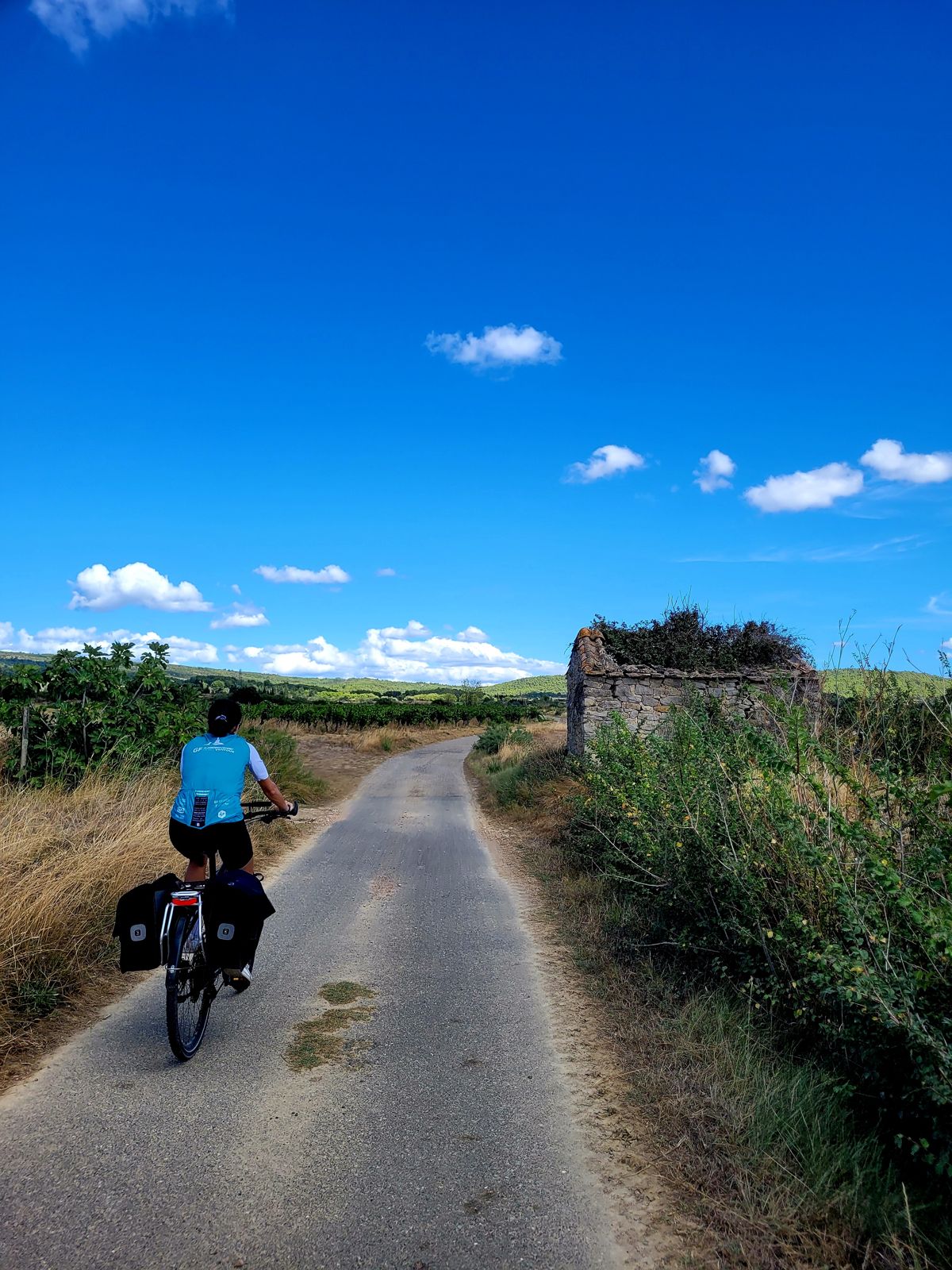
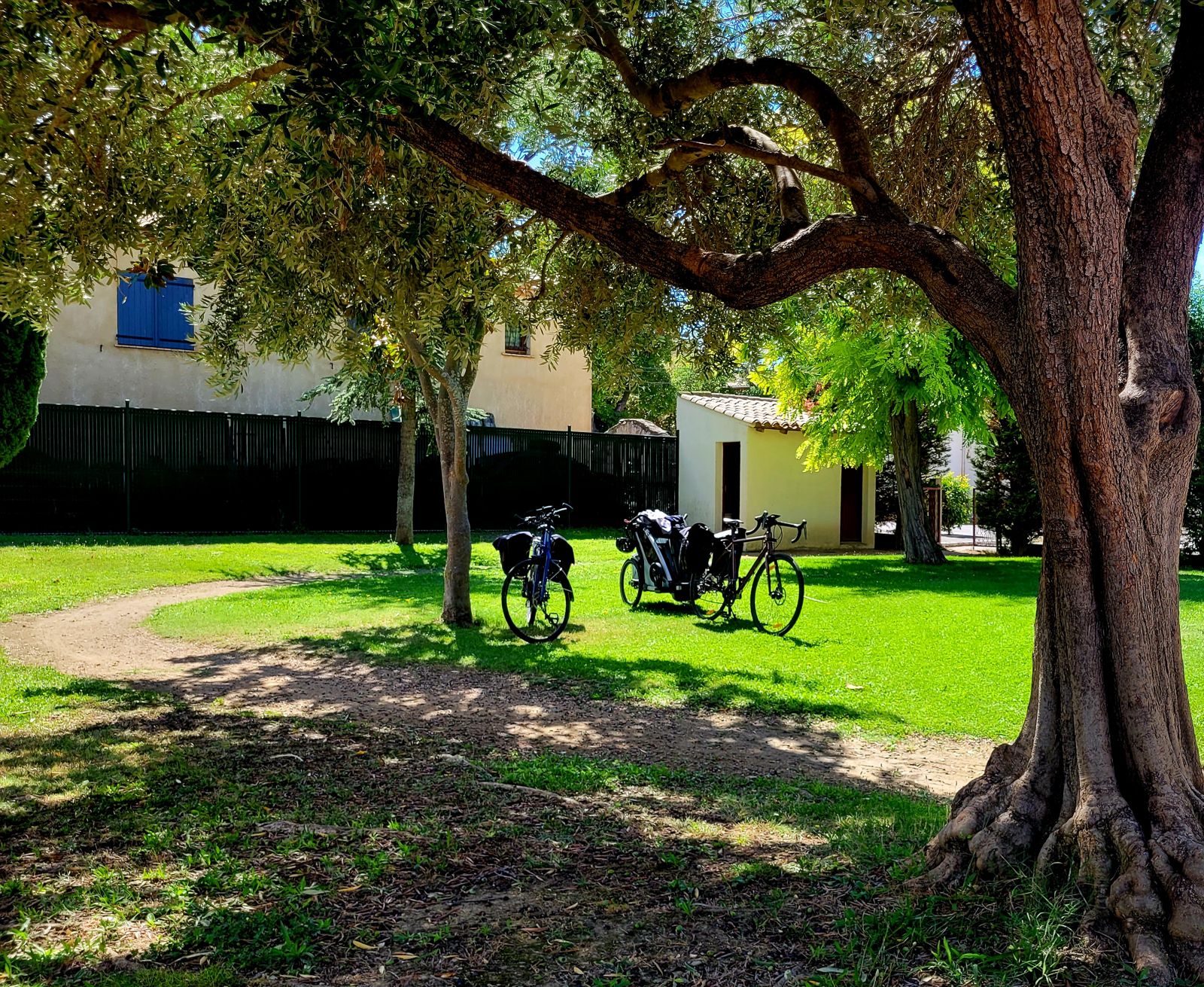
A neighbour who strikes up a conversation as we pass his garden says the same. "Dry, eh?" he calls out. He explains that the sort of moat separating his garden from the lane where we're standing held a stream until three years ago. Now it's desperately dry and half his vegetable garden is already dead, burned by the sun.
When we tell him we nonetheless had several days of rain between Bédarieux and Mazamet, he says he's sorry for us but happy for himself. Since the water flows down from the Montagne Noire, maybe his stream will see a trickle this September. But that's far from certain.
Day 3
Our friend from last night must be pleased. The sky is coal black and the clouds are ready to burst. Eating frozen croissants kindly offered by our host, we wonder about the best strategy: leave now and hope to dodge the drops, or wait for it to break and decide afterwards? Unfortunately we choose to try our luck, but barely 6 kilometres on, the rain starts. At first a light drizzle, which lets us play a bit in a little park next to a nursery school. The area is deserted; we chat with the teacher of the only remaining class. The rain is a blessing for them, even if it will never be enough to make up for all the water that's missing.
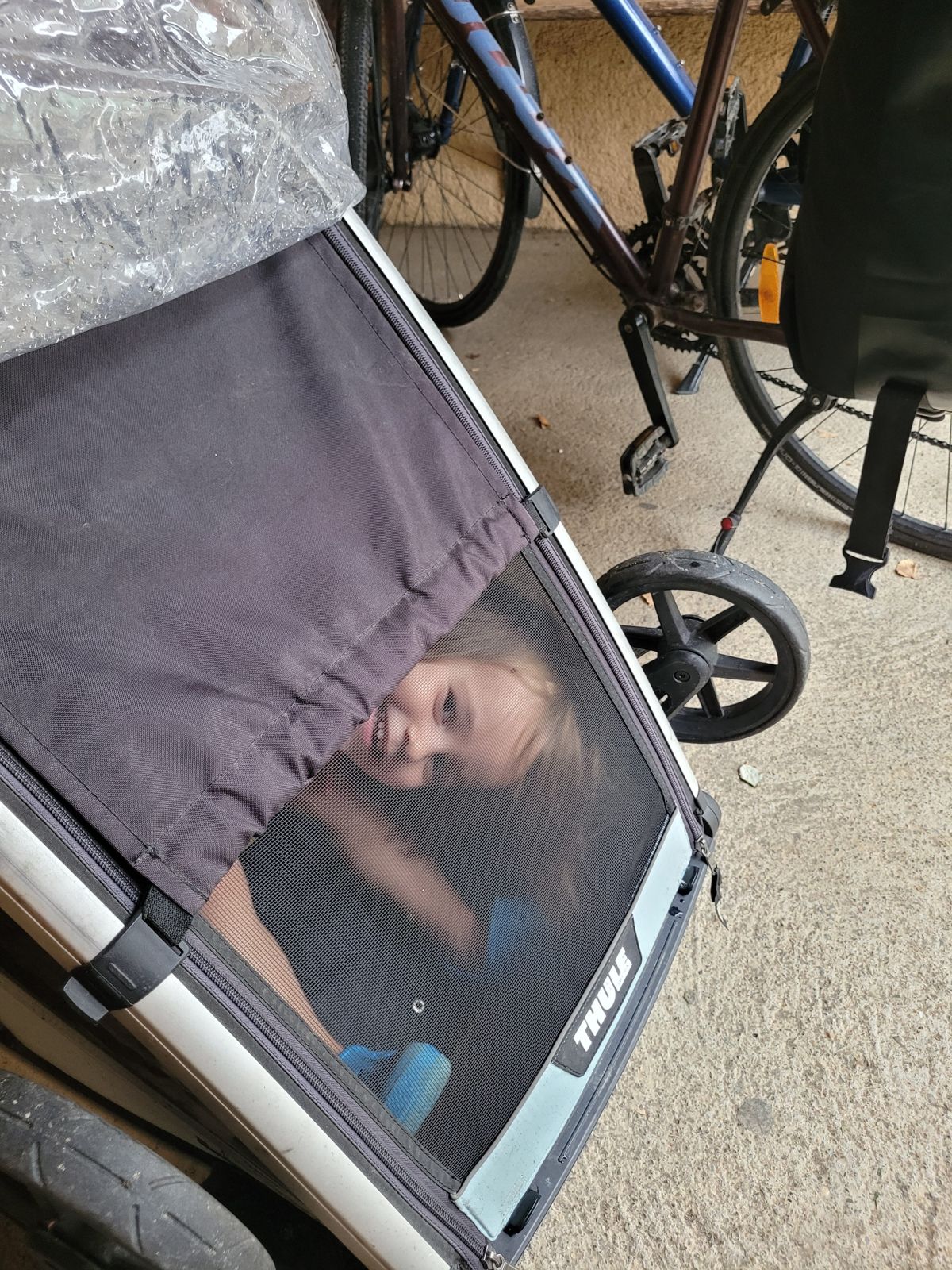
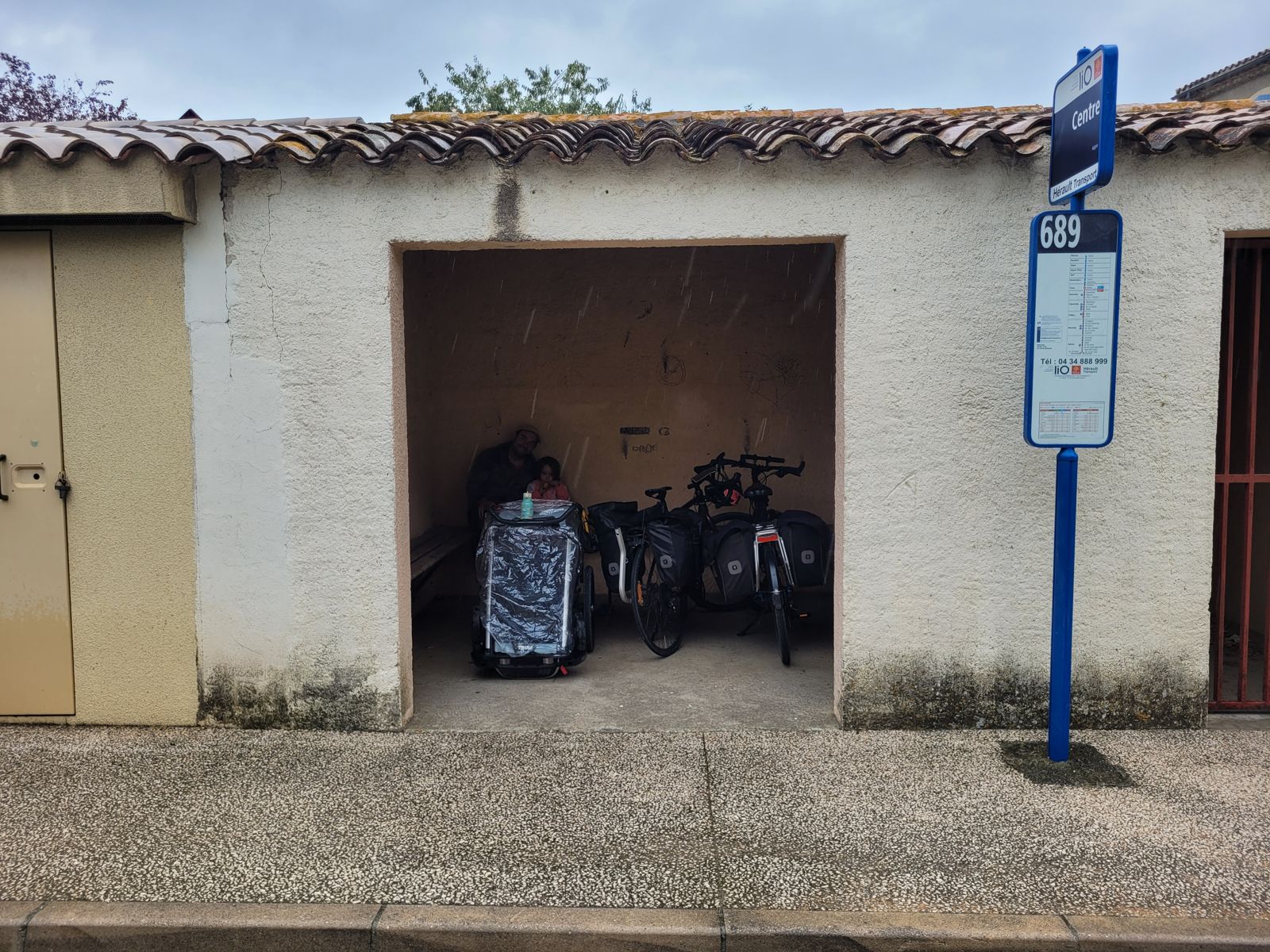
For us, though, it's sheer misery. The intensity and size of the drops increase, and we have to take refuge in a fairly sturdy bus shelter. Clémence is a model of patience, luckily for us. We have fun as best we can on the little benches, watching the cars speed past. A brief sunny spell appears and we race off to Aigues-Vives, where we eat in a very friendly restaurant.
A single dish on the menu, unlimited sides and posters of French bands make up the decor of this very nice place. Many local bands played their first gigs here, but the owner has stopped putting on music. People don't spend any more, he tells us dejectedly, and it's become impossible to cover his costs.
When we leave the restaurant it's already 1 pm, and we've only covered 8 of today's 36 kilometres. We decide to ride the rest in one go and make good speed. Our Kona Rove, an excellent bike, is showing worrying signs of fatigue. The front disc squeals and regularly rubs in its calliper. The two lowest gears won't engage any more, which makes climbs much harder.
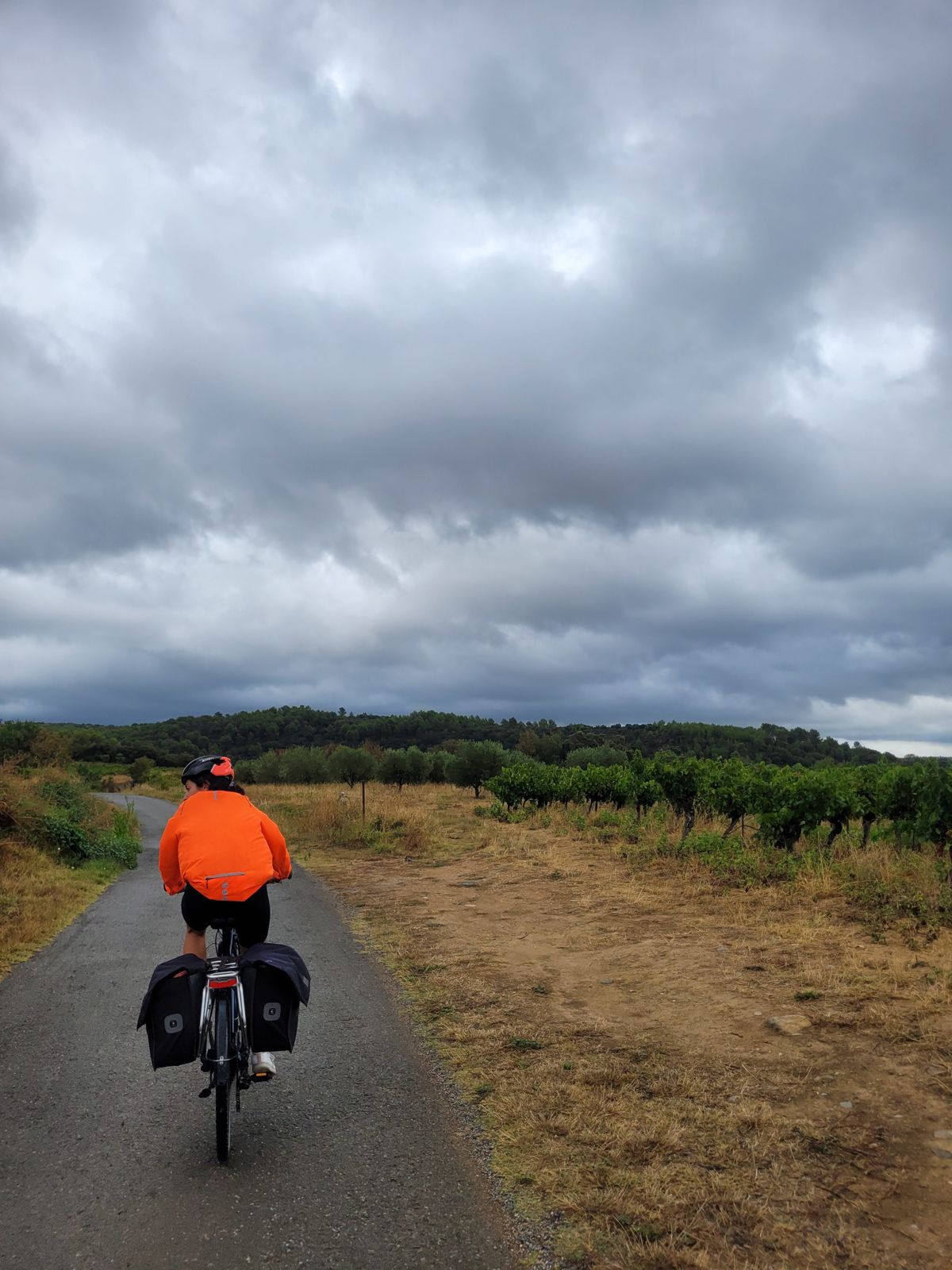
The Decathlon Touring 520, on the other hand, seems ready to go to war. It never has the slightest problem or the smallest noise of complaint. It's heavier, admittedly, but it more than makes up for its weight with reliability and comfort.
To make matters worse, we have a headwind, and the end of the trip is starting to be a real slog. On top of that, the route we're following, the prettily named Oenovélo, once again takes us along bumpy, stony tracks. Stéphane almost falls, slipping in a pile of sand. We reach our Airbnb in Cessenon-sur-Orb at 4 pm.
But the day isn't over. Stéphane gets back on the bike to Magalas station, 20 kilometres away, to take the train to Bédarieux and collect the car. The fickle weather has got the better of our motivation, and Saturday's forecast — rain, rain, rain — has finished us off. For the first time, we've experienced bike travel in difficult weather. Even though we didn't enjoy it, we tell ourselves it's part of the bike-touring experience. When you want to make the most of nature and the outdoors, you have to accept the hazards. It'll be better next time!
Voir sur AirbnbHébergement · Cessenon-sur-Orb · ★4,84 · 1 chambre · 1 lit · 1 salle de bainOn the road