Bédarieux is surely not the prettiest town in France. Make no mistake, its narrow old streets do have a certain charm, but everything feels more abandoned than picturesque. Yet this is where our new bike adventure for three begins.
After breakfast and a puzzle over what goes in the panniers and what stays in the car, we face the hardest part of bike travel: getting going. Everything has to be checked, tightened and pumped up, and it's a good two hours after breakfast before we finally hit the road.
Day 1
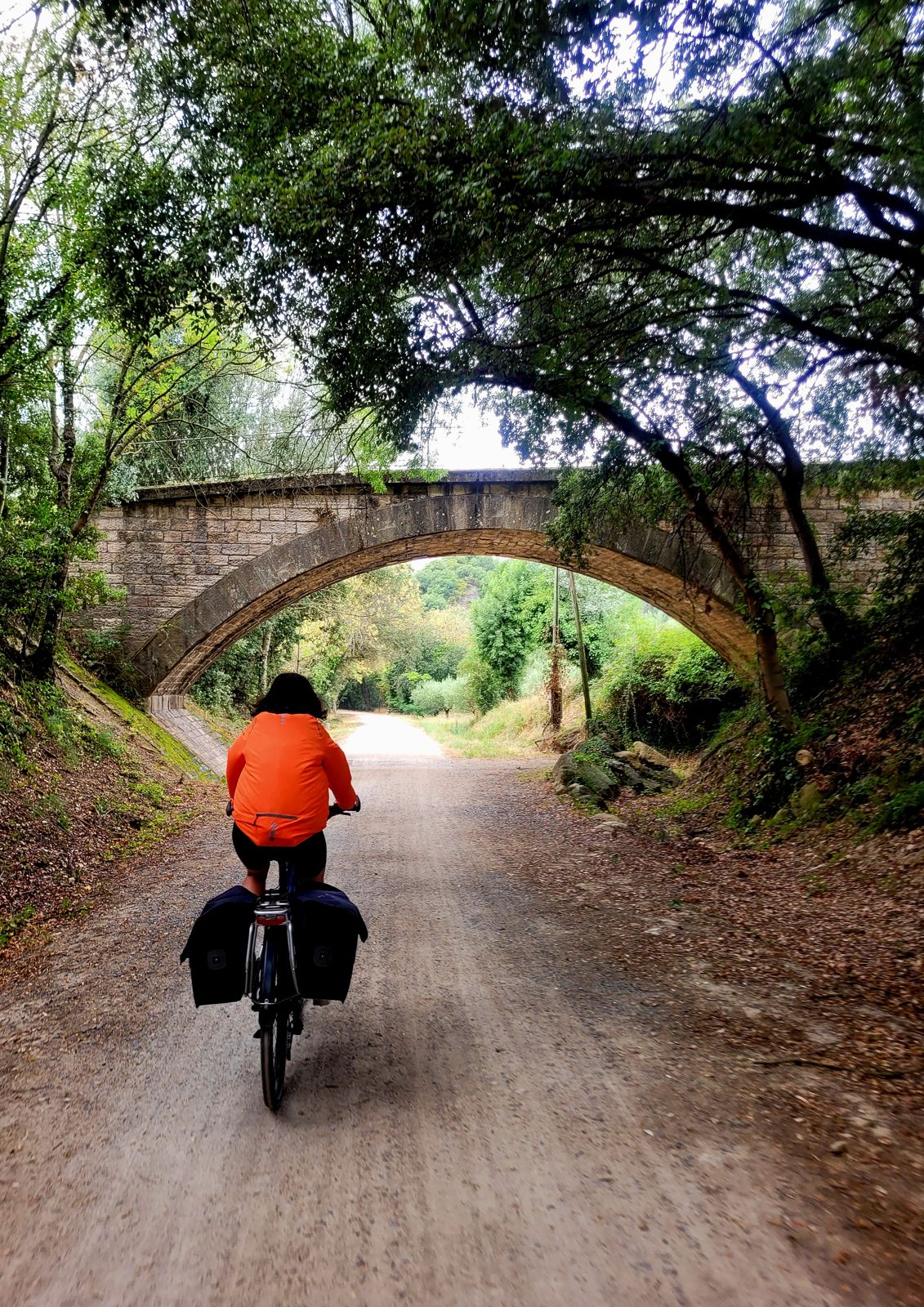
The Passa Païs from Bédarieux to Castres has the particularity of being entirely unpaved track. It rolls fairly well, but the speed isn't the same as on tarmac. In any case it's raining, and we're starting to think Météo-France has cursed us. Our last trip had already been cut short because of the weather.
We ride the first 10 kilometres in the rain until Clémence literally screams from her trailer at the sight of a park to tell us about it. Faced with her enthusiasm, we stop and readily agree that this playground does look very nice. It has the immense good taste to be in front of an open-air café, "En avant Guinguette" by name, which lets us take turns drinking a hot coffee.
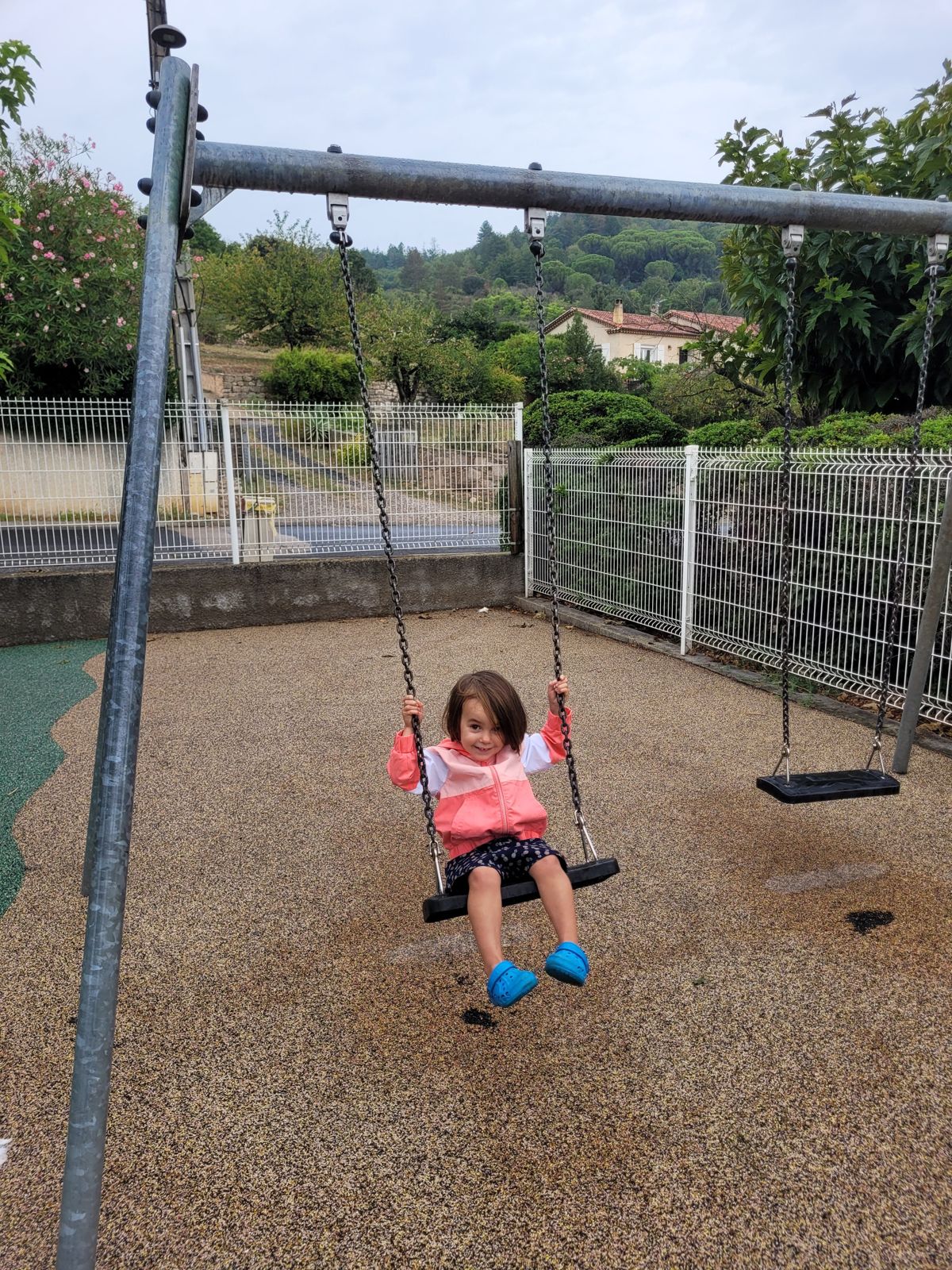
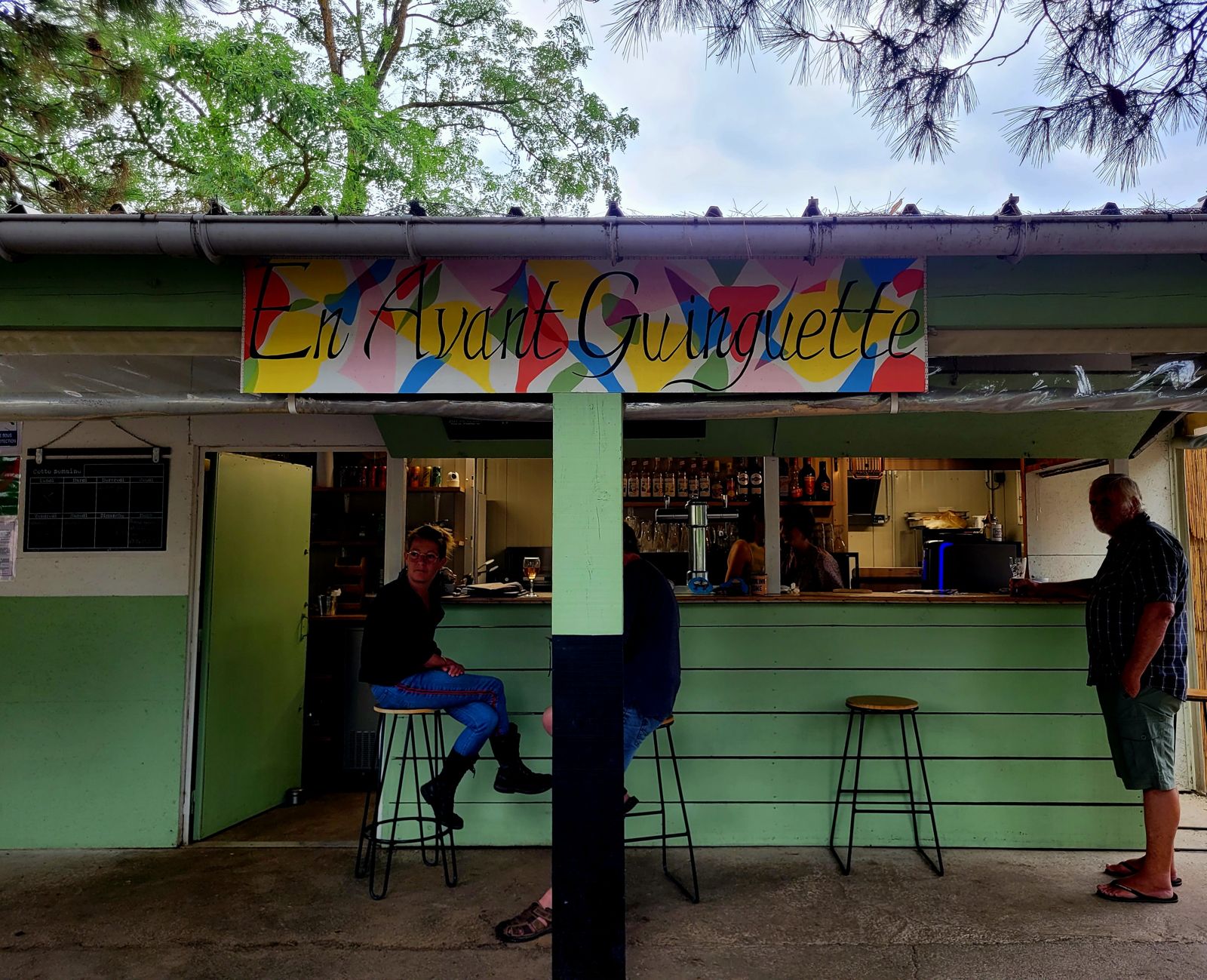
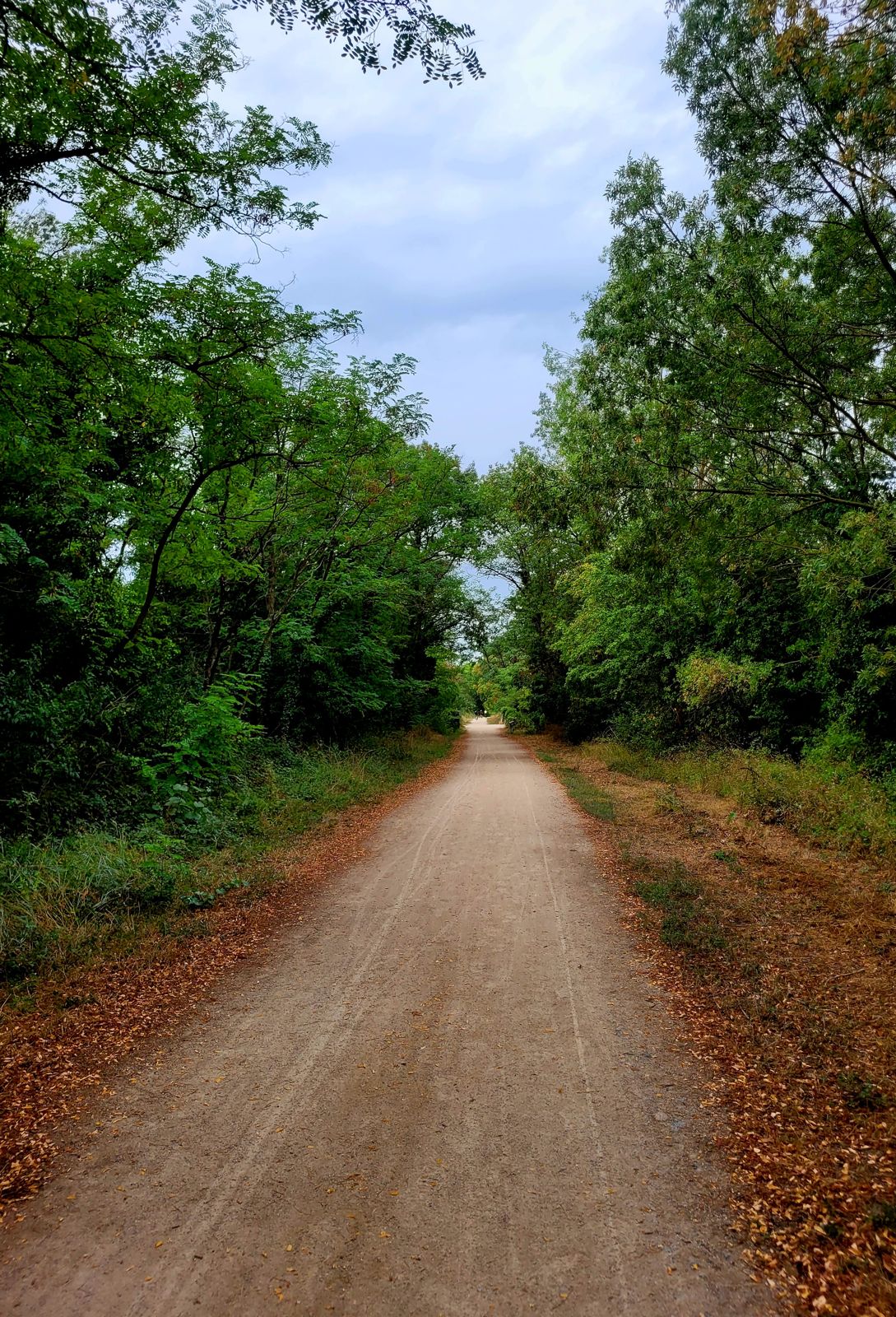
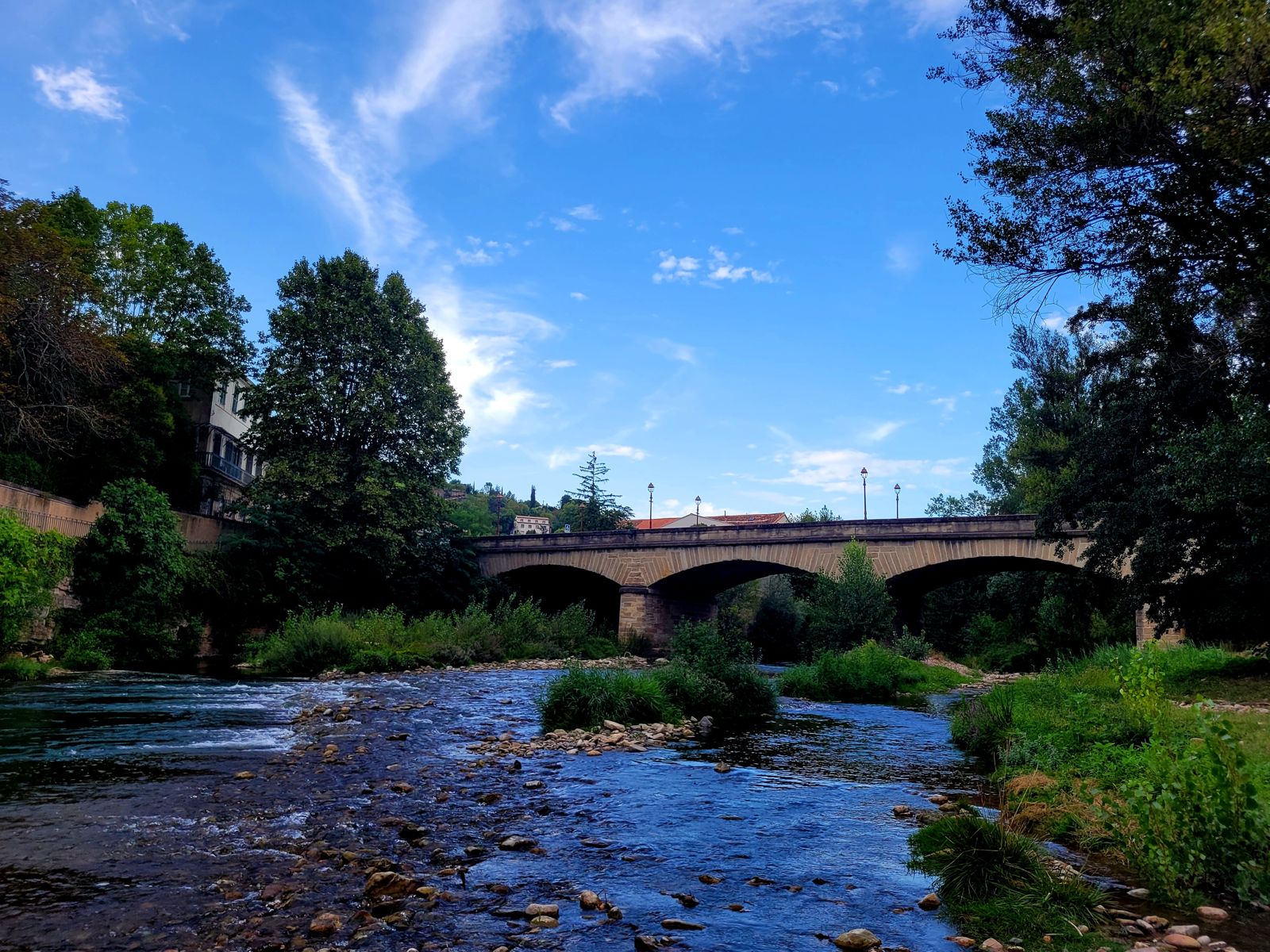
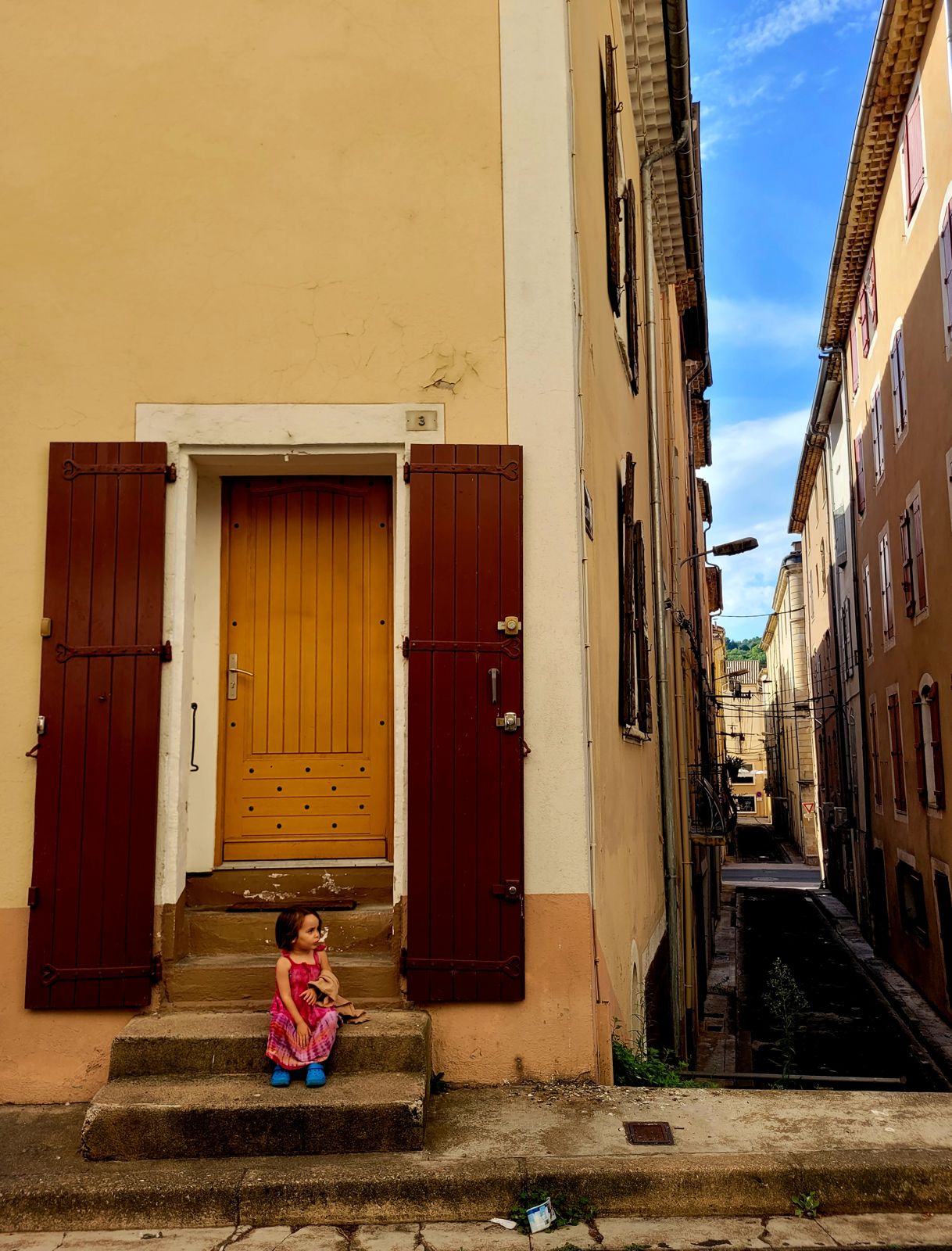
After discovering that our daughter can now swing on her own, we get back in the saddle as far as Mons, where we eat at the restaurant Lo T'chapaïre. There, a group of elderly people come up to us, amazed at the distance we're covering. The gap between people is always striking, as the bar for physical effort varies hugely from one person to another. We're under no illusions about our sporting level, though, and we know our stages of barely 40 kilometres don't amount to much.
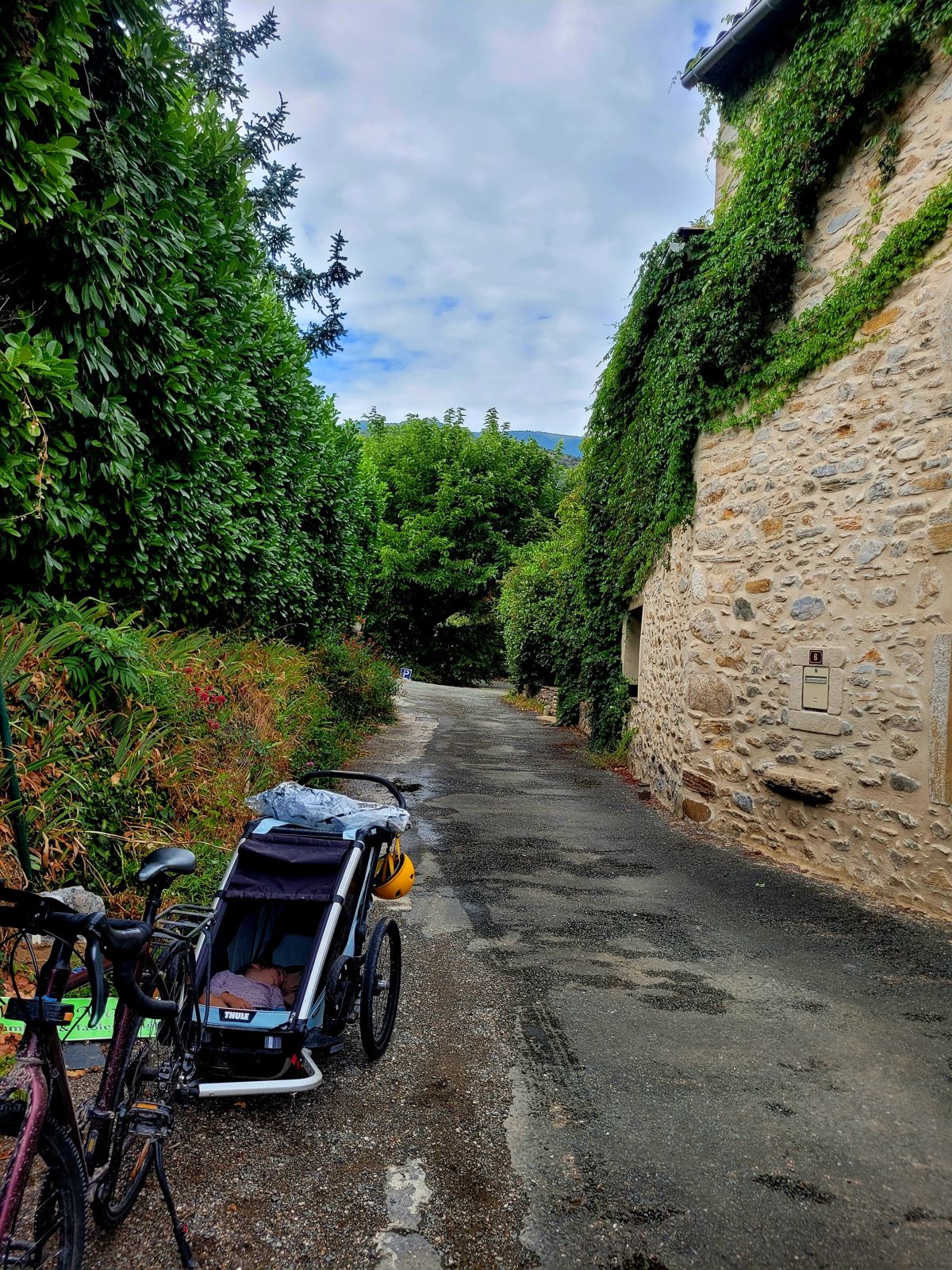
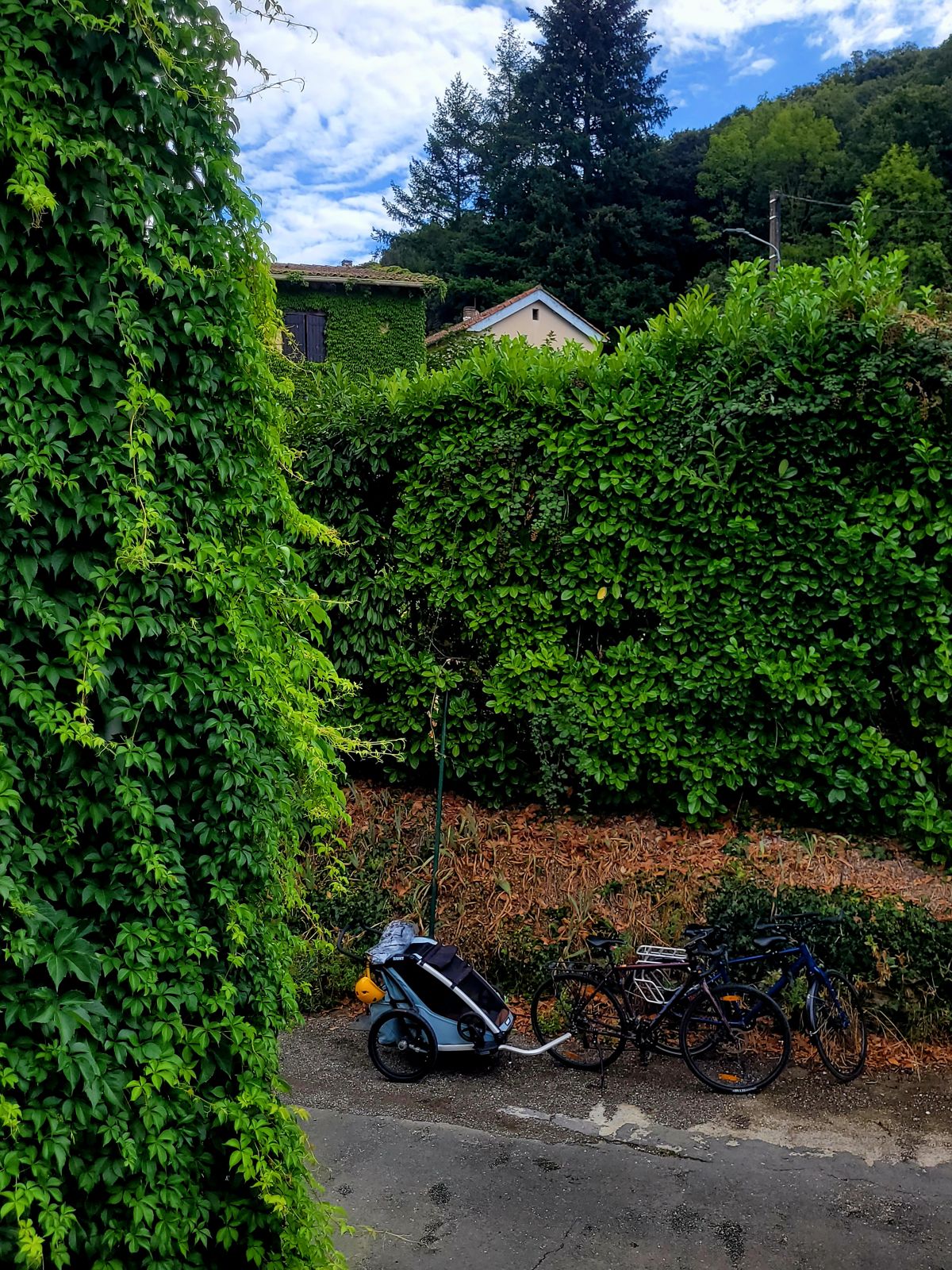
By the end of the conversation the rain has stopped, and we take the opportunity to set off quickly and dodge the drops. Clémence falls asleep in her trailer and we press on towards Prémian, where we're staying at the Moulin d'Arcas. She's still asleep when we arrive, so we chat with the owners, a couple from Béziers who changed their way of life. They're truly adorable, and after the usual early-evening routine of park/shower/pyjamas, we have dinner with them.
They have lots of stories to tell, and Clémence is in excellent form, chatting non-stop and making us laugh with her vocabulary, so rich for a two-year-old. At 10 pm we do call an end to playtime, and on the way up to the room we realise there are stars everywhere in the sky. We've wanted to show her for so long that we're delighted, and we lie in the grass for a few minutes to savour this fabulous show.
Day 2
Behind its picturesque little name, the Passa Païs hides a reality all too typical of the south: neglect of cycling infrastructure. Since its start in Bédarieux, it has made a particularly bad impression on us. We get the feeling that the planners and consultants really pondered the question: how can we annoy cyclists as much as possible? The route seems designed to be as unpleasant as possible. To begin with, the packed-earth surface leaves a lot to be desired. Add dozens of barriers you have to stop at, sometimes getting off the bike to get the trailer through. Add unbevelled kerbs to cross every kilometre, and you have the recipe for disaster.
Sometimes the bumpy track runs alongside a superb, freshly resurfaced road, and sometimes we're sent to share a pavement with pedestrians. Once again, the difference in treatment between cyclists and drivers is glaring. And yet our day had started well.
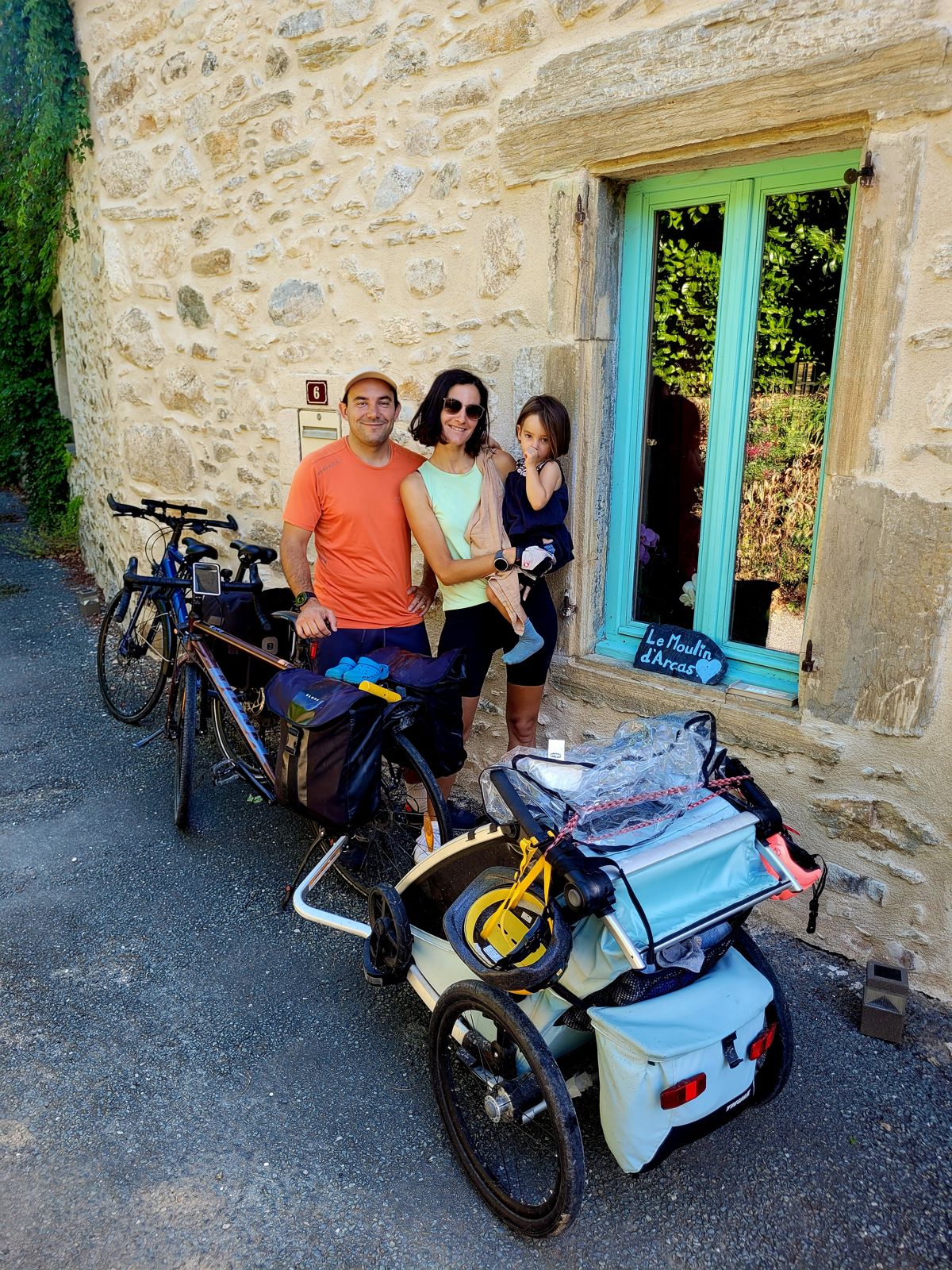
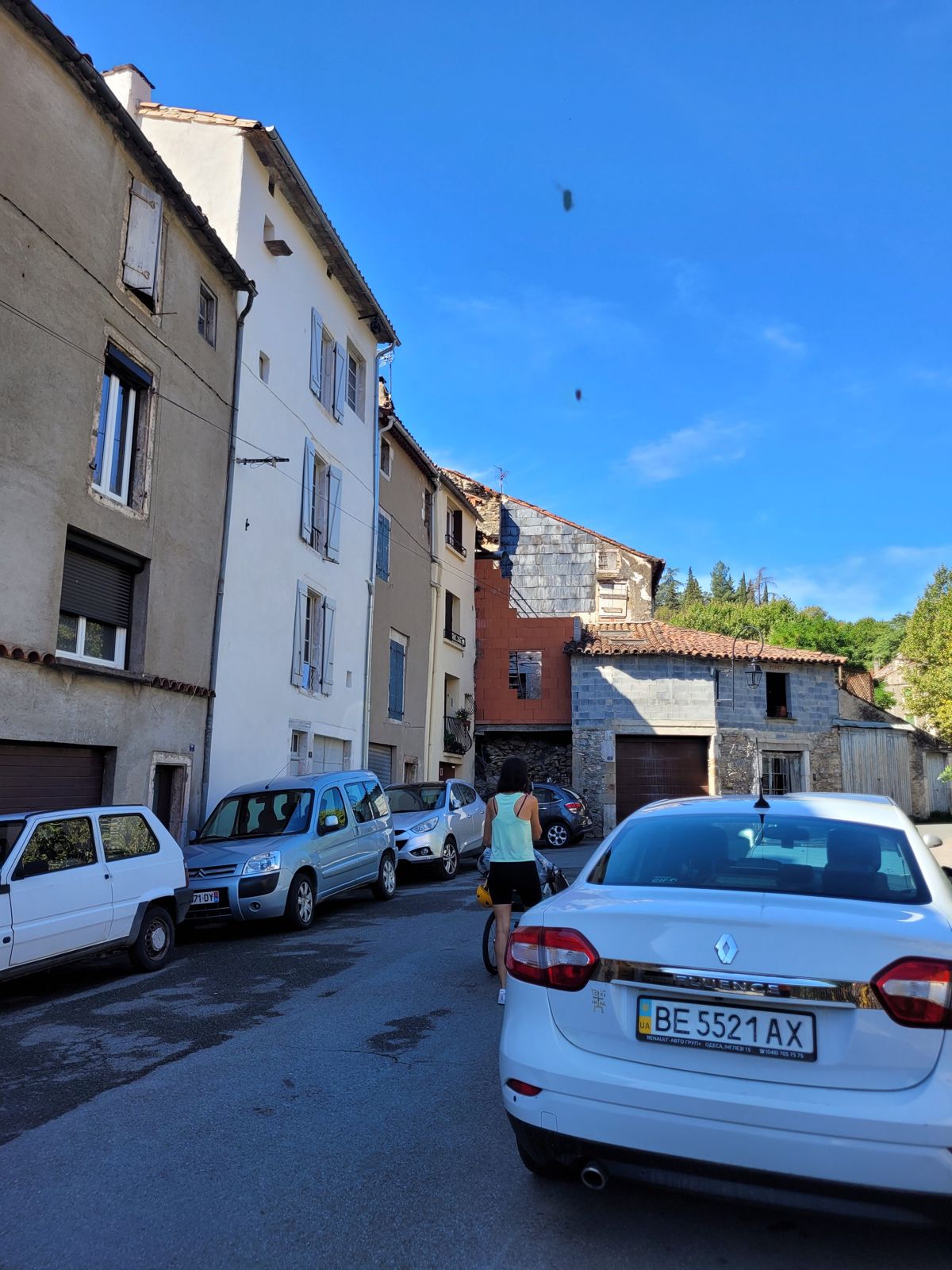
Luc and Nanou from our guesthouse served us an excellent breakfast and we set off well fed. It's sunny and warm and the track winds through the forest. But at our first stop, in Saint-Pons-de-Thomières, we're already disillusioned. The town is an ocean of cars, a giant car park with a few original buildings dotted around for decoration, and on top of that it's constantly crossed by articulated lorries. The noise is permanent, and even though we give the village a chance by exploring the little streets, we still prefer to flee as fast as possible.
The problem: our road climbs to rejoin the greenway, and the lorries aren't exactly keen to be patient. After several overtakes that are borderline legal, a car skims past us at high speed. People often talk about the "child king" who must never be given in to, but France is full of adult kings, unable to manage their frustration and be patient to avoid endangering a couple with a baby. People are ready to attempt the most dangerous overtakes in the world to reach a red light 20 metres further on.
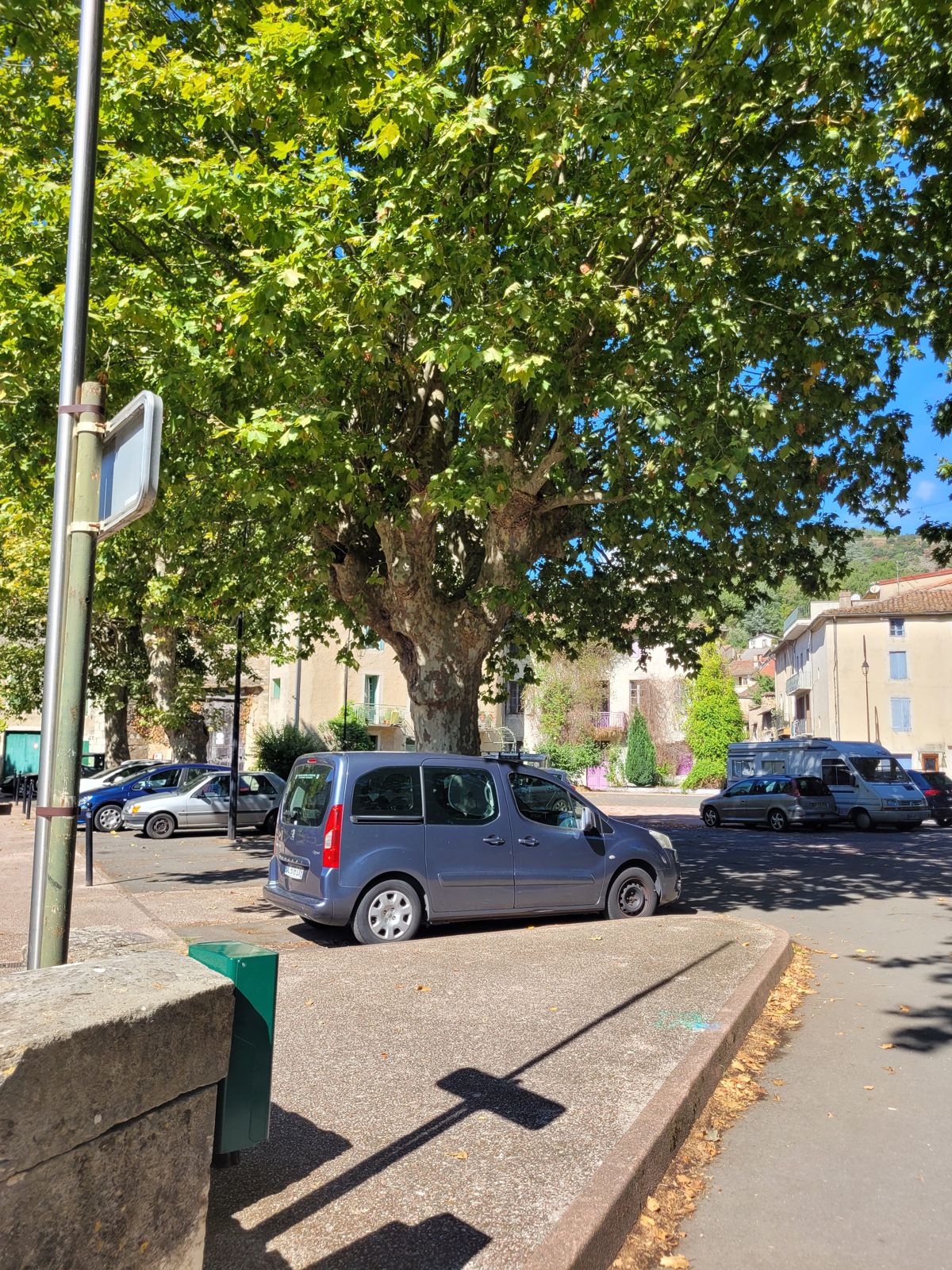
We're angry when we reach Courniou, where the greenway runs past a bar and a children's playground. It's the perfect stop for lunch, and our stress melts away with slides and rope climbing. After a good hour there, we promise Clémence we'll stop at the next playground we pass, a sneaky but effective way of getting her back into the trailer every time without complaint.
Good call: 15 kilometres on, there's a new play area with other facilities, toilets and water to fill our bottles. We play there for almost an hour before getting back on the road. We're starting to tire of this damaged route through the forest. There's no landscape, no viewpoint, and it's all monotonous. We chat while Clémence sleeps and finally reach Mazamet at snack time.
We take possession of our Airbnb, run by a nursery manager. The place is full of toys and we have a terrible time getting Clémence to leave for the Himalayan footbridge. We park our bikes in the car park and opt for the shortest but steepest ascent, averaging 19%. To our great surprise, Clémence climbs a good part of it before giving up and finishing on Mummy's and Daddy's shoulders in turn.
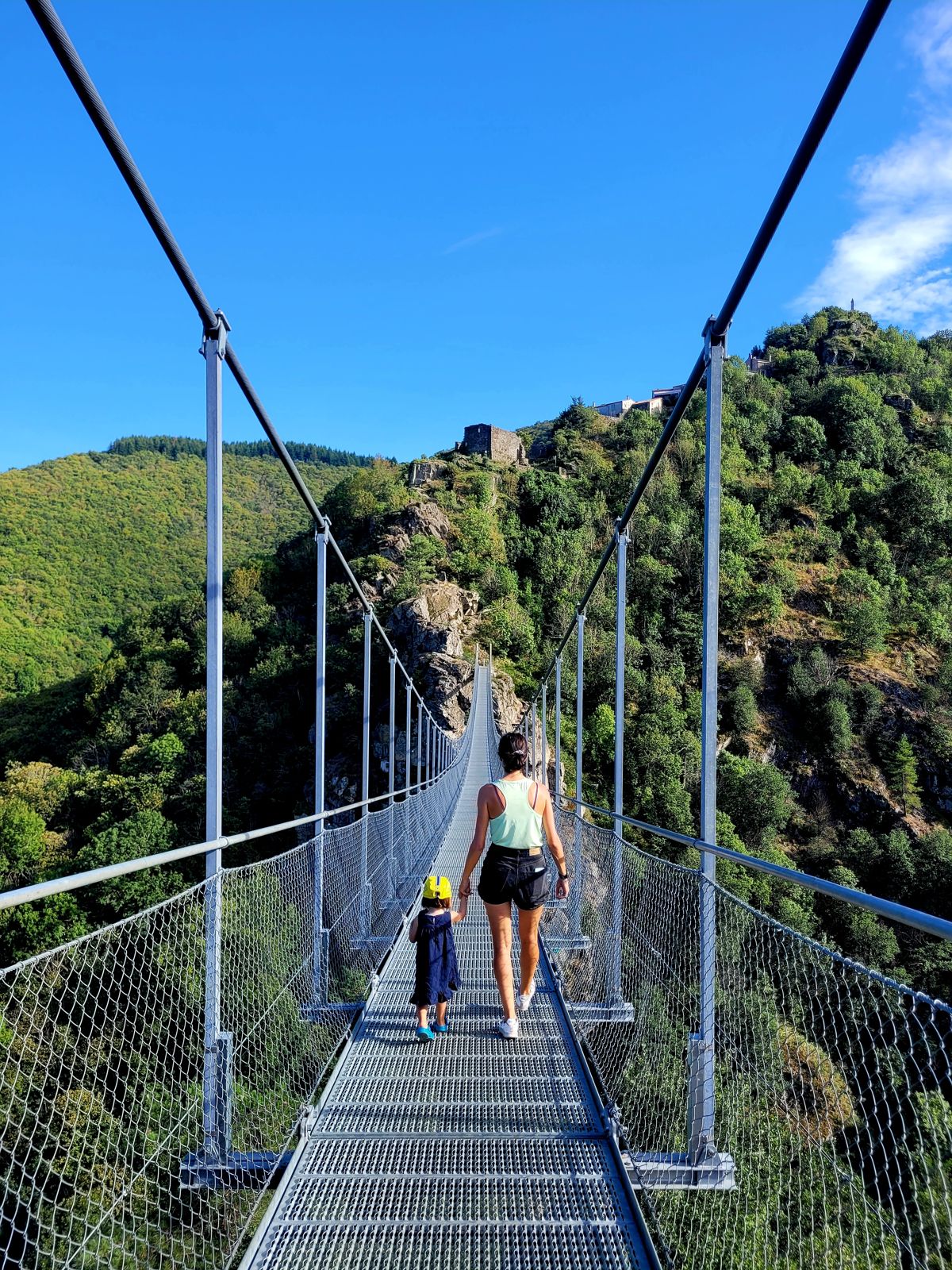
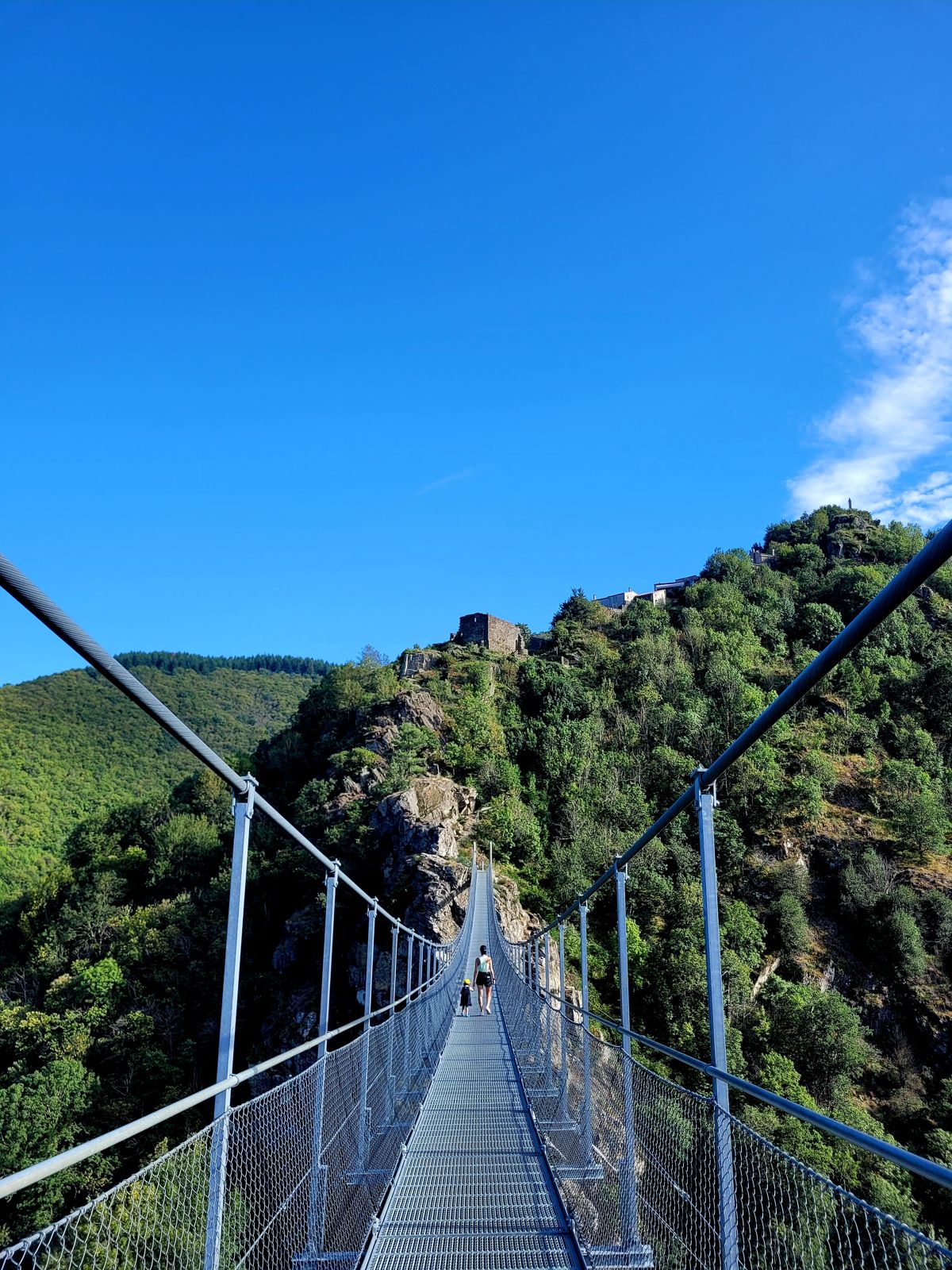
The footbridge is a rope bridge, or suspension bridge, opened in 2018. So it's a brand-new monument we're crossing. Clémence isn't scared at all and does the round trip without the slightest hesitation. On the way back into town we find a big playground, but the crowd in Mazamet surprises us a little. We come across lots of aggressive, provocative people, and although it never frightens us, it doesn't make us want to linger either. After some shopping, we go back to the flat for some well-earned rest.
Day 3
This morning we put off leaving half an hour at a time. The rain won't stop and sometimes even gets heavier. The Castres–Toulouse train we were going to take to avoid the bad weather has been cancelled, like all those yesterday. In the famous debate over the motorway, lots of people told us they'd much rather have more trains. And it's true: why build a motorway costing billions of euros when you could simply run a regular service on the railway? At the moment there are only four or five a day.
Anyway, after delaying our departure, we take advantage of a lull to get on our bikes. We also wanted to avoid the Mazamet–Castres section, as it has a very bad reputation in the bike-touring world. It's fairly well signposted, but once again the roads are in poor condition. We find ourselves on 70 km/h roads, then on cute little tracks. The rain grows stronger and we curse the planners under our breath.
The gravel paths reserved for bikes throw speed bumps at us every 300 metres. With the rain, puddles form at their base and make them hard to see. We finally reach the outskirts of Castres in pouring, relentless rain. We're soaked to the bone, and to our dismay, the signs suddenly stop pointing to the town. They point in every direction except the centre of Castres.
We finish our ride by GPS in a stream of traffic worthy of Paris. Castres seems stuck in the 1970s. We find ourselves on roads with three lanes going the same way, people drive at breakneck speed and seem to care little for pedestrians. At 12:30 we finally reach the B&B "L'Autan d'Isabelle", where we're delighted to learn we can already have the room. We go up to change and take a hot shower, all three of us, to put this horrible morning behind us.
Going back out into Castres to eat, the impression of a town handed over to cars is overwhelming. Not a single space isn't taken up by a car. The banks of the Agout, the river running through it, could be so lovely, but they're used as car parks. Little squares that could be very pretty are abandoned to the automobile.
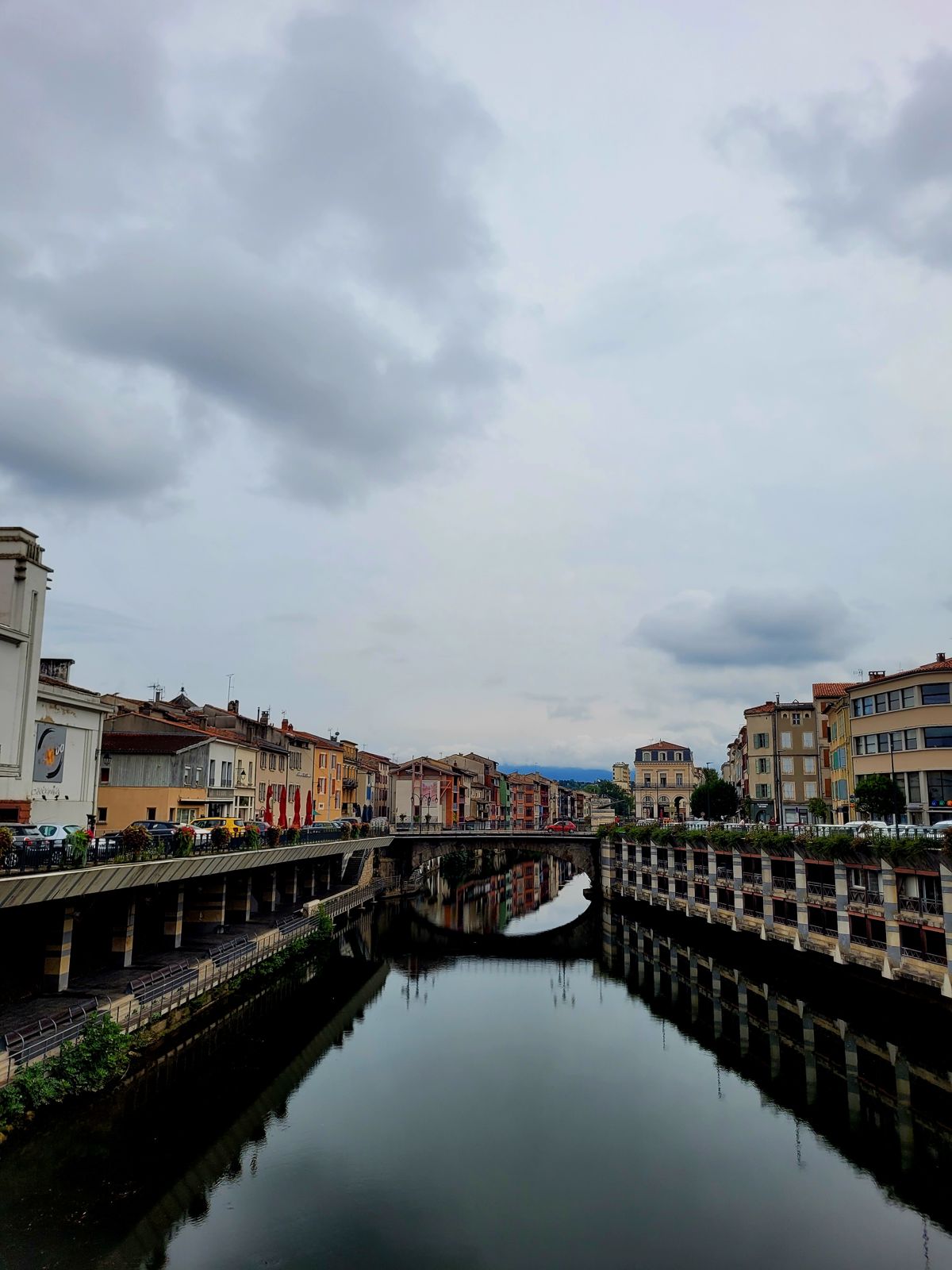
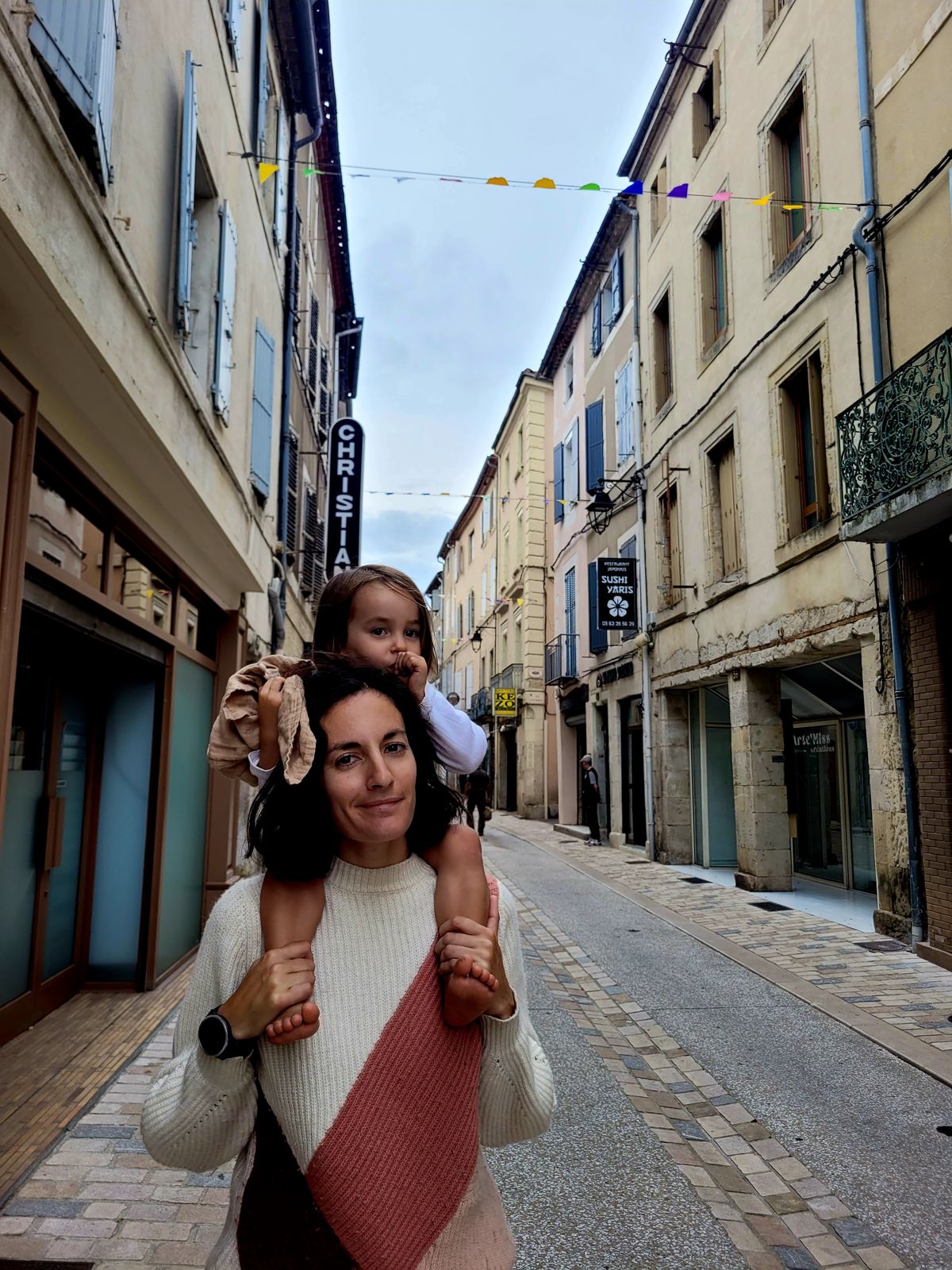
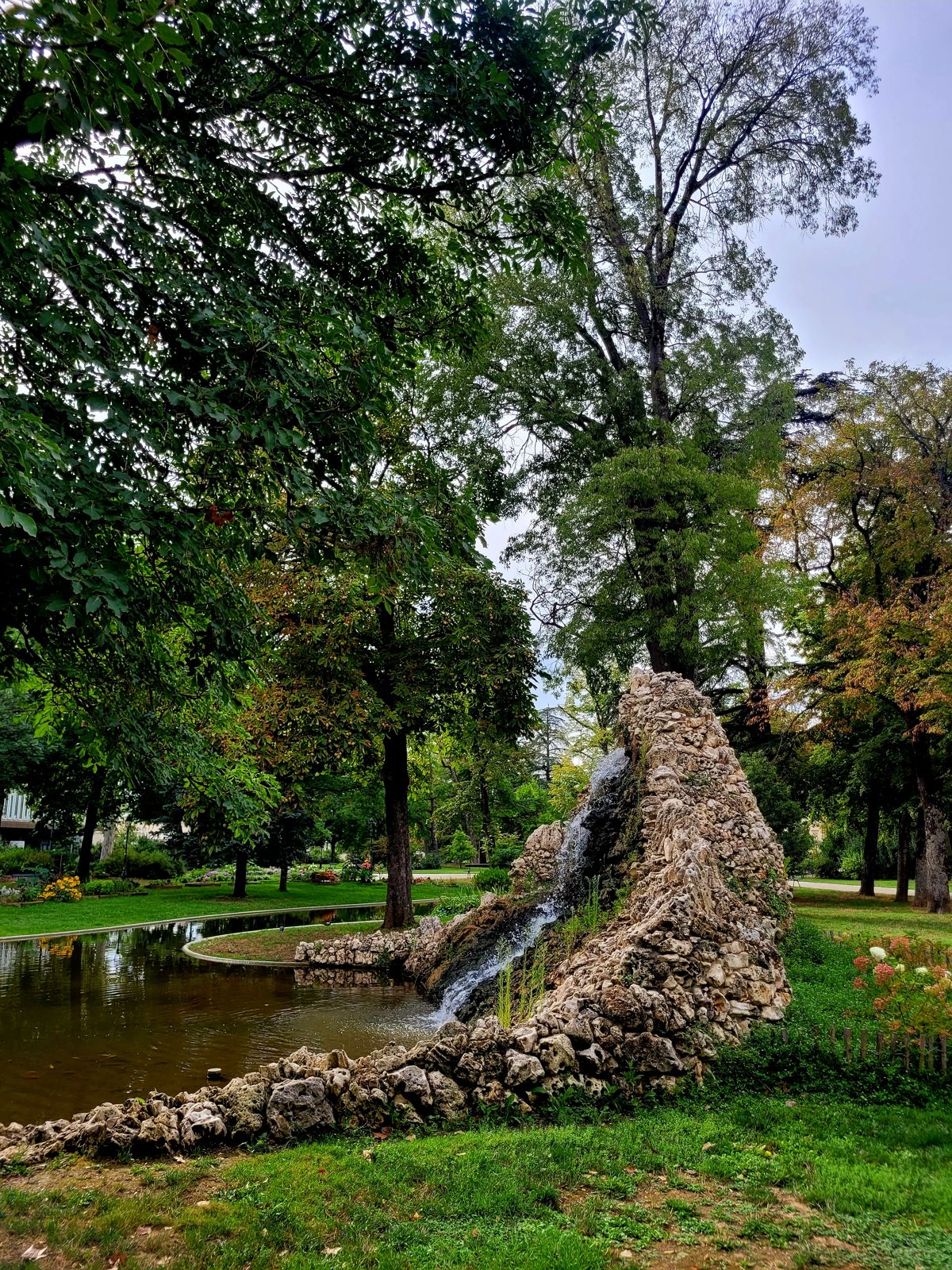
And you feel it in the driving. When you have every right over a town, you also have it over its residents, and that's exactly how it feels as a pedestrian — the same feeling as in Marseille. You have to be constantly on your guard and can't trust zebra crossings or right of way. Our walk isn't exactly pleasant, and we're happy to find the only park in town where Clémence can finally walk around without fearing for her life.
The tragedy is that most of the traffic seems to come from outside Castres, as when we go out to eat in the evening, the town is deserted. That's the thorny issue of urban sprawl: for the sacrosanct trinity of house, garden and children, the French choose to depend on their cars and so put enormous pressure on the towns that provide jobs. In short, Castres won't leave us with a lasting memory.
On the road