
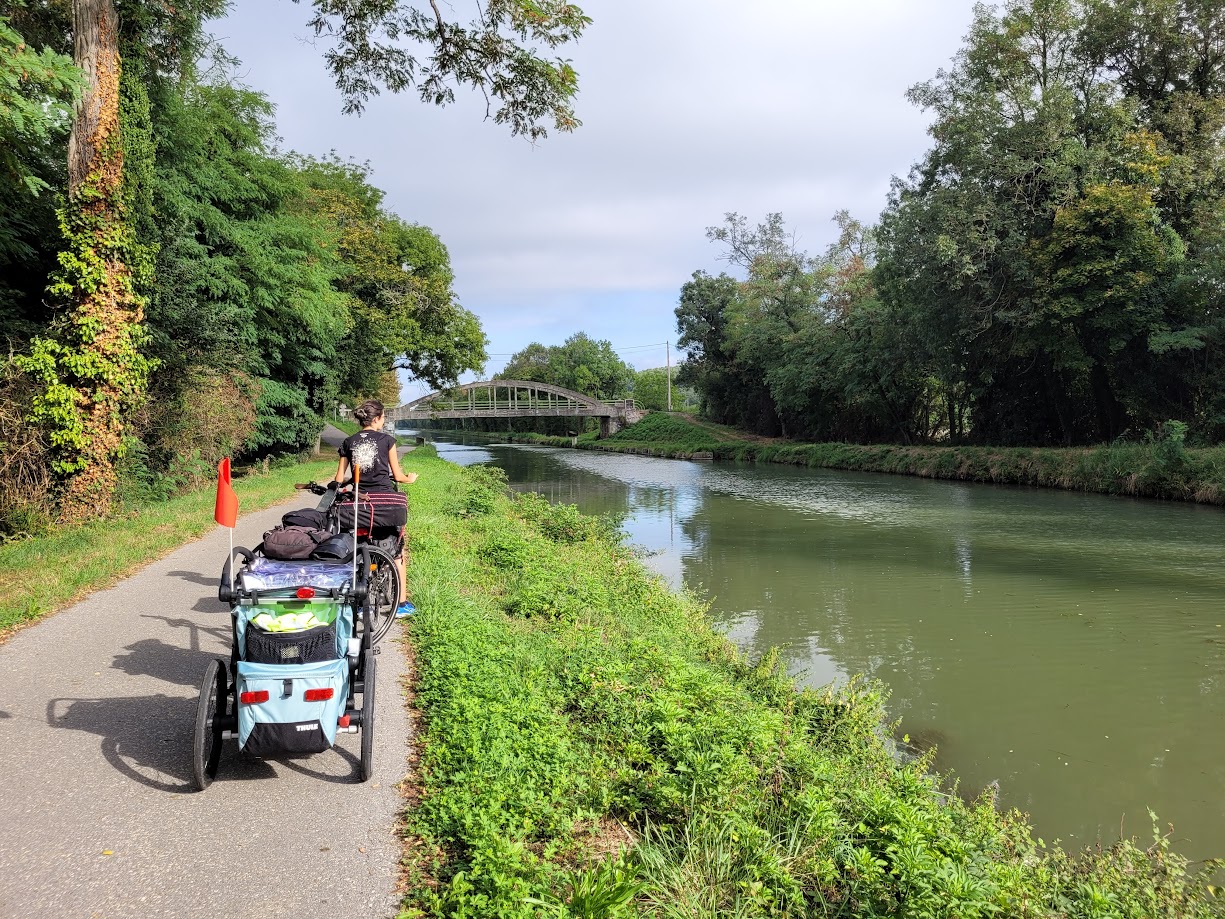
Having a child knocks you sideways. You can turn the problem over every which way, convince yourself before the birth that life won't change, make grand plans — the wall you hit is brutal. It's like riding at 30 km/h on the flat and seeing an 18% climb appear round a bend. Inevitably, the pace drops all at once, even with all the goodwill in the world.
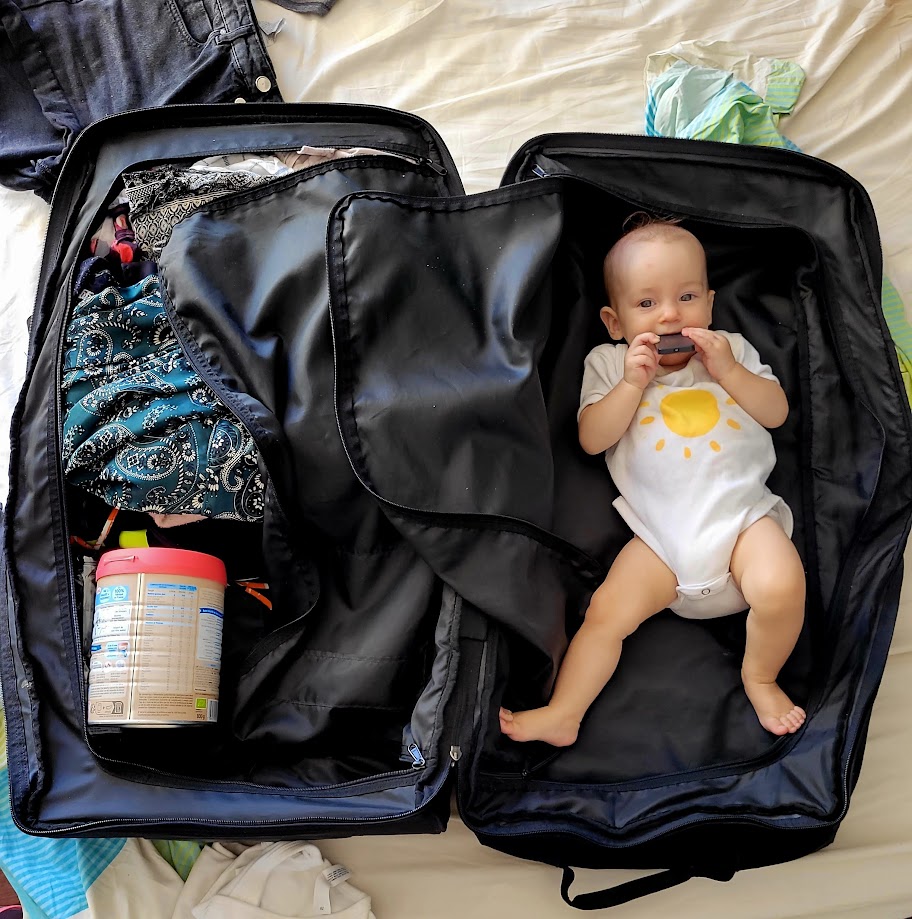
A new life takes shape, new habits set in, and even if the child becomes the absolute priority, how do you not lose sight of your adult life in all that turmoil? It's partly to solve that equation that we decided to go bike touring with our baby. All her needs are met and our adventure batteries recharge at the same time. Clémence was only 7 months old when we set off on the road.
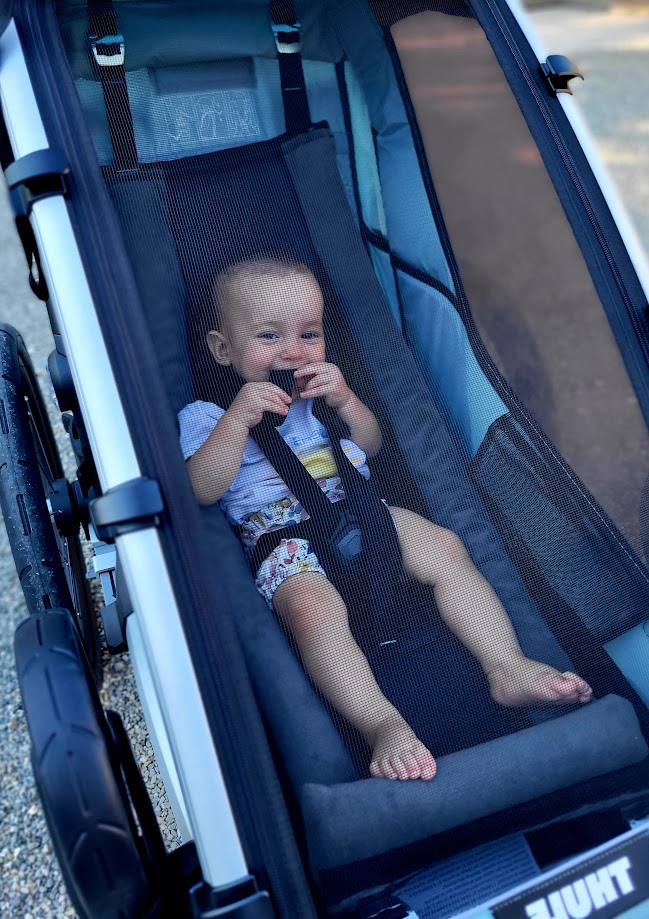
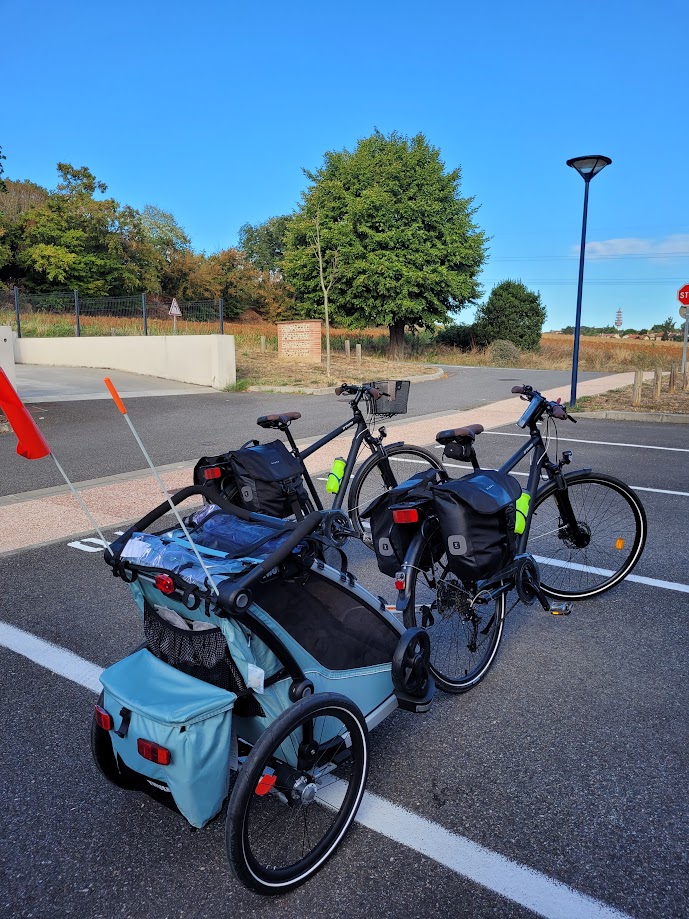
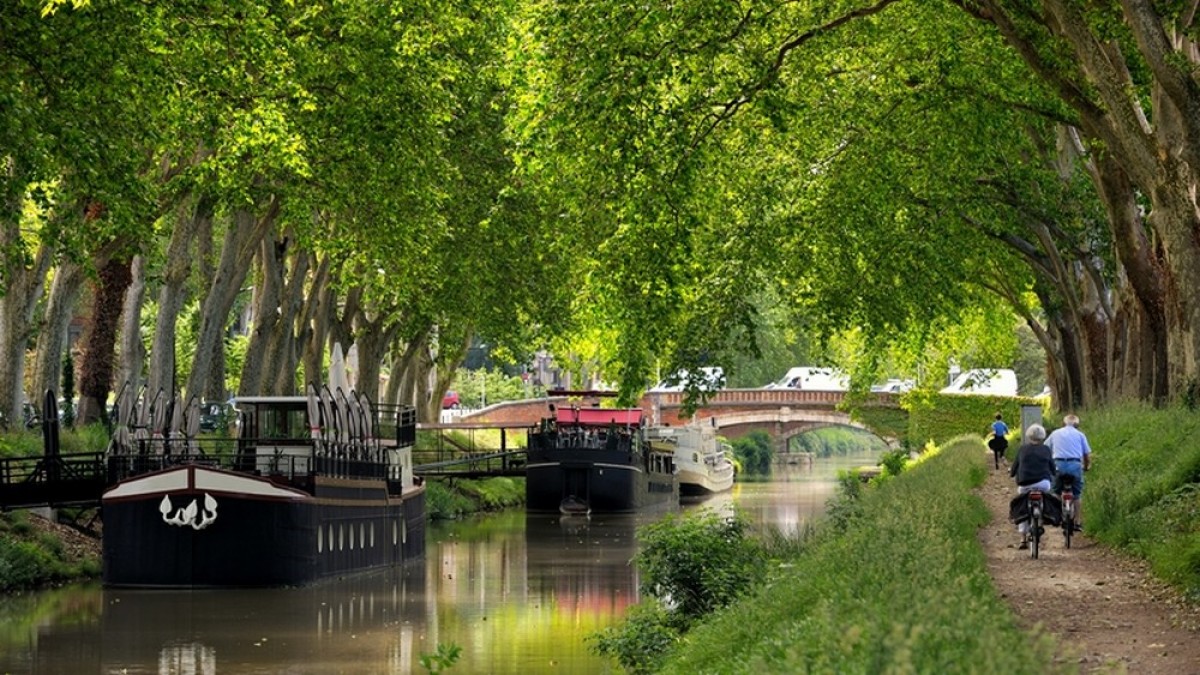
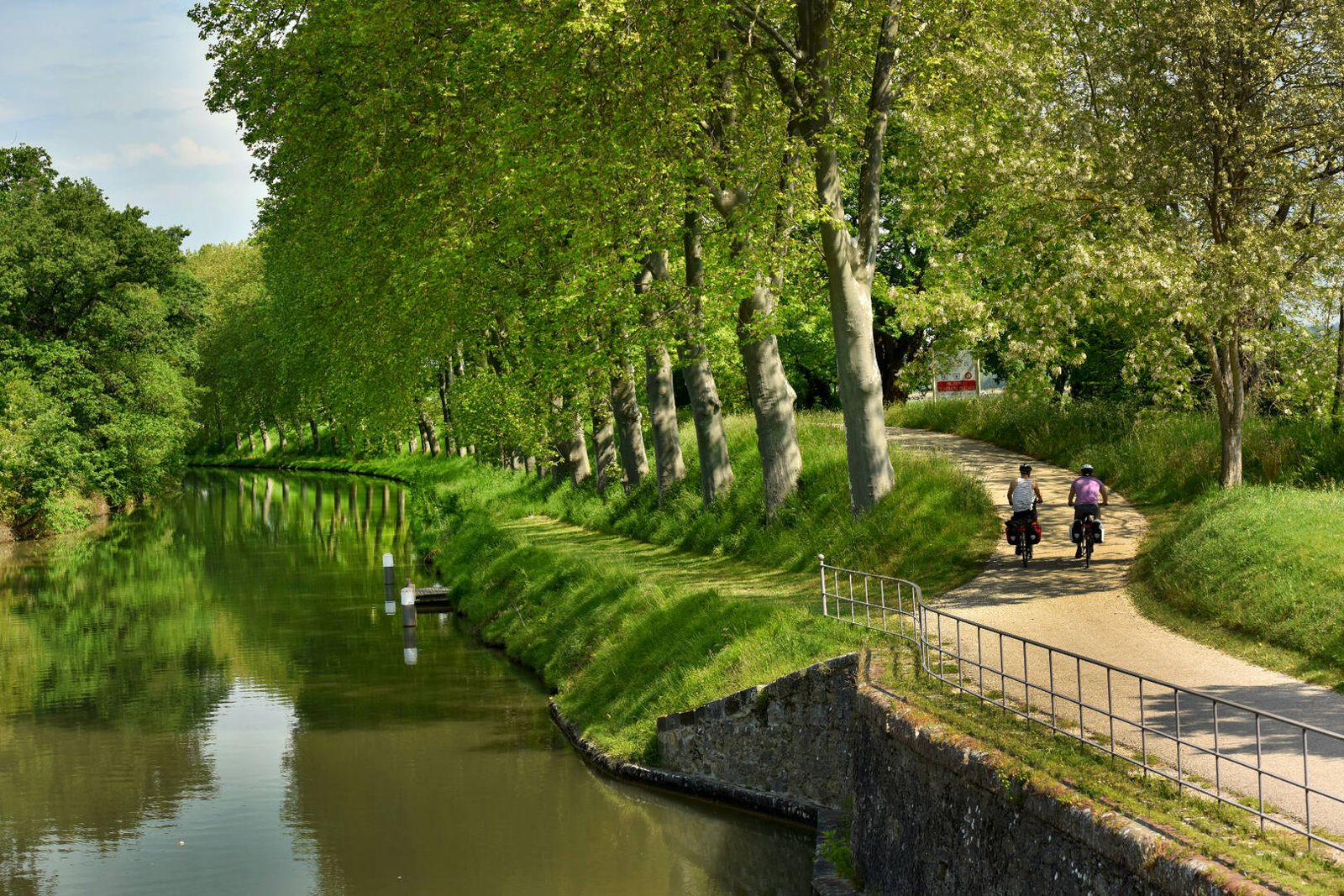
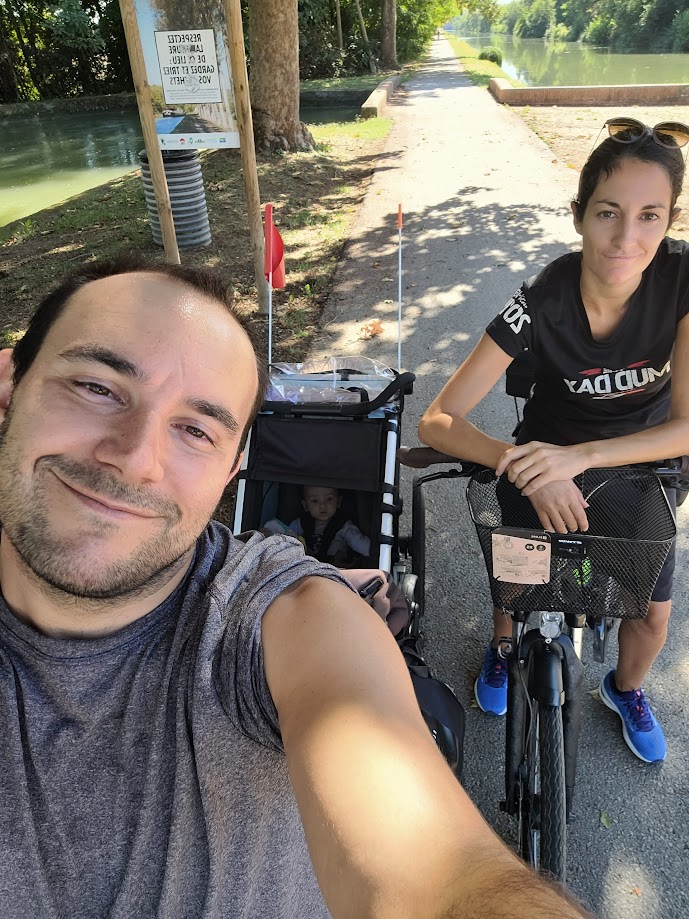
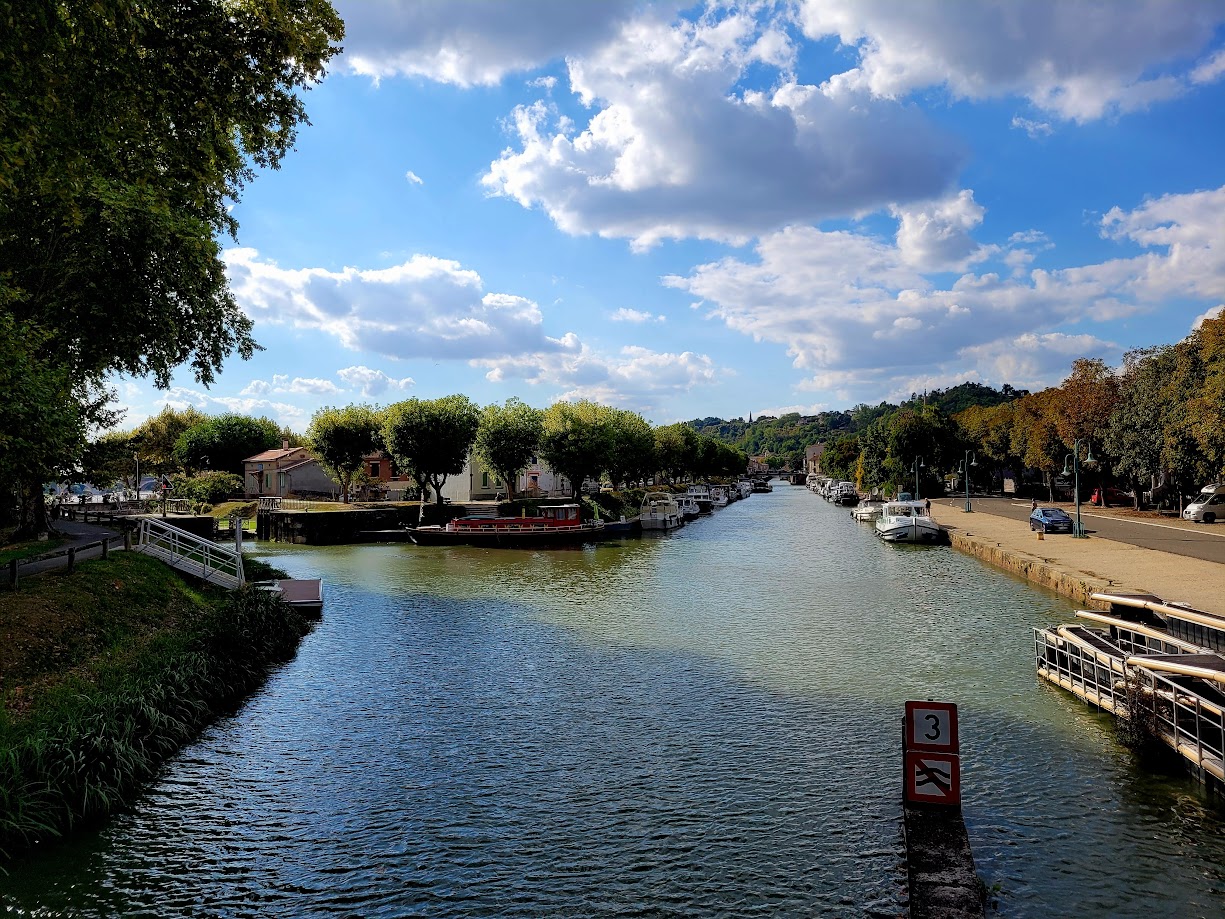
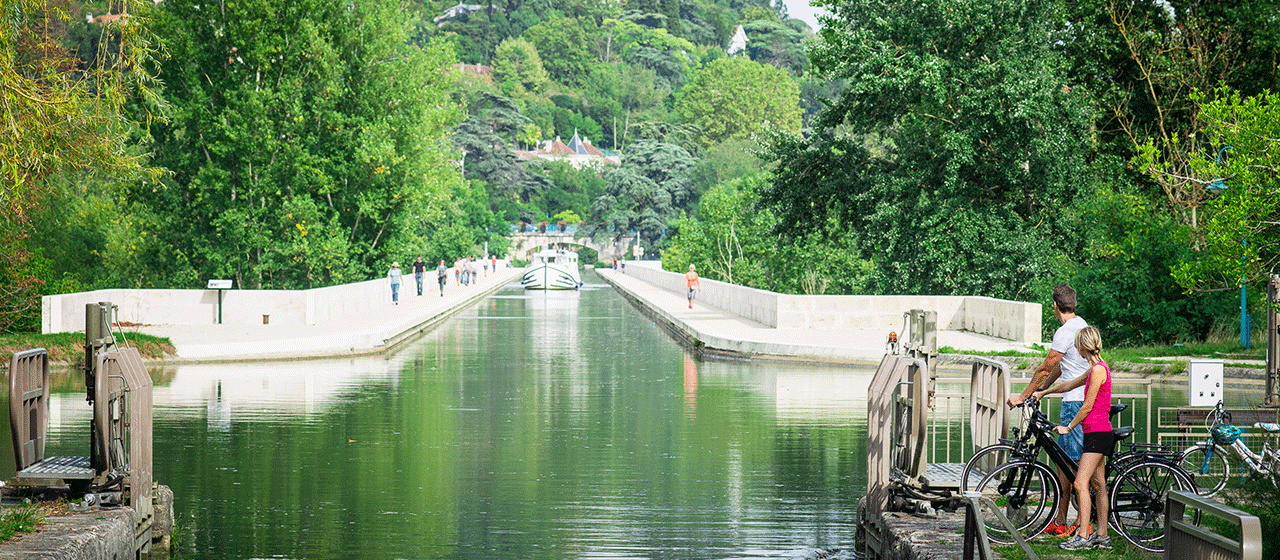
We chose a safe route away from cars to make this first experience a pleasure for everyone. The Garonne lateral canal between Toulouse and Bordeaux ticked every box: a 350-kilometre route by the water, shaded by trees, with almost no difficulty apart from a few bridges to cross. Before the big departure, we had to adapt our gear to the arrival of a baby. We broke open the piggy bank to buy a Thule Chariot Cross trailer in a lovely Alaska blue. After some hesitation about whether to get a double, we preferred the compactness and ease of transport of the single.
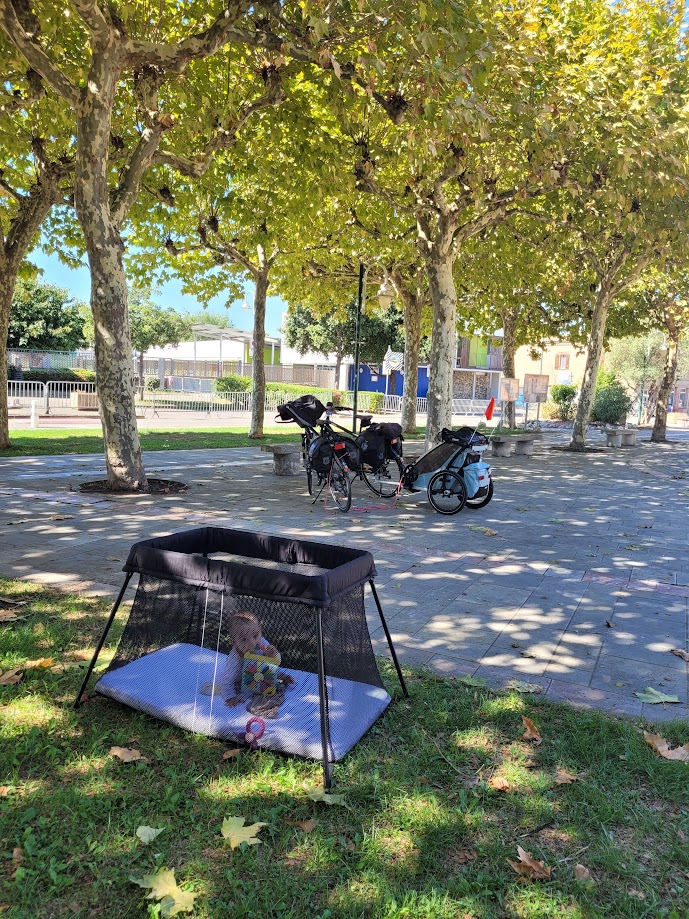
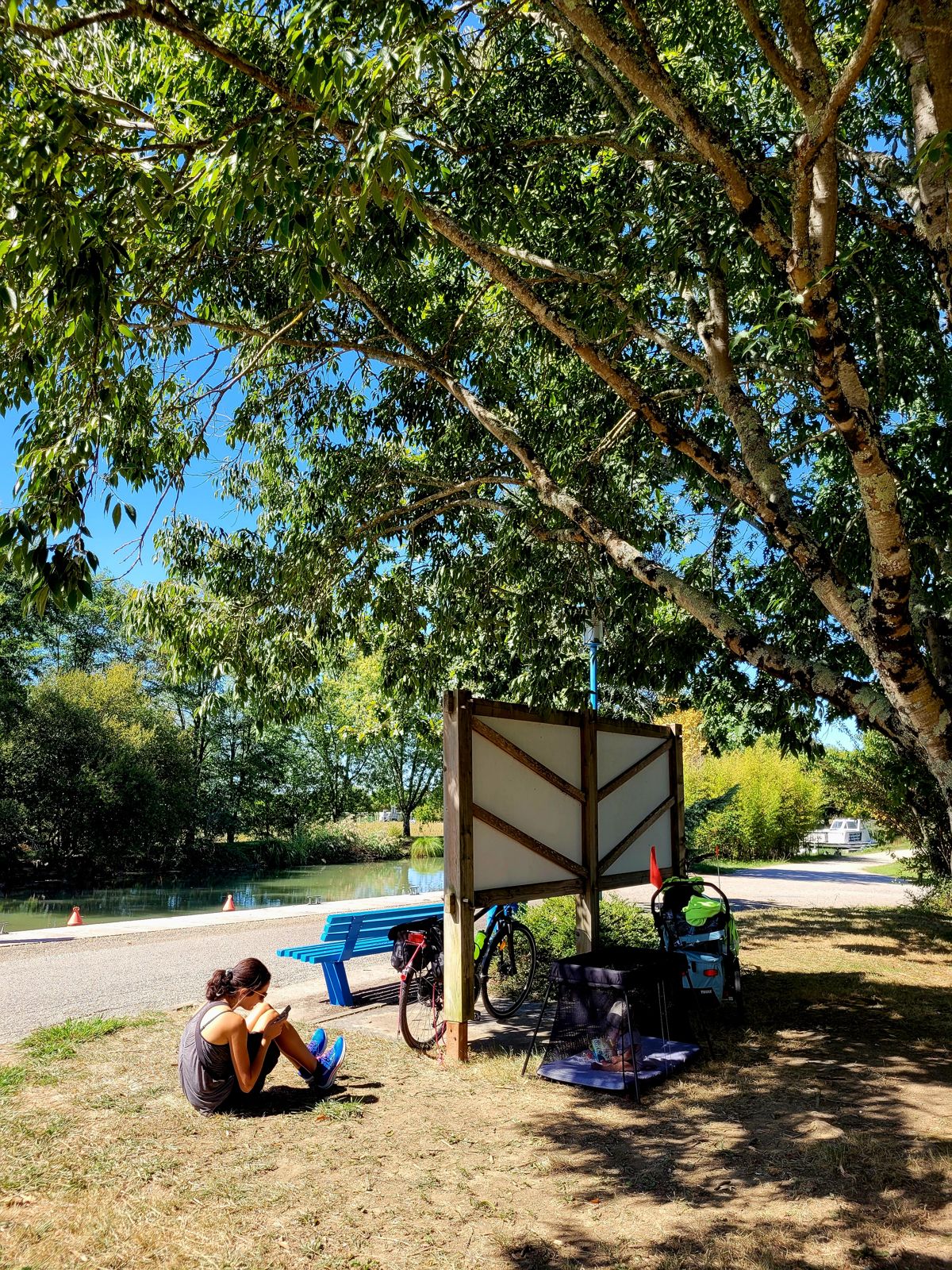
We already had the bikes, since we were already bike tourers. Packing works differently, though. A whole pannier is taken up by nappies, the trailer's boot is full of food, and our usable space is optimised to the max. For peace of mind and practicality, we also brought the little one's Babybjörn travel cot. Held with bungee cords on top of a rack, it turns out to be very handy for breaks, naps and nights.
Day 1: from Toulouse to Grisolles.
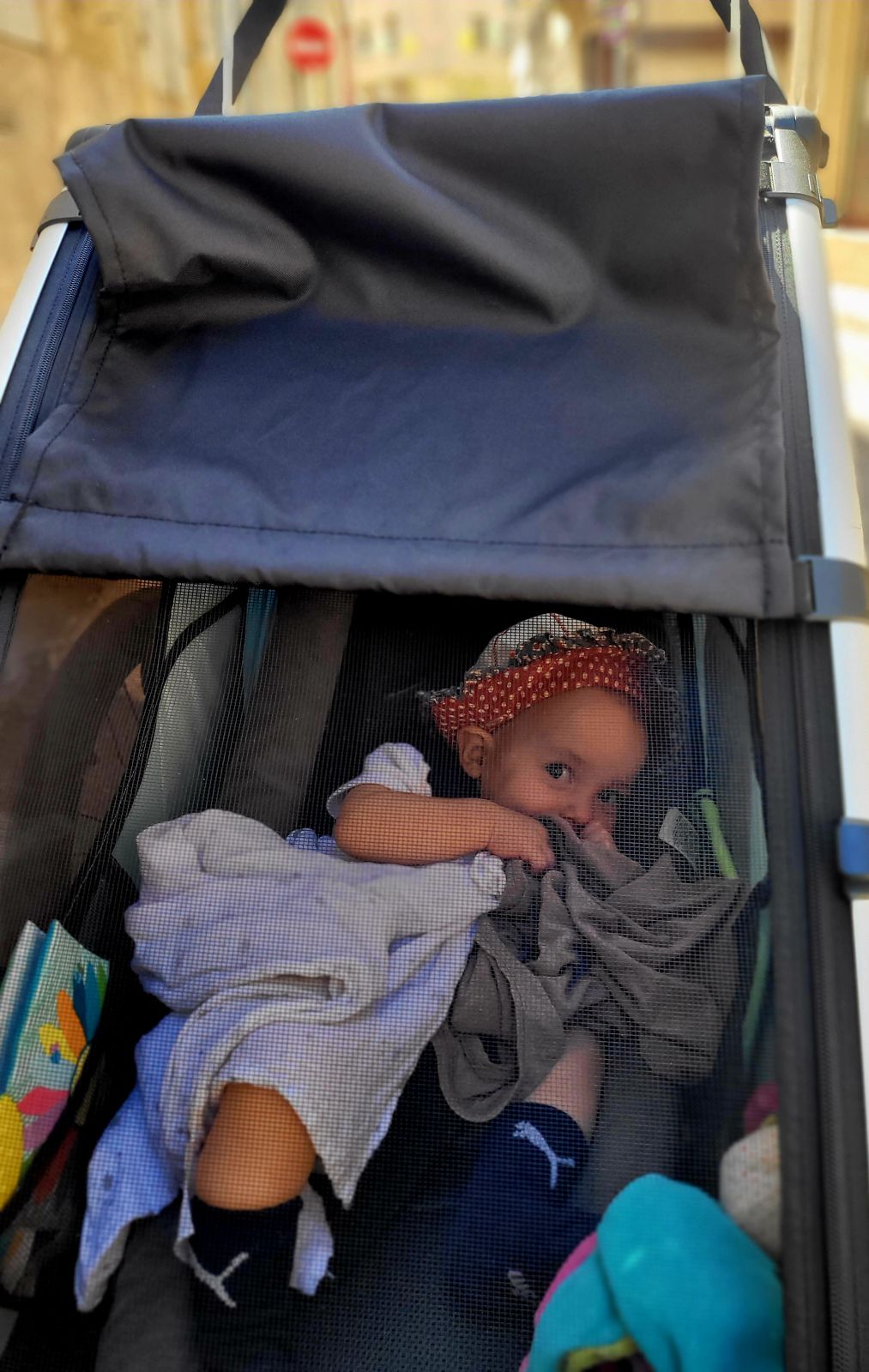
Our first stage stretches slowly between Toulouse and Grisolles. The relative bustle of the city gives way to the calm of the Haute-Garonne countryside. Soon all we can hear is birdsong, the wind in the leaves and the slow progress of barges moving so gently that they barely make ripples. Their occupants are so pleased to find a distraction that they wave to us heartily. There's a country atmosphere, the one Céline describes in "Journey to the End of the Night" when he visits the area around Toulouse. Clémence adapts well to her trailer, fitted with a little special baby hammock, and she has her first nap rocked by the rolling of the bikes. Our worries fade as we eat up the kilometres.
We eat in Gagnac, a tiny town relatively spared from the omnipresence of cars. A big grassy square, shaded by tall plane trees, welcomes idlers. We use the bakery next to it to stock up and warm up Clémence's food. She plays in her travel cot, which becomes a playpen by day and draws smiles from passers-by. The effect of bike touring on us can already be felt. We're nomads just passing through scraps of territory. Something irrevocably separates us from the people getting out of their cars and going about their normal lives. The call of the road is powerful: discovering the next kilometre hiding behind the last.
On arrival in Grisolles, the counter shows 43 kilometres in almost exactly 3 hours of riding. That's an average of 15 km/h, which proves that even going slowly you can travel far. Yet we're never far enough from cars. Grisolles is the typical French village: it could be magnificent, because the buildings are beautiful and old and give off an aura of centuries of history, but they're drowned behind car parks. The pavements are ridiculously narrow and drivers don't respect the speed limits in town at all. Every shop has its shutters down except the Carrefour on the edge of town. We go there with Clémence in the baby carrier for her afternoon nap, but our hearts aren't in it. We buy a few supplies before retreating to the hotel.
Day 2 : from Grisolles to Moissac
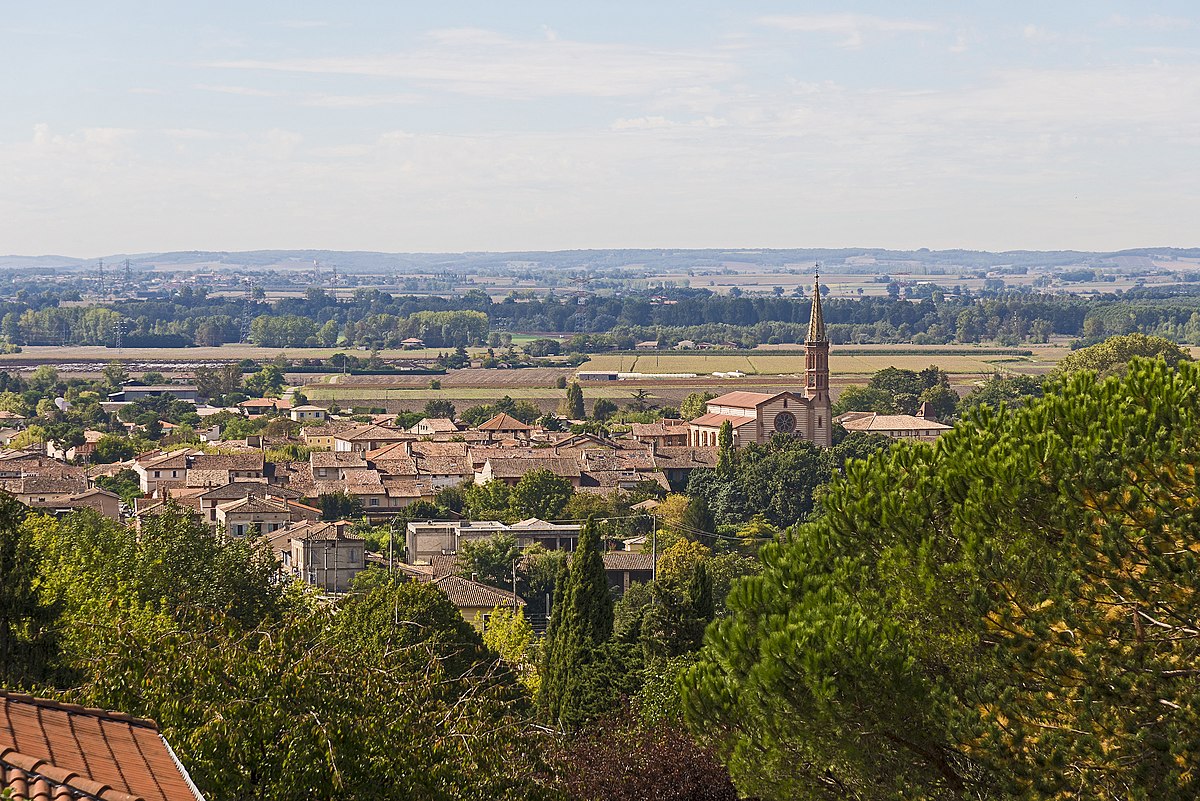
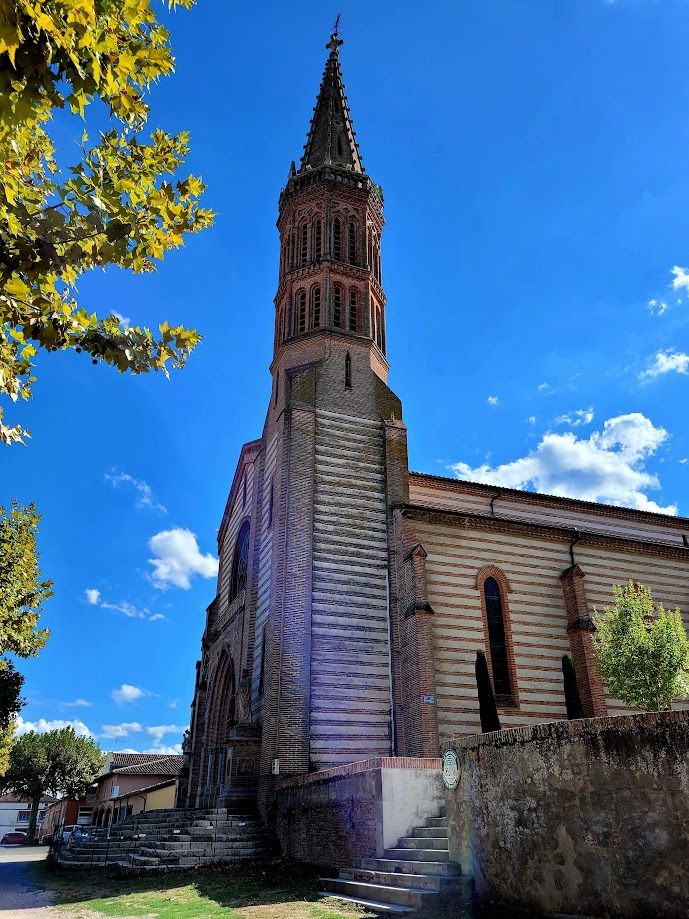
The next day, the parade of plane trees and locks pushes us ever deeper into rural Occitanie. We arrive for lunch in Castelsarrasin, a town of absolute calm that hides a very turbulent history. Ravaged by the Wars of Religion and then the Hundred Years' War, it was also strongly affected by the May 1968 movement. None of that can be felt, and Baby plays in her little playpen by the marina while we eat watching the boats come and go. Life seems sweet there, but Pierre Perret's home town won't manage to keep us. We get back on our bikes and speed off with the wind towards Moissac.
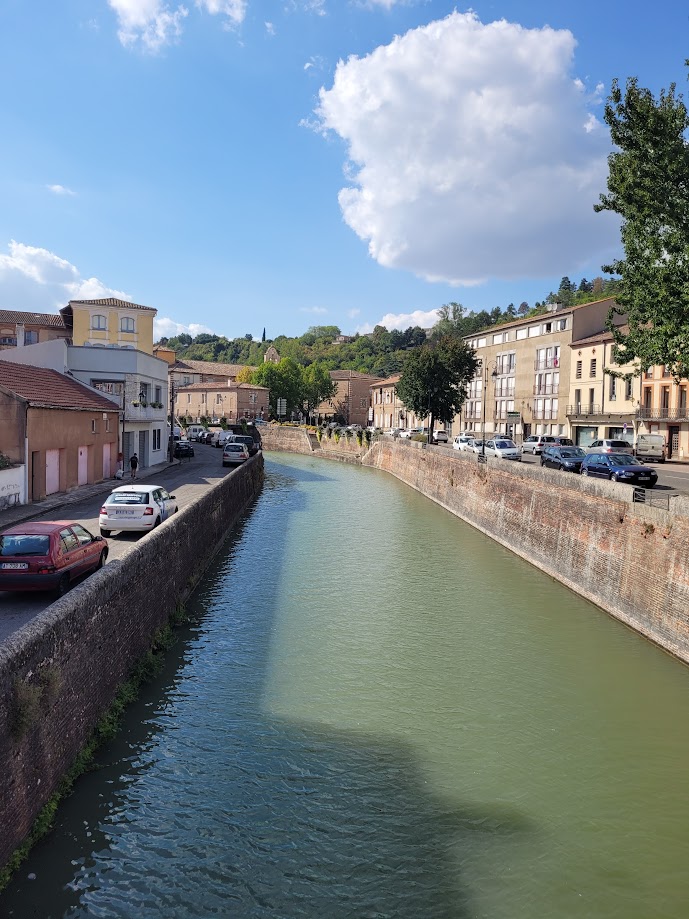
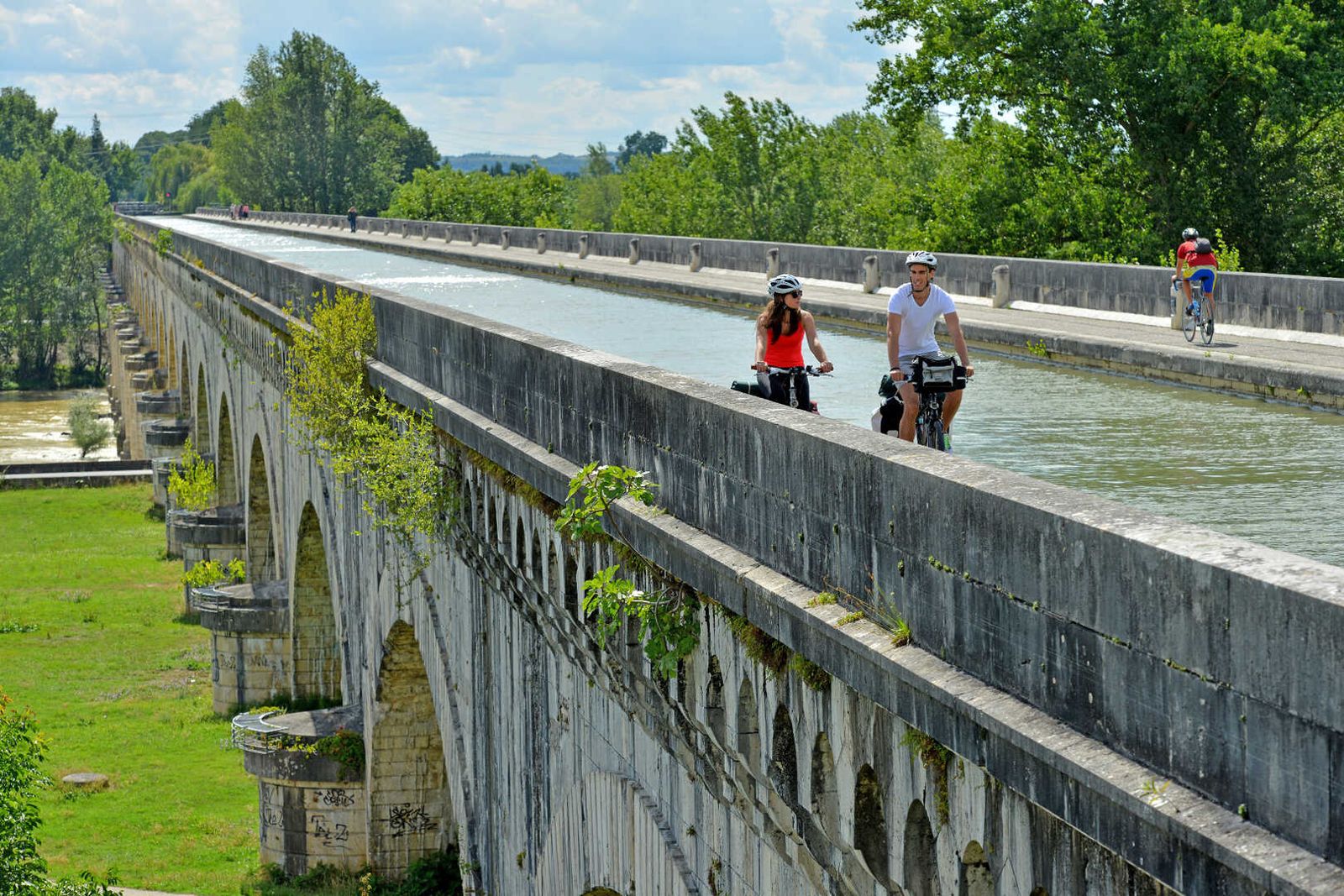
The pedalling rate is the same as the day before — 40 kilometres in just under 3 hours — except that the landscape is starting to change. The region becomes more agricultural and we cross our first canal bridge, a truly unusual piece of engineering. We cross the Tarn 5 metres up while staying by the water. It's a brand-new feeling, and we spend long minutes gazing at the structure and wondering at the reach of human building genius. Arriving in Moissac reveals pretty bridges and views of houses in a deep brick red. We leave the cycle route to turn off towards our refuge for the night.
Moissac lies at the meeting point of two alternative modes of transport: cycling, as you'll have gathered, but also walking. Halfway along the Le Puy route of the Way of St James, or Via Podiensis, the little town welcomes its share of pilgrims every day in the good season. Our lodging for the evening is in fact dedicated to pilgrims, and its owner, Marine, devotes her working life to welcoming them.
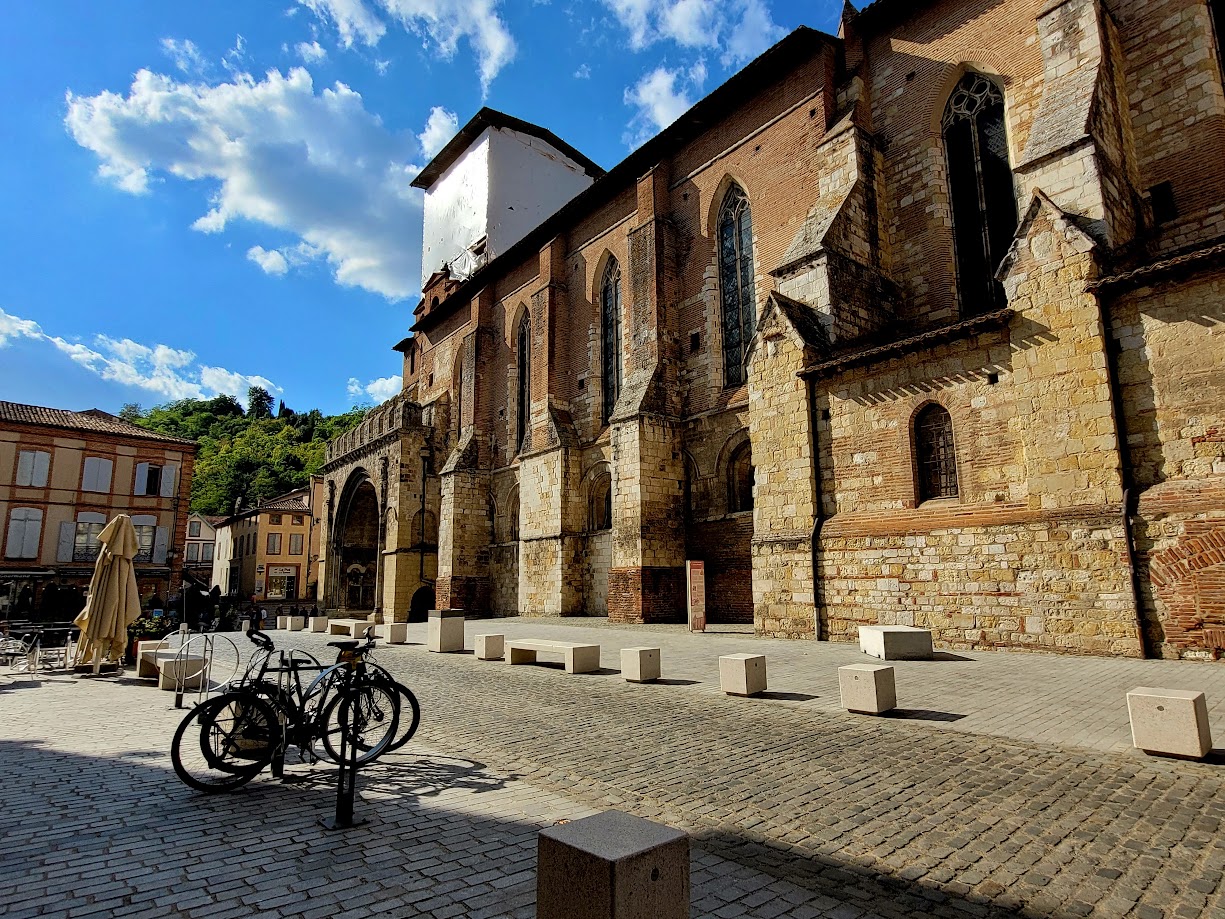
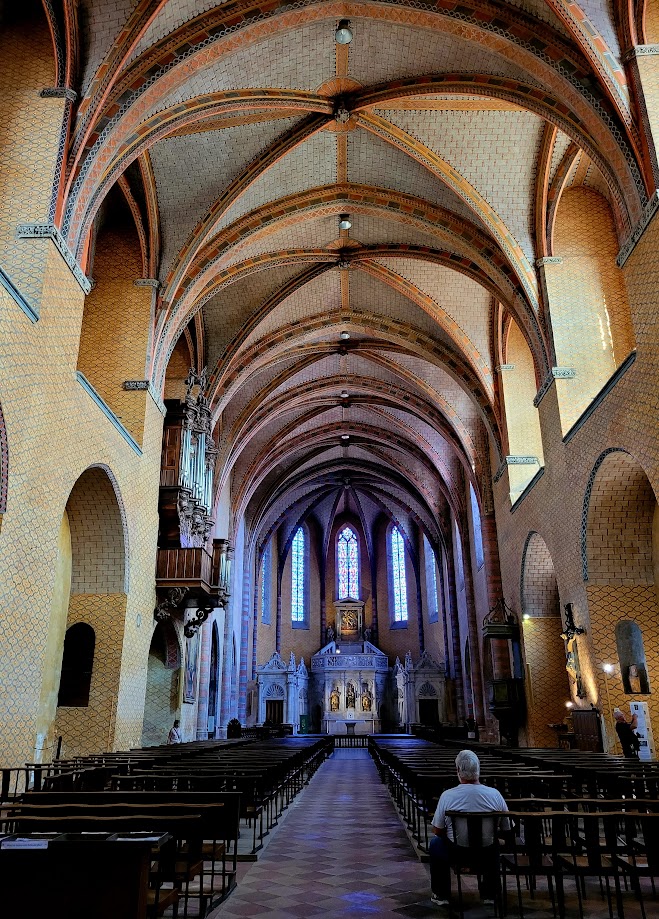
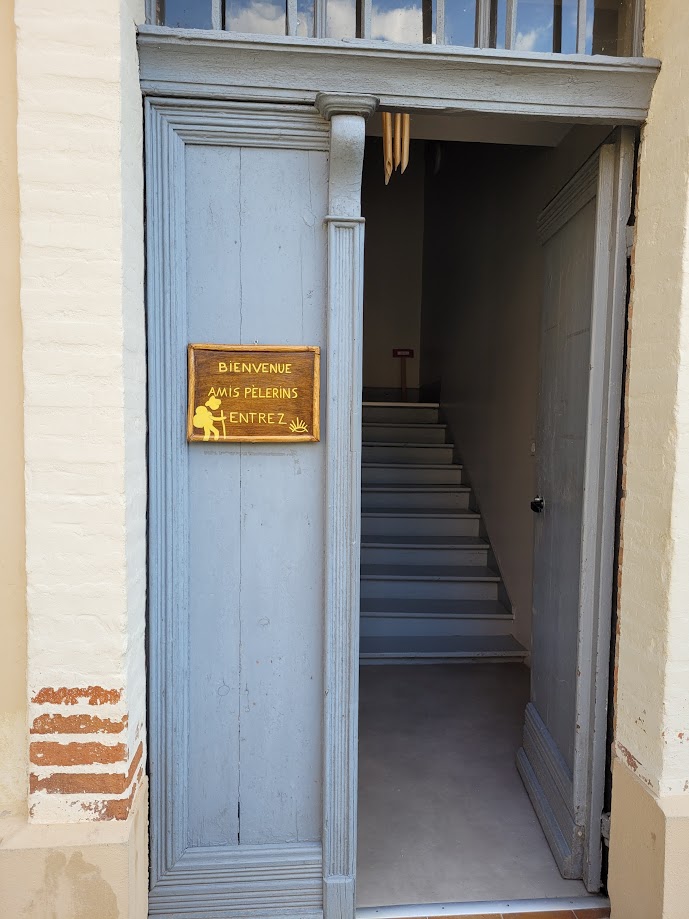
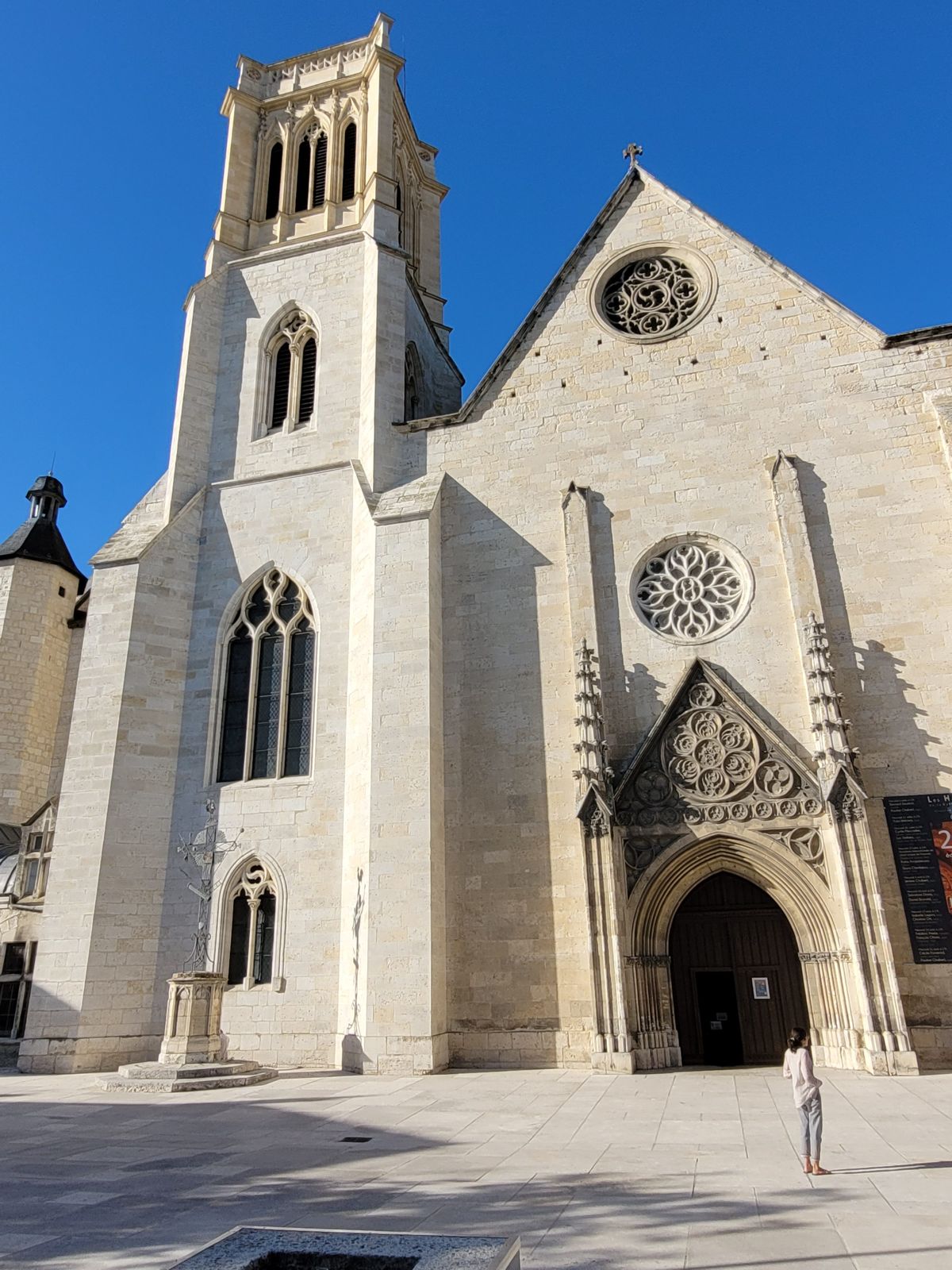
We make the most of our early arrival to visit the religious sites, including the sumptuous abbey of Moissac. We meet pilgrims on every street corner, recognisable a mile off by their outfits and walking poles. We even share our meal at the inn with a German walker who's come from Berlin. Helmut has caught a passion for "the Way" and walks sections of it every year. He confides that he prefers to come alone, meaning without his wife, to walk at his own pace in peace. Over an extremely hearty homemade cassoulet, the conversation gently drifts towards History with a capital H as he tells us about his experience of the fall of the Wall. We go to bed happy to see that barriers barely exist between slow travellers like us.
Day 3 : from Moissac to Agen
At breakfast we realise how lucky we are to have a daughter like ours. She sleeps well, smiles all the time and seems to really blossom on the road. Every time we look at her, she gives us the cutest little smile. We also realise that this is actually the perfect age to travel with a baby. At 7 months she isn't walking yet, almost never complains and sleeps a lot. All our worries about her have vanished.
On the way to Valence-d'Agen, our lunch stop, we don't talk much, busy as we are listening to the sound of silence. It's September and we don't meet many people, but we come across an odd bird: a man called David riding a recumbent bike covered in solar panels, who's planning a tour of France in his unusual shell. Detours into villages are often double or quits. Some are wonderful and invite you to linger, but others, like today's, make you want to flee. Valence-d'Agen is one of those.
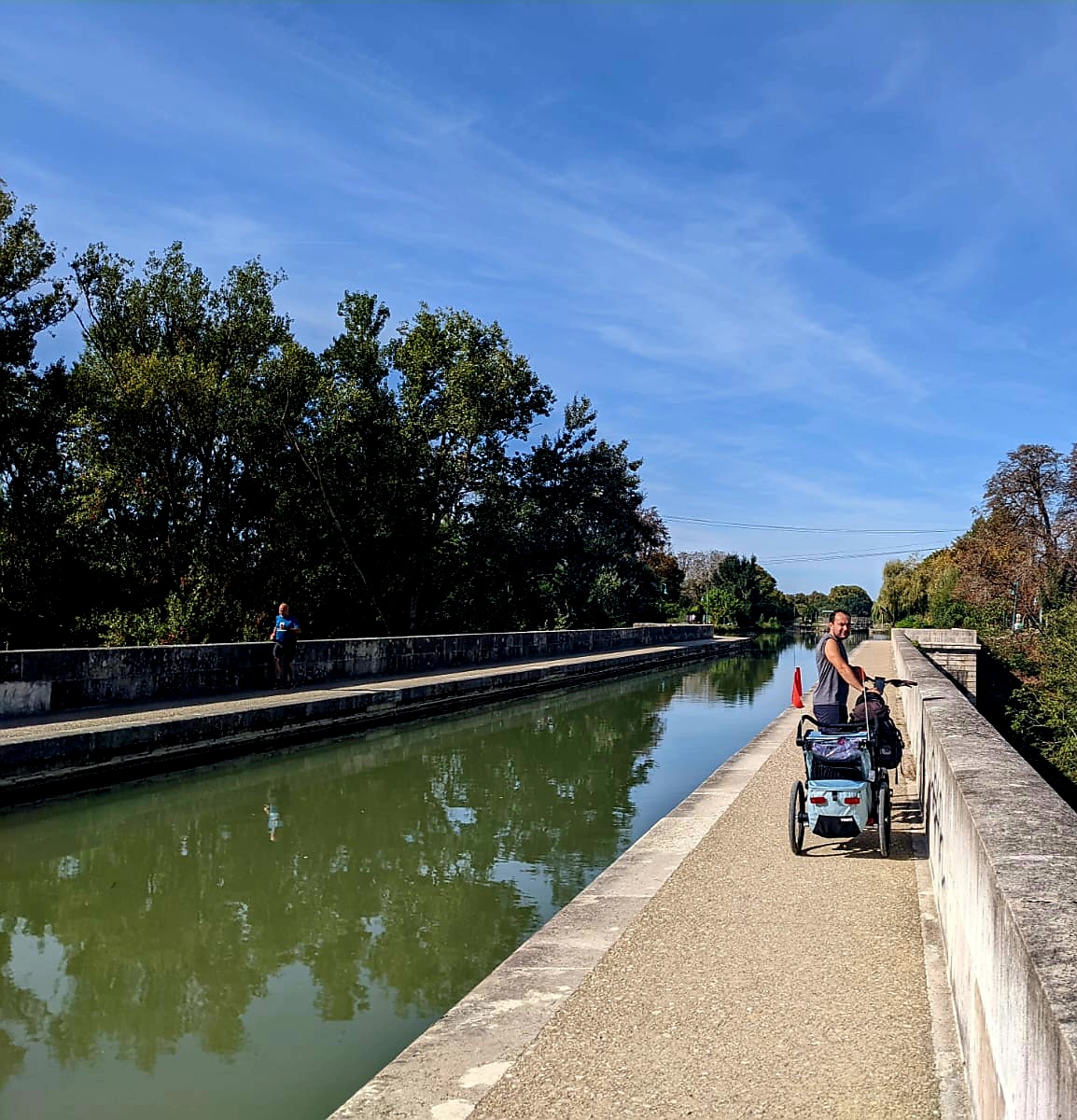
Once again, the walls echo with very ancient history, but the grip of the car seems to have known no limits. Every space, every alcove, the smallest patch of asphalt is swallowed up by cars. It's impossible to take a decent photo of a beautiful monument without vehicles in it. The space left to us is far too cramped, so we decide to just buy some food and leave straight away. We enter the Lot-et-Garonne, one more invisible border on our way to Bordeaux. We pass unremarkable little villages, bucolic houses and enchanting trees.
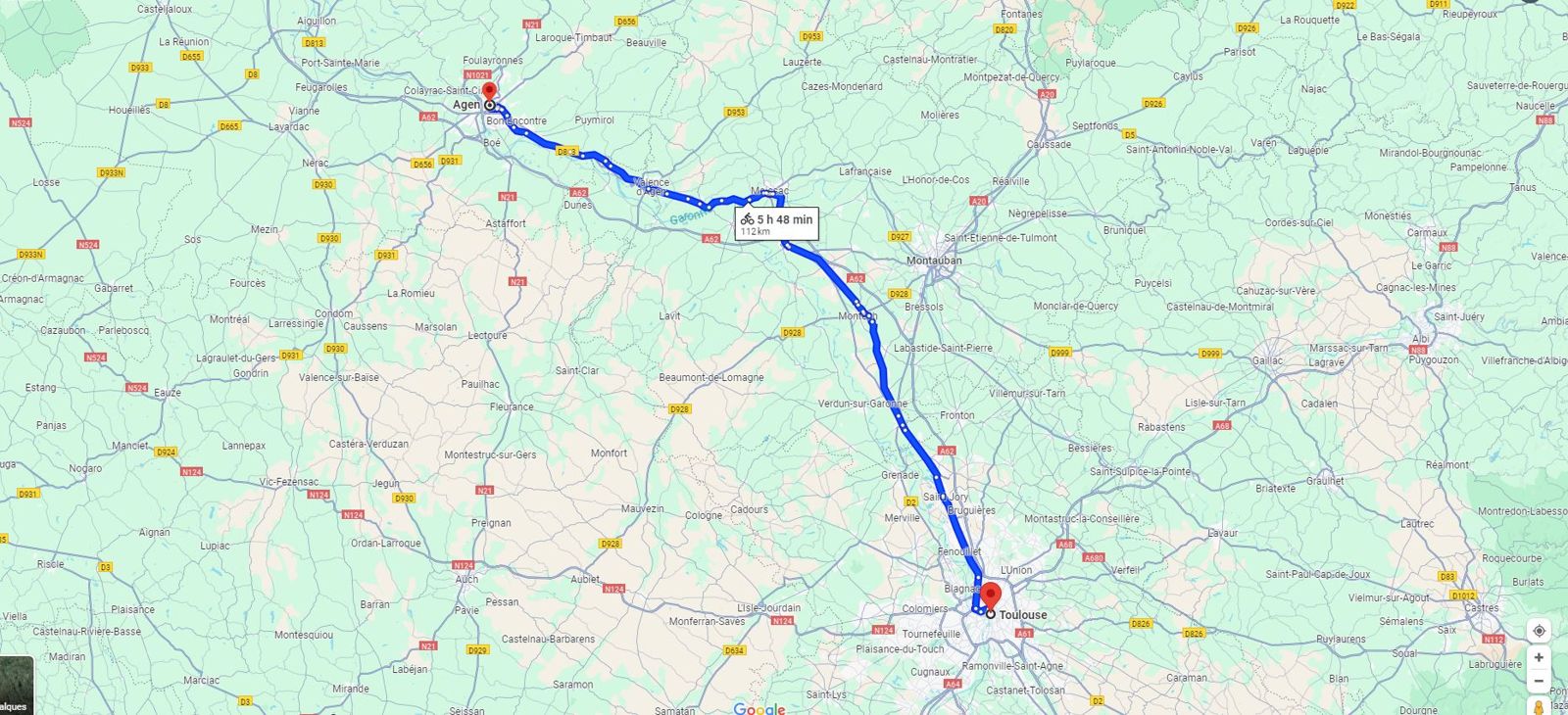
The cycle route follows a main road where people drive at full speed — at least that's how it feels at our snail's pace on the other side of the canal. It sets us thinking about our fast lives and the time we do or don't take. On the outskirts of Agen, a water-sports centre is the perfect place for a break. It's cool, there's water and shade. Clémence plays in her playpen after a long nap, and we take the chance to rest beside her. We've only been gone three days, but we're already apprehensive about arriving in a "big" city.
Admittedly Agen is neither Paris nor Marseille, but the peacefulness of bike travel is such that you quickly forget the outside world. Our fears are unfounded, as Francis Cabrel's home town turns out to be very approachable. We take the opportunity to sing Clémence one of her favourite songs, "Je l'aime à
mourir". It may sound like a cliché, but a child's eyes lighting up are well worth it. Agen surprises us a lot with its long pedestrian streets, its winding lanes and its bustle on this September Saturday.
Day after day we keep up our pace of 45 kilometres in 3 hours. That rhythm means we're never tired and can take time to wander. It also gives us long stretches of free time to play with Clémence. She still loves this trip and nothing seems to unsettle her, not even constantly changing beds. The proof: she wakes up after 9 the next morning.
On the road